
The Yamuna River level dropped below the danger mark in Delhi on September 8, five days after it had exceeded the safe threshold. During this period, thousands of residents from low-lying areas were compelled to abandon their homes for temporary shelters.
On September 8, the river level was recorded at 205.21 metres. Authorities stated that nearly one lakh people had been evacuated to relief camps.
By September 9, at 6 AM, the water level at the Old Railway Bridge (ORB) was measured at 204.96 metres, close to the warning mark of 204.50 metres. The river had reached its seasonal peak of 207.48 metres on September 4.
As the water receded, residents began clearing mud and silt from their homes. The ORB, closed to traffic when the water crossed the danger level, was reopened by the Delhi Traffic Police on September 8.
The warning mark for Delhi is 204.50 metres, while the danger mark is 205.33 metres, with evacuations beginning at 206 metres.
UIDBs found in alarming numbers
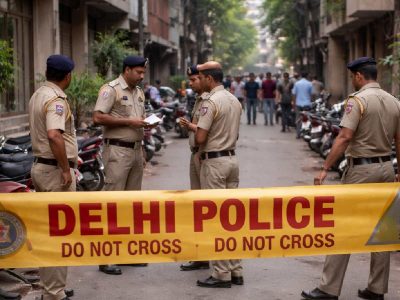
Flooding also brought to the surface another grim reality: the recovery of unidentified dead bodies (UIDBs).
According to the Zonal Integrated Police Network (ZIPNET), the highest number of UIDBs during August 1–September 9 was recorded under the jurisdiction of north Delhi (71), followed by the Railways division (52).
Kashmiri Gate Police Station recorded the maximum number of UIDBs (15) in this period, followed by Civil Lines. The trend was mirrored in north east Delhi, with Shastri Park and New Usmanpur police stations reporting high numbers.
Officials note that these stations cover areas along the Yamuna’s floodplains, where bodies are often recovered after heavy rainfall.
Yamuna Bazaar and surrounding areas worst hit
Yamuna Bazaar and nearby settlements were among the worst affected during the recent flooding. Areas such as Monastery Market, Madanpur Khadar, and Yamuna Bazar were inundated, forcing families to relocate to relief camps.
Tents were erected on the Delhi-Meerut Expressway, near Mori Gate and in Mayur Vihar, to house the displaced.
Delhi has witnessed severe flooding in recent years. In July 2023, the Yamuna reached a record 208.66 metres, inundating several districts and iconic areas such as Rajghat and the Tibetan Market.
Crime on the floodplains
Beyond natural disasters, the Yamuna floodplains have long been associated with crime. On October 29, 2024, a body with multiple stab wounds was discovered near a pipeline in New Usmanpur, close to the Yamuna Khadar.
“We tried to find more leads, but it was a dead end as there were no identification marks or documents on the victim,” said a police officer.
Residents say such cases are common. “Proper residential areas and colonies are far from the Khadar region. At night, the entire plains remain deserted. Even when a crime occurs or a body is found, witnesses are scarce. We avoid the Khadar area after sunset,” said Ram Prakash Singh, a resident of New Usmanpur.
Also Read: Over 200 waterlogging incidents recorded in Delhi till September
According to Google Maps, the Yamuna’s bank here is nearly six kilometres from the nearest residential neighbourhood. A Delhi High Court order dated July 8 directed the Delhi Development Authority (DDA) to clear encroachments from the river’s banks and drains, but the absence of habitation has reinforced its reputation as a dumping ground for crime.
Suicides along the river
Suicides are another recurring tragedy. ZIPNET data shows that under the jurisdiction of Wazirabad Police Station, four UIDBs were recovered by July 11, two of which were pulled from the Yamuna itself. Timarpur Police Station reported approximately 14 UIDBs in the same period, with two retrieved from the river and the rest from beneath the Wazirabad flyover.
On July 7, 19-year-old Delhi University student Sneha Debnath was last seen near the Signature Bridge. She had booked a taxi to Sarai Rohilla Railway Station but changed her destination to the bridge. With CCTV cameras not functioning, investigators had little evidence.
Six days later, on July 13, her body was found in the Yamuna near the Geeta Colony flyover. A suicide note recovered from her home revealed she felt like a failure and a burden, and that life had become unbearable.
As of now, 1,997 UIDBs have been recovered across Delhi since the beginning of the year. The figure underscores the extent to which the Yamuna remains not only a natural hazard during monsoons but also a silent witness to crime and despair.