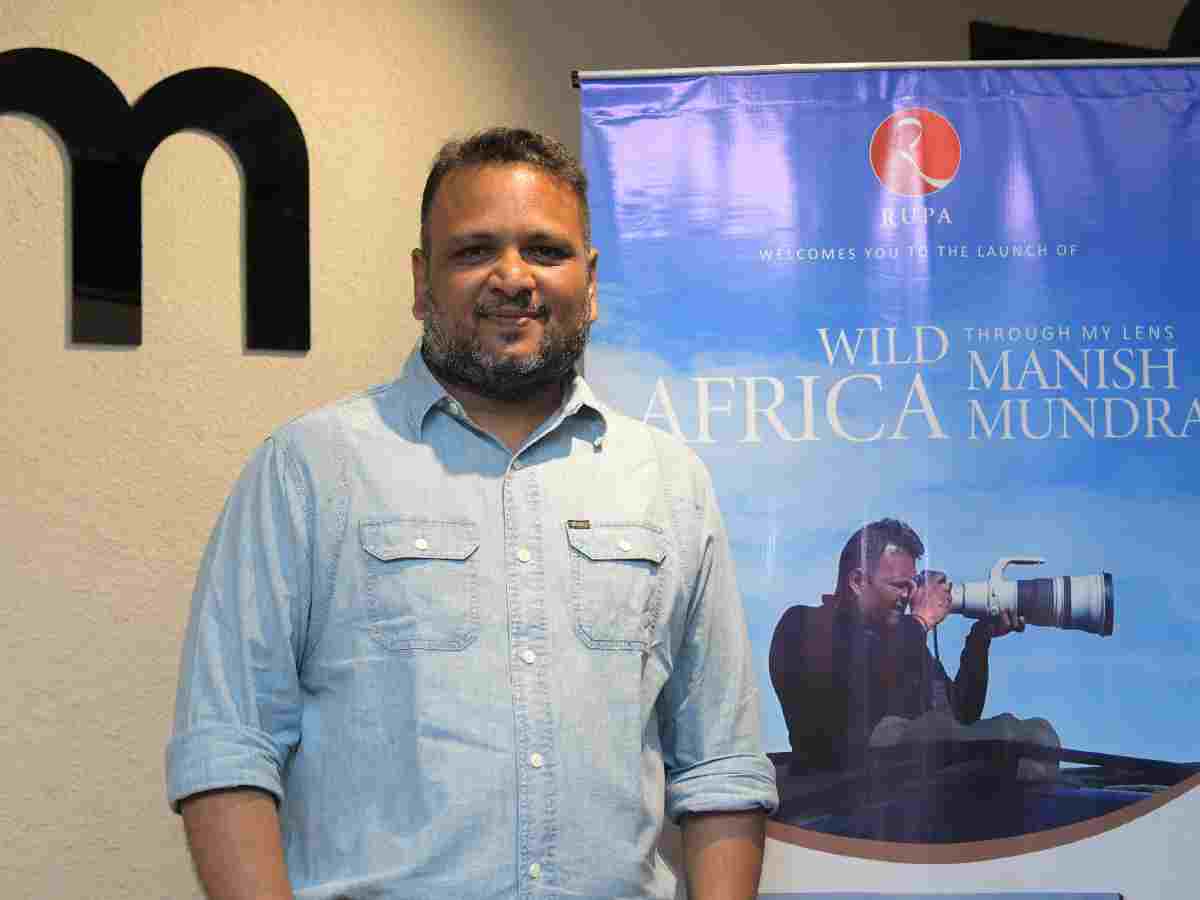
From the dusty streets of Deoghar to the red carpets of international film festivals, Manish Mundra’s journey is nothing short of cinematic. Born into a Marwari family in Jharkhand’s Deoghar, he began selling cold drinks and saris as a child to help his family. Today, he is a corporate leader, award-winning film producer, wildlife photographer, and author.
“We are human beings before we are professionals, and each of us has passions. I believe that to live fully, you need to follow them—especially artistic passions,” Mundra told Patriot.
After completing his MBA in Jodhpur, his career took him from Mumbai to Indonesia, Thailand, and Nigeria, where he became CEO (Africa) and Managing Director of Indorama Eleme Petrochemicals. Yet a creative urge lingered.
“I was always drawn to painting, writing, photography, and films. Photography has been a part of me for a long time. Eventually, I felt the urge to explore wildlife photography… Over time, I realised the photographs were strong enough to be compiled into a coffee table book. That’s how this book was born,” he said.
Mundra was in the Capital earlier this month for the launch of his debut book, Wild Africa, which features over 280 images of East African wildlife, a project nurtured over nearly a decade. “The difference is perspective. These are my photographs, taken through my eyes. Each frame carries its own story, and that’s what makes this book personal,” he added.
From corporate to cinema
In 2014, Mundra returned to India with a vision for independent cinema. He founded Drishyam Films, producing acclaimed works such as Masaan (2015), Dhanak (2016), Newton (2017), and Kadvi Hawa (2017). Dhanak won the National Award for Best Children’s Film, Newton was India’s Oscar entry, and Kadvi Hawa received a Special Mention at the National Film Awards.
“Not all my films are political. I focus on soulful stories… At Drishyam Films, what we look for are stories that touch the heart. They may vary in subject, but they are deeply Indian and emotionally resonant,” Mundra said.
He believes in new talent. “First-time directors bring new energy and ideas. Once established, many directors become cautious. Working with new talent benefits the industry and is also cost-effective.”
The challenge of independent films
Independent cinema comes with risks, but Mundra is undeterred. “There are already many people doing commercial cinema, and they’re doing it well. I felt there was a small but important space for independent films, which can survive and thrive today. It also suits my financial reality—I fund my films from my corporate earnings, so I have to work within a limited budget.”
The bigger hurdle lies in exhibition and marketing. “For an 80-crore film, spending 15 crores on promotion is manageable. But for a film made on 7–8 crores, you can’t spend more than 2–3 crores. That limits outreach. We depend on word of mouth, and the short exhibition window—most films run only a week or two—makes survival hard,” he explained.
OTT, theatres, and the future of cinema
“OTT is one of the biggest shifts, especially after the pandemic. It brings films to global audiences and also exposes us to worldwide content. OTT is here to stay, and we must create content that works both in theatres and online,” he said.
Yet he warns of the declining theatre experience in Hindi cinema. “Regional industries like Malayalam, Tamil, or Telugu still draw audiences. The problem is largely in Hindi cinema, where viewers feel films aren’t worth the theatrical experience. The responsibility is on us—we need to raise standards and make films that compel people to return.”
Delhi, life, and philosophy
Though Mundra has no personal roots in Delhi, he feels a connection to the city. “Delhi is the heartbeat of India—it’s the Capital, and you always feel good visiting. The city mesmerises me. Definitely the food—Delhi has amazing cuisine. Old Delhi carries history, while New Delhi represents a new India. Walking past Parliament, the Supreme Court, or Rashtrapati Bhavan always gives you a sense of energy,” he said.
He balances multiple passions through discipline. “You have to consciously create space for your interests. I also have a strong team supporting me in every area I work in, which gives me the freedom to switch easily between roles.”
Quick takes on cinema and creativity
Asked which film he wished he had produced, Mundra immediately replied, Laapata Ladies. For dream collaborations, he names Vinod Chopra and Sanjay Leela Bhansali.
Also Read: Muzaffar Ali: The poet of cinema who painted Umrao Jaan with patience and pain
He insists he carries no regrets over scripts turned down. “I don’t regret anything,” he said. If he were to describe Indian cinema in one word, it would be “diverse”—with regional industries thriving while Hindi cinema faces “challenging times.”
And does he see himself in the tradition of Bollywood or parallel cinema? “I don’t believe in the concept of Bollywood. I stand for good cinema, whether you call it parallel or otherwise.”