The dreary cells of Rohini Jail hold stories of sorrow and survival, and a flurry of corruption allegations. While some inmates face harassment and deprivation, others are allegedly forced to pay bribes for basic rights and access, claims Shabana, the mother of inmate Shahrukh.
According to her complaint, Shahrukh was subjected to extortion, discrimination and harassment by Amit, the jail’s canteen in-charge. The complaint alleges that Amit overcharged inmates for essentials, demanded payments through digital apps to personal accounts, and denied basic supplies unless bribes were paid.
“When Shahrukh refused to pay, he was threatened with serious consequences. Despite repeated payments, the demands continued, causing severe mental distress and fear for his life,” Shabana stated.
To support her complaint, she attached screenshots of online transfers and sought protection and action from authorities.
The National Human Rights Commission (NHRC) took cognisance of the complaint and ordered a surprise inspection of the facility from June 9 to 11.
“In view of the seriousness of the matter, the Director General (Investigation) and Registrar (Law) are hereby directed to constitute a joint team from the Investigation and Law Division of the Commission to conduct a surprise inspection at District Jail Rohini, Delhi, under the provisions of the Protection of Human Rights Act (PHRA), 1993,” the NHRC noted.
However, the Commission has not made its findings public.
Also Read: Delhi blast: Pulwama doctor was driving car, Amit Shah to hold review meet; FIR lodged under UAPA
Past investigations
This is not the first time Rohini Jail has come under scrutiny. In 2023, Delhi Lieutenant Governor VK Saxena authorised the Delhi Police to investigate eight prison officials under Section 17A of the Prevention of Corruption Act for their alleged role in enabling conman Sukesh Chandrashekhar to operate a crime syndicate from within the facility.
According to an official statement, the Economic Offences Wing (EOW) was granted permission to probe eight Group B officials — SP Sunil Kumar, SP Sunder Bora, DSP Prakash Chand, DSP Mahender Prasad Sundriyal, DSP Subhaash Batra, ASP Dharam Singh Meena, ASP Lakshmi Dutt and ASP Prakash Chand.
The probe found that these officials ensured Chandrashekhar’s comfort and privacy, allowing him to operate mobile phones and continue his activities in exchange for money.
Investigators analysed CCTV footage, duty rosters and phone records, and relied on disclosures from the accused officials. Call Detail Records (CDRs) and Internet Protocol Detail Records (IPDRs) revealed that Chandrashekhar remained in continuous possession of at least two mobile phones.
“Money was paid to all arrested staff, regardless of their duty assignments, as a bribe to ensure they stayed silent and did not expose Chandrashekhar,” the release stated.
It further alleged that, in violation of the jail manual, the officials provided a separate barrack exclusively for Chandrashekhar through ASP Dharam Singh Meena in return for pecuniary gain.
Tihar Jail case
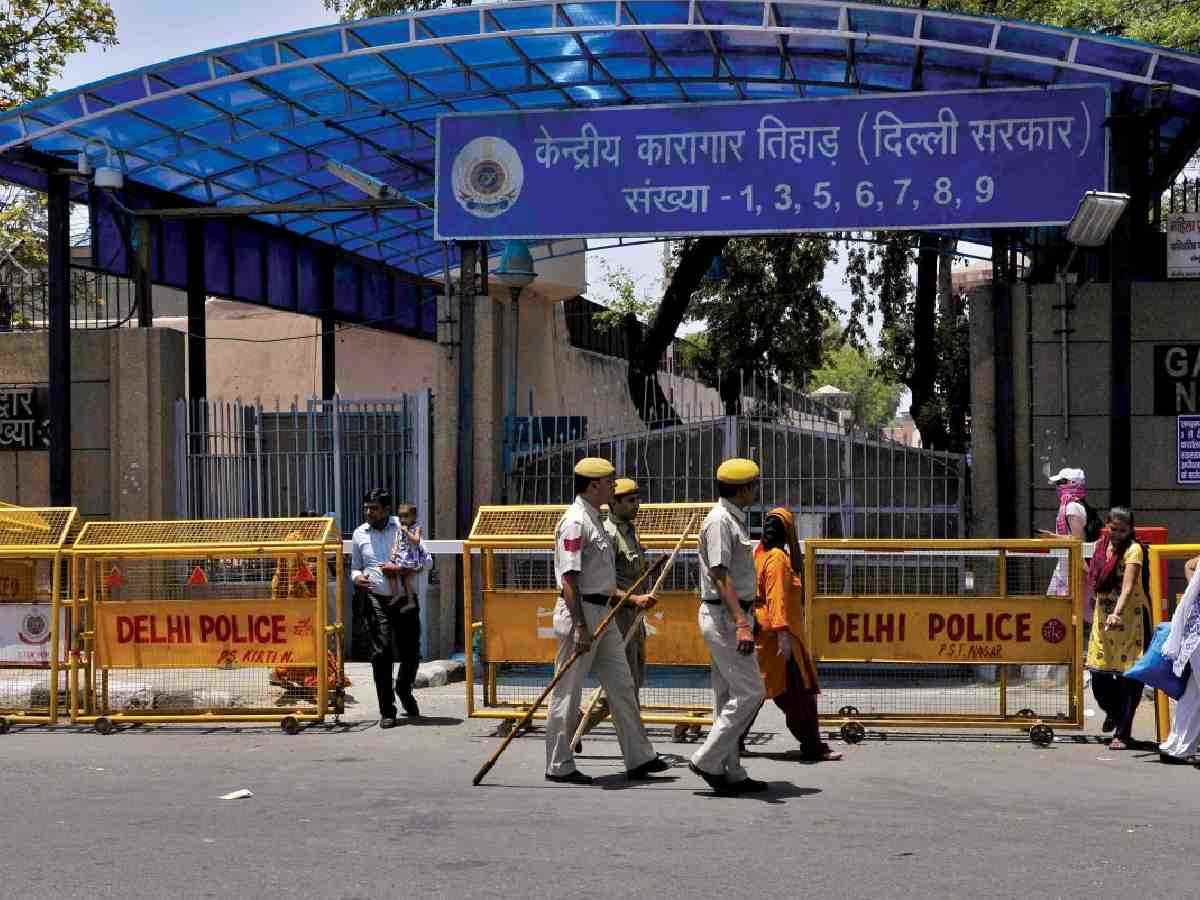
Even Tihar Jail, often described as India’s model prison, has not escaped controversy. On October 30, the Delhi High Court gave the Delhi government two weeks to form an inquiry committee and initiate action against officials accused of running an extortion racket inside the jail.
A bench of Chief Justice DK Upadhyaya and Justice Tushar Rao Gedela directed the vigilance department to appoint an inquiry officer to conduct a unified probe into the conduct of nine suspended officials.
The case stemmed from a petition by Mohit Goyal, who, after being incarcerated on cheating charges and later released on bail, exposed an organised extortion network involving jail staff and inmates.
Also read: Those responsible for Delhi blast will not be spared: Rajnath Singh
The bench observed that suspension alone was inadequate and that disciplinary proceedings must follow due process.
Earlier, in 2024, the High Court had ordered a judicial inspection of Tihar Jail, which revealed misuse of prison landlines for extortion calls and widespread procedural irregularities.