Goa nightclub fire: A devastating fire at the Birch nightclub in Goa’s Baga–Calangute belt on December 6 claimed 25 lives, according to local authorities. The blaze broke out on December 6 late night while the venue was packed with revellers.
Goa Chief Minister Pramod Sawant said that investigators had ruled out the initial suspicion of a gas-cylinder explosion. The fire is now believed to have been triggered by indoor pyrotechnics (“cold fireworks”) used during a Bollywood DJ performance.
Among the victims were four members of a family from Delhi and 21 staff workers. Most died due to smoke inhalation and suffocation; three suffered fatal burn injuries. Six others were hospitalised. Police have arrested four people, including the nightclub manager, while a non-bailable warrant has been issued for the absconding owner.
Eyewitnesses recalled chaotic scenes as people rushed to escape. Although the club’s main entrance was wide, the narrow bridge that serves as the only access route slowed the arrival of fire tenders. The 21 staff victims were from Jharkhand, Uttarakhand, Maharashtra, Assam, Uttar Pradesh, West Bengal, Karnataka and Nepal.
Delhi’s low compliance
The incident has renewed focus on Delhi’s own vulnerabilities. Only 52 hotels and 38 clubs in the capital hold valid Fire Safety Certificates (FSCs) out of more than 3,000 establishments, Delhi Fire Services (DFS) data show. This amounts to roughly 3% of the hospitality sector being compliant.
Industry observers point out that even these figures may be conservative. Online listings show between 2,000 and 3,000 registered hotels alone, while the number of clubs and bars is also estimated to exceed 2,000. According to the Excise Department, around 1,000 licensed hospitality establishments — restaurants, bars, clubs and hotels — were operating in the capital by the end of 2024. A significant number of unregistered venues continue across densely packed neighbourhoods, complicating oversight.
A DFS official reiterated that an FSC is mandatory for restaurants, hotels and clubs with a built-up area of 90 square metres or more.
Following the Goa fire, Delhi Police urged all hotels and clubs to immediately reassess their fire-safety preparedness.
“Establishments must ensure that extinguishers are in working order, emergency exits remain unobstructed, and electrical loads are properly monitored,” a senior officer said. Ahead of Christmas and New Year, police have increased patrolling in high-footfall nightlife zones. “Extra PCR vans, motorcycle patrols and foot patrols have already been deployed,” the officer added.
Requirements and loopholes
Under Rule 27 of the Delhi Fire Services Rules 2010, high-rise residential buildings, commercial premises, hotels, clubs, assembly venues, institutional establishments and mercantile structures must obtain a Fire Safety Certificate — commonly known as a Fire NOC — before operation.
Also Read: Delhi’s groundwater salinity rises sharply, placing the capital in a high-risk category
Hotels, clubs and, “resto-bars” are generally required to submit a valid NOC to secure an excise licence. The process involves DFS approval of building plans and a final inspection once fire-safety systems are installed.
Former DFS Director Atul Garg said that although NOCs are issued only after thorough on-site checks, many establishments alter their layouts afterwards in ways that compromise safety.
“The department that grants the NOC has no legal mandate to re-inspect the premises routinely unless there is a specific complaint or an incident,” he said. As a result, serious violations often remain undetected.
He pointed out a key regulatory gap, in Delhi, restaurants and cafés with a built-up area of less than 90 square metres are entirely exempt from the requirement to obtain a fire safety certificate. “For premises between 90 and 270 square metres, the rules mandate two staircases, each at least 1.5 metres wide,” he said. “For larger establishments above 270 square metres, one staircase must be a minimum of 2 metres wide, while the second must be no less than 1.5 metres.”
Garg said owners frequently add seating, partitions or mezzanines after obtaining the NOC, which can reduce escape widths or overload electrical systems. These changes, he emphasised, weaken the safety measures that were originally approved.
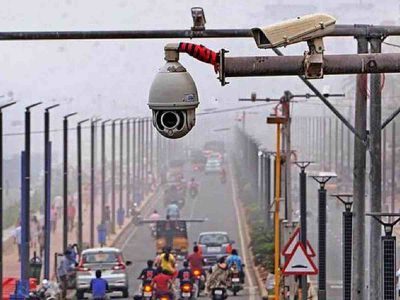
He called for a stronger post-occupancy monitoring mechanism, including unannounced inspections or real-time oversight through CCTV feeds, warning that without continuous enforcement the risks will persist. “This could be done either through a dedicated independent agency that conducts periodic checks or by mandating that all such establishments provide live CCTV feeds to a central monitoring cell for real-time oversight.”
Recent violations
Recent DFS inspections reflect wide-ranging lapses across the capital.
At Music and Mountains in Greater Kailash I, officials found unauthorised internal alterations, including the removal of fire-check doors that protect escape paths. A notice accessed by Patriot said the establishment had failed to maintain required compartmentation and exit safeguards.
Hotel Gemstone, under the Treebo franchise, was served notices in September and again on December 1 for repeated violations. DFS officials recorded issues such as unauthorised guest accommodation above the third floor, corridors that did not meet minimum width requirements, non-functional fire-safety equipment and inadequate segregation of different building occupancies. Several alarm systems and the fire pump were also found to be non-functional.
Hauz Khas shortcomings
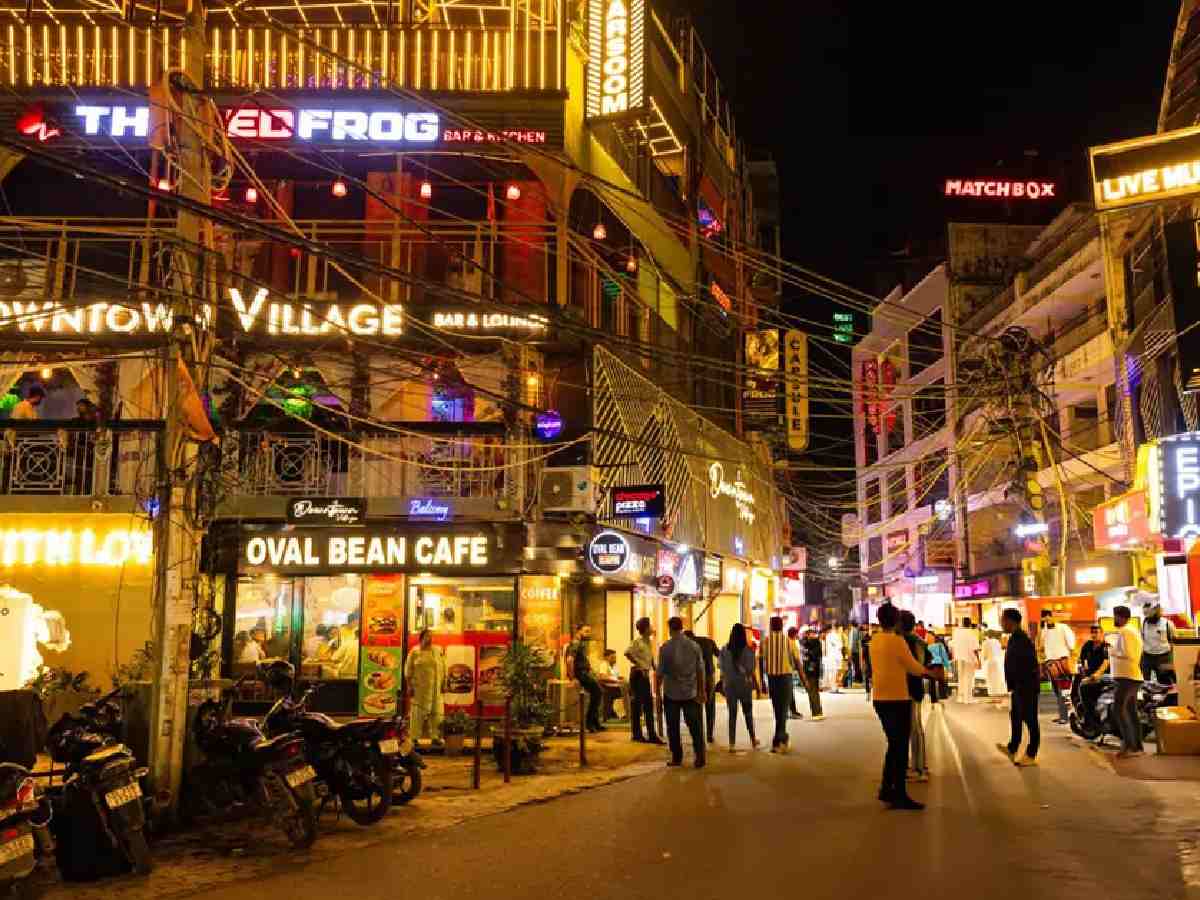
Hauz Khas Village remains among the most difficult clusters to regulate, with many eateries falling short of basic fire-safety norms.
At The Living Room, DFS officials noted multiple deficiencies. These included the absence of the mandatory six-metre-wide approach road, inadequate staircases and exit doors, and non-functional hydrants and pumps. The lack of turning space for fire tenders was highlighted as a major operational concern. Exit signage had also been removed in parts of the building.
Unfortunately, the six-metre-wide guideline violation exists across the board for not just the said establishment but for others as well. To put matters into perspective, another establishment by the name of Epic Resto Bar has also come under the scanner for not being able to adhere to the DFS’ guidelines.
A continuing hazard
The Birch nightclub tragedy has once again exposed how thin Delhi’s fire-safety net remains. With low compliance, unregistered establishments, structural constraints and little post-occupancy monitoring, large sections of the capital’s hospitality sector continue to sit on a tinderbox.