For decades, people from several African nations have made Delhi their home, often for as long as their visas allow. Yet, even within the national capital, daily life remains fraught with uncertainty, discrimination and fear.
From routine racism to the constant threat of police action, African migrants say they live under sustained pressure. Locals, they allege, are rarely supportive and often reluctant to engage with them, largely out of fear that police scrutiny may follow any association. As a result, many African residents find themselves socially isolated, interacting largely within their own communities.
Police crackdown on undocumented migrants
Throughout 2025, Delhi Police intensified its crackdown on individuals staying without valid documentation. In Dwarka district alone, police teams apprehended 361 people as part of enforcement drives.
The Anti-Narcotics Cell led the operations, deporting 109 individuals, followed by Dabri Police Station with 76 and the Special Staff with 54. Police stations in Uttam Nagar, Bindapur and Mohan Garden accounted for 48, 40 and 19 deportations respectively. Dwarka Sector 23 police station and the Anti-Auto Theft Squad deported six individuals each, while Chhawla Police Station processed three cases.
Among those apprehended, the largest group comprised Nigerian nationals, totalling 187 individuals, including 21 women. Police also detained 82 citizens of Bangladesh, including 20 women and 26 children. Others included 26 people from Ivory Coast, 17 from Myanmar, 11 from Ghana and 10 from Cameroon. Smaller numbers from Senegal, Liberia, Tanzania, Guinea, Uzbekistan, Benin, Sierra Leone and Uganda were also identified.
Also Read: Victim of BMW accident deliberately taken to distant hospital: Delhi Police tells court
Community members argue that the actions of a few have placed the entire African population under suspicion. Routine checks and heightened surveillance have left many on edge, reinforcing social segregation as locals increasingly avoid direct contact.
Nigerians under particular scrutiny
Uttam Nagar, a major residential hub for African nationals, particularly Nigerians, reflects the depth of discrimination they face. Near Holi Chowk, Nigerian residents say they are commonly referred to by a derogatory nickname whose meaning many only gradually came to understand.
Hawasi—loosely translating to hedonist—is a label locals admit has been used for generations, often eclipsing nationality itself.
“They are just known as that. There is no origin to it. Ever since we were children, we have used the word to refer to them,” said Rajkumar Gahrwal, a resident of Uttam Nagar.
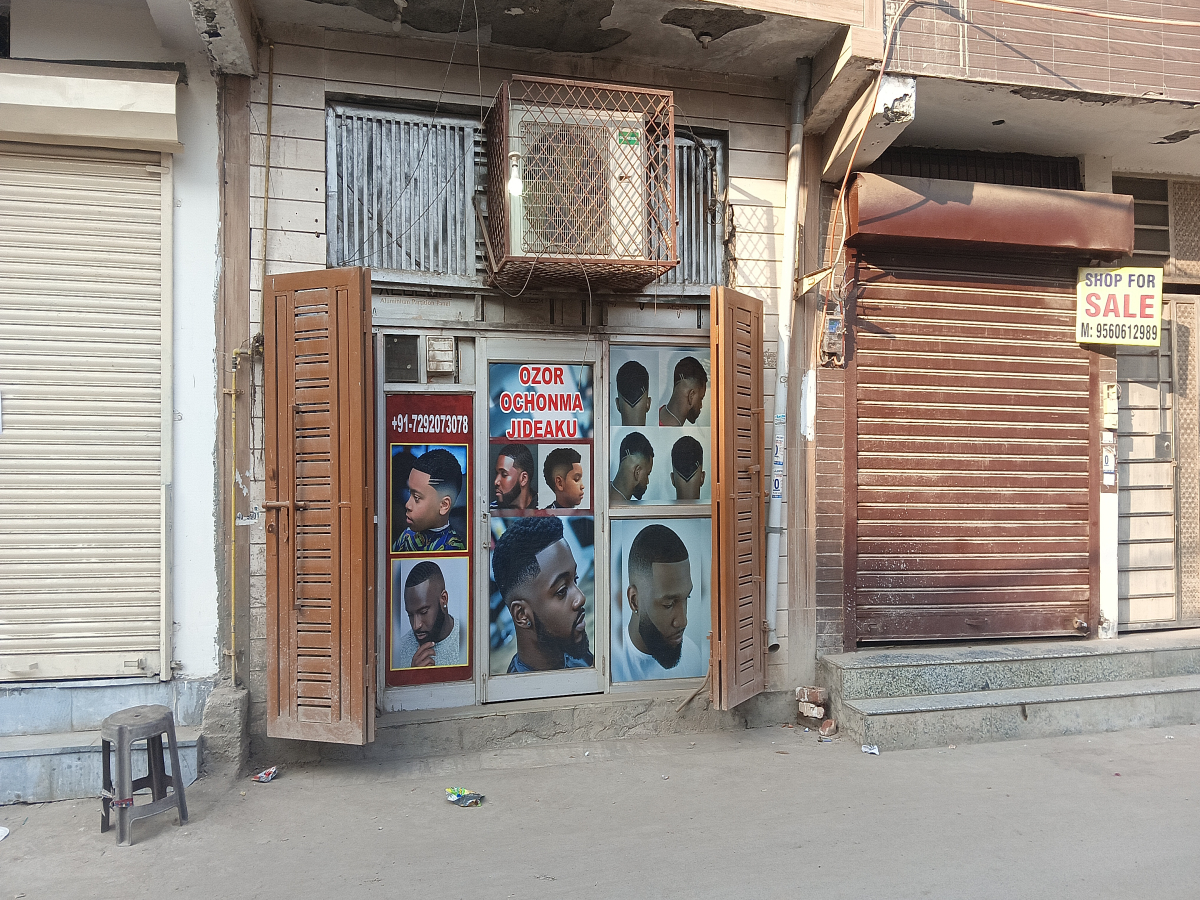
Discrimination extends beyond race to livelihoods. Ozor Ochonma Jideaku, a Nigerian resident who runs a small parlour in Uttam Nagar, said business has sharply declined over the past three months.
Sitting inside his dimly lit salon, Jideaku waits for customers who rarely arrive. His colleague Chidon Chiboy sits across on another barber chair, listening to music through earphones.
Jideaku has worked in Delhi for over five years but said he has never seen business this slow. “We try to do our bit and maintain the highest form of honesty that is possible. Nobody has walked in through the door apart from people from the Nigerian community. Sometimes people from other nationalities also show up, but it’s not often. The locals never show up. Earlier, they would still be a bit more cordial but ever since the crackdowns started gaining heat, the instances have dwindled a lot,” he said.
The parlour has only three barber chairs. “Even filling them up has become a difficult task. We barely charge anything as it is,” he added.
Raj (name changed), who runs a grocery shop nearby, said fear drives residents’ behaviour. “The police have been much more steadfast in recent months, carrying out raids to get illegal immigrants deported. They keep patrolling every day and make randomised visits to their homes. We do not have any problem with them, but the regular police visits mean residents are afraid of interacting with them, in fear of being apprehended themselves,” he said.
Deaths and despair
Police visits, residents say, have also brought grim discoveries. “Most of the African residents here are male who live with friends or by themselves. Sometimes there is no one to check up on them if things turn for the worse. A couple of days ago somebody died by suicide because he was scared of being apprehended by police and deported,” Chiboy said.
Earlier in August 2025, two Nigerian nationals were found dead in a rented flat in Uttam Nagar, within Dwarka district. The bodies were discovered on the first floor of a building behind a clothing warehouse in Chanakya Place.
The deceased were identified as Joseph and Chibitern. Police said the two were residents of Burari and had travelled to Chanakya Place the previous day. The flat had reportedly been rented by a man named Henry. Personnel from Dabri police station secured the area, and forensic and crime scene teams inspected the property.
“At first glance, no external injuries were found on the bodies. No foul play was observed,” a senior police official said.
As resentment and suspicion peak, residents claim that entire blocks once occupied by Nigerian tenants have emptied overnight. Locked doors now stand as reminders of a community living under fear, waiting for what comes next.
Read More: When pollution became permanent: how 2025 redefined public health in NCR