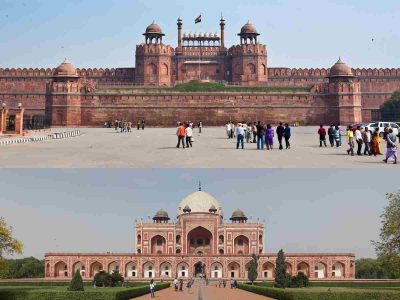
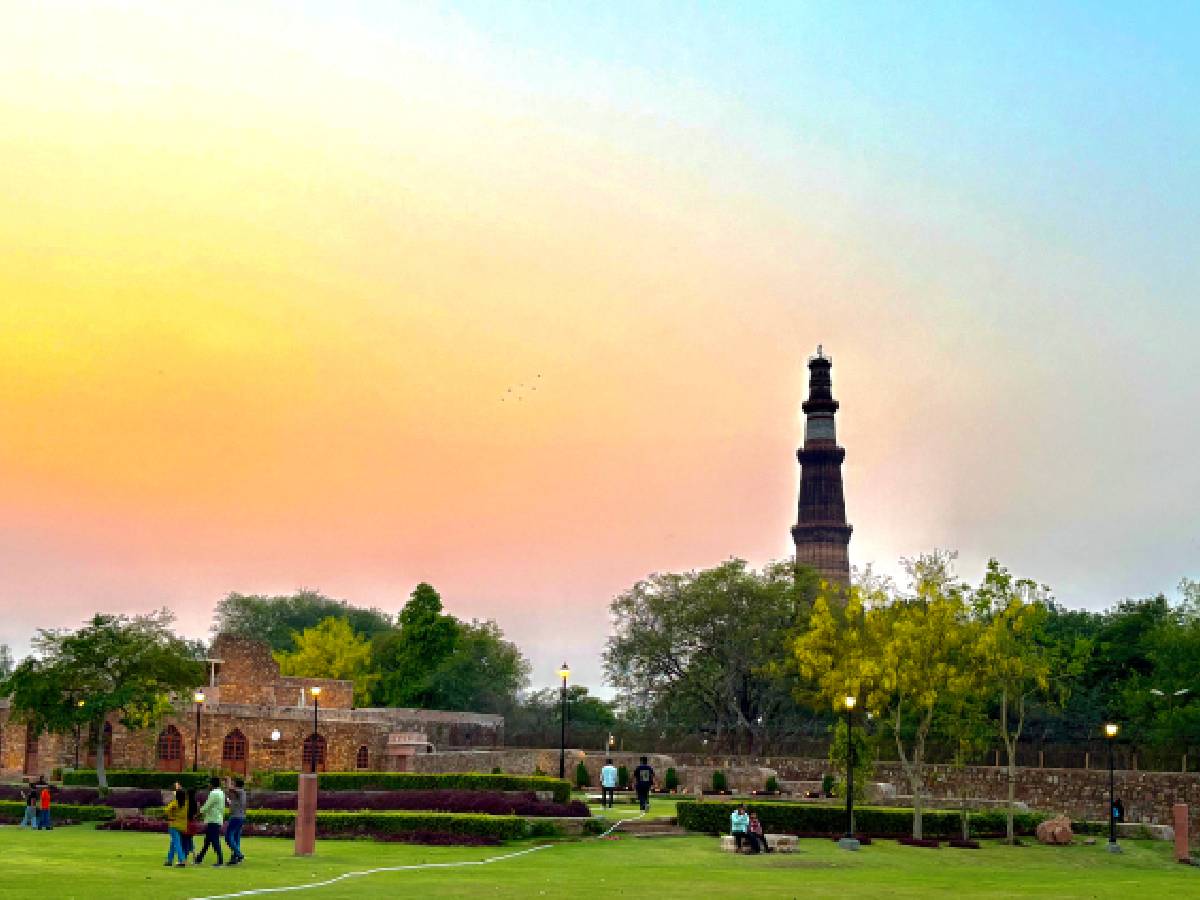
Delhi is often described as a living museum. From medieval tombs and Mughal gardens to stepwells and forgotten mosques hidden among modern colonies, the city carries layers of history spanning more than a thousand years. Home to over 1,200 recognised heritage structures and three UNESCO World Heritage Sites — the Red Fort, Humayun’s Tomb, and Qutub Minar — Delhi’s historic landscape reflects the rise and fall of empires, changing architectural styles, and evolving urban life.
The surviving historic urban landscapes of Mehrauli, Nizamuddin, Shahjahanabad, and New Delhi are now being proposed as a World Heritage City because of their outstanding universal significance. But alongside preservation comes another challenge: restoring monuments that have slowly crumbled under pollution, weather, neglect, and urban pressure.
Reflections of history
Preserving and restoring old buildings is important because these monuments reflect history. They help people understand the lives, traditions, and cultures of different eras. Old monuments also help trace the transformation of cities and societies over centuries.
They reflect prosperity, conflict, war, and even the economic conditions of their time. In a city like Delhi, heritage structures are not merely tourist attractions but visual records of civilisation itself.
In terms of tourism, maintaining architectural heritage also helps attract visitors who want to experience the spirit of a city through its architecture, stories, and public spaces.
Improving visitor experience
“Several heritage structures, especially those made of limestone, begin to deteriorate during the monsoon. We wanted to ensure that this does not happen. The restoration work included whitewashing and painting walls, chemical treatment to remove algae and black stains, and landscaping around monuments to improve their appearance and visitor experience. These restoration efforts at sites like Bijri Khan’s Tomb, Bara Lao Ka Gumbad, and the Mosque of Darwesh Shah are also aimed at reconnecting younger generations with Delhi’s forgotten history,” an ASI official told Patriot.
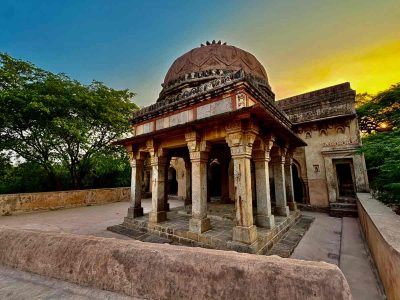
Over the last three years, several lesser-known monuments across the Capital have undergone restoration and conservation work by agencies including the Archaeological Survey of India (ASI), the Delhi Development Authority (DDA), the Delhi Jal Board, the DTTDC, and the Delhi government.
Reviving Metcalfe’s Dilkusha
Located in the heart of Mehrauli Archaeological Park near Qutub Minar, the restored Dilkusha Complex once served as the 1840s retreat of Thomas Metcalfe, who transformed old Mughal tombs into English-style leisure spaces, including the Boat House, Circular Dining Room, and Guest House.
Over the years, these structures had turned into crumbling ruins hidden beneath thick vegetation. Through coordinated efforts by the Delhi Development Authority, ASI, and other civic bodies, the heritage complex was restored within seven months and reopened to the public.
The restored Circular Monument now houses Café Stone, while the Metcalfe Guest House is being developed as an interpretation centre showcasing the history of the park and its monuments. The historic water body beside the Boat House, once filled with silt and debris, has also been rejuvenated through desilting, restoration of old water channels, fresh landscaping and plantation, and continuous water supply.
The restoration has transformed the area into one of Delhi’s most scenic heritage spaces, where Mughal ruins, colonial history, and ecological revival coexist.
Stepwell breathes again
Rajon Ki Baoli, built in 1506 and located inside Mehrauli Archaeological Park, is one of Delhi’s finest surviving stepwells and was historically used both as a water reservoir and a resting space during summers.
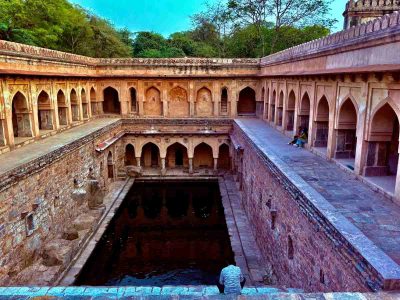
Also known as Rajon Ki Bain, the baoli is believed to have been named after the masons who worked there. Designed across four descending levels that gradually narrow towards the well, the structure features symmetrical arches lined with pillars and inner chambers that once served as resting spaces for travellers and workers.
Niches built into the walls for lighting oil lamps suggest that the baoli may also have hosted social and cultural gatherings in the past.
After remaining neglected for more than two decades, the ASI recently undertook extensive restoration and desilting work at the monument. Debris and stagnant water were removed, damaged stone structures were strengthened, and drainage systems were improved in coordination with the Delhi Jal Board.
The restoration has revived the architectural beauty and historic character of the baoli while also preserving an important example of medieval water-management systems in Delhi.
A forgotten legacy
Standing on a raised mound near Sri Venkateshwara Mandir Marg in RK Puram Sector 3, the Tomb of Bijri Khan is a nearly 600-year-old monument from the Lodi period, believed to belong to a nobleman of the Lodi court, though little is known about Bijri Khan himself.
The tomb features classic Lodi-era architecture with arched entrances, decorative brackets, battlemented parapets, and staircases leading to an upper terrace, while the main chamber houses five unidentified graves. A smaller adjoining structure from the Tughlaq period also stands beside it.
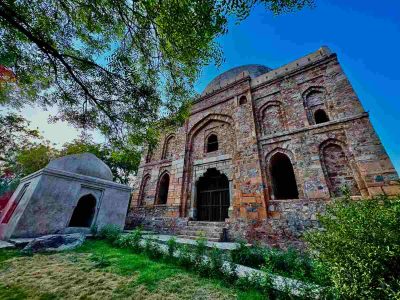
Declared a Grade A heritage monument by INTACH for its archaeological significance, the site had fallen into neglect for years, with encroachments and severe structural decay damaging its original character.
In 2021, INTACH signed an MoU with the Delhi government’s archaeology department under the Adopt a Heritage scheme to restore and preserve the monument. Chemical cleaning, structural repairs, and conservation work were carried out, and the restoration was completed in 2025, helping revive the legacy of one of Delhi’s lesser-known Lodi-era heritage structures.
Mughal grandeur restored
Shalimar Bagh, a historic Mughal-era garden complex in north Delhi, is laid out in the traditional charbagh style. Once known as Aizzabad Garden, it is believed to have been built by Emperor Shah Jahan in memory of Aizzun-Nisha Begum.
At the centre of the garden stands Sheesh Mahal, a palace constructed in 1653. The site holds immense historical significance as the place where Aurangzeb held his first coronation in 1658.
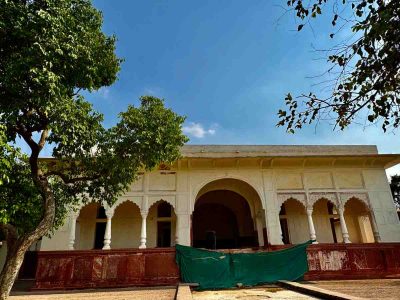
After decades of neglect, the palace was officially reopened on July 2, 2025, by Union Minister for Culture and Tourism Gajendra Singh Shekhawat. The restoration gained momentum after a visit by Lieutenant Governor Vinai Kumar Saxena in early 2024.
The ASI undertook structural restoration of the palace, while the Delhi Development Authority revived the surrounding Mughal-style gardens.
Today, the restored Sheesh Mahal once again reflects the elegance of Mughal architecture and garden planning that once defined imperial Delhi.
Hidden histories
Located on the outskirts of the ancient city of Siri beside Gulmohar Park, the lesser-known Lodi-era Mosque of Darwesh Shah carries centuries of history and mystery within its walls.
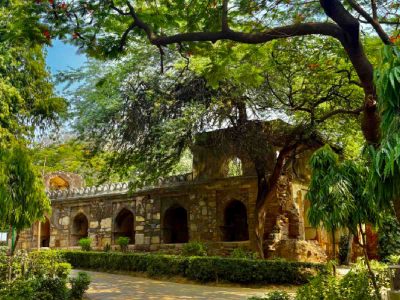
Dedicated to Darwesh Shah, whose identity remains unknown, the mosque is believed to have spiritual links with Sufi traditions, as the term ‘darwesh’ refers to a mystic or ascetic seeking a deeper connection with the divine.
Built with rubble masonry, the structure features recessed mihrab arches, elevated grave enclosures, and battlemented parapets characteristic of late Sultanate architecture. Historians believe it may have originally formed part of the Siri Fort complex before being modified during the Lodi period.
A popular legend links the mosque to Bahlol Lodhi, founder of the Lodi dynasty, who was allegedly blessed by the saint long before becoming Sultan of Delhi.
Preservation efforts
For decades, the mosque remained hidden beneath thick vegetation and suffered severe structural decay. INTACH first restored parts of the monument in 2009 ahead of the Commonwealth Games. In 2025, the ASI carried out another round of restoration, including repairs to crumbling limestone walls, chemical cleaning, and conservation work to preserve the structure.
The restoration of these monuments reflects a larger effort to preserve Delhi’s layered identity. In a rapidly expanding modern city, these historic structures continue to remind residents that Delhi’s past still survives in its stones, arches, gardens, and forgotten pathways.