As Delhi rolls out a new rehabilitation policy that promises housing to nearly four lakh slum-dwelling families, residents say they welcome redevelopment but remain anxious about livelihoods, schooling and displacement.
Sitting on a pavement in Shashi Garden in Mayur Vihar, a group of students discusses the government initiative that could reshape their future.
The conversation revolved around Delhi’s newly approved slum redevelopment policy and what it might mean for the neighbourhood they had called home for years.
“If the government wants to redevelop the area, it should do so here itself,” said one of the students. “Our schools are here and so are our friends.”
Another quickly joined in.
“We have grown up here. Moving us somewhere else would affect our education and our social lives. We want development, but we do not want to lose our connection to this neighbourhood.”
A young resident standing nearby added another layer to the concern, pointing to everyday survival. “People often think only about houses, but for young people, there are schools, coaching centres, friends and jobs nearby. All of that matters,” he said.
For many residents, moving elsewhere would mean losing easy access to work, with domestic workers and drivers largely employed in nearby government offices and neighbourhood. “Most of us earn our living close to where we stay. If we are moved far away, the cost and time of commuting could make it difficult to keep our jobs,” said a resident, reflecting a concern shared by many families in the settlement.
The housing promise
The discussions unfolding in Delhi’s slum settlements follow the approval of the Slum and JJ Cluster Rehabilitation and Relocation Policy, 2026, during a high-level meeting chaired by Union Home Minister Amit Shah earlier this month.
आज का दिन दिल्ली के झुग्गी-झोपड़ी में रहने वाले बहनों-भाइयों के लिए महत्त्वपूर्ण दिन है, ‘दिल्ली स्लम एवं झुग्गी झोपड़ी पुनर्वास एवं पुनर्स्थापन नीति, 2026’ को आज अंतिम रूप दे दिया गया है।
प्रथम चरण में PPP मॉडल के तहत DDA और DUSIB 45 दिन के अंदर 5 JJ cluster का टेंडर जारी… pic.twitter.com/VSqxNHfVjy
— Amit Shah (@AmitShah) June 16, 2026
The policy aims to rehabilitate nearly four lakh families through a public-private partnership (PPP) model and could eventually benefit around 20 lakh residents living in JJ clusters across the capital.
One of its most significant provisions is the extension of the eligibility cut-off date from January 1, 2015, to January 1, 2025. Officials say the move will bring a significantly larger number of residents within the ambit of rehabilitation and reduce disputes that delayed earlier projects.
The decision was taken at the 36th board meeting of the Delhi Urban Shelter Improvement Board (DUSIB), chaired by Chief Minister Rekha Gupta at the Delhi Secretariat, with Urban Development Minister Ashish Sood, Chief Secretary Rajiv Verma and senior officials in attendance.
“दिल्ली में 1 जनवरी 2025 तक बनी सभी झुग्गी बस्तियों के निवासियों को पुनर्वास का लाभ मिलेगा।”
आज दिल्ली शहरी आश्रय सुधार बोर्ड (DUSIB) की 36वीं बैठक में लिया गया यह ऐतिहासिक निर्णय माननीय गृह मंत्री श्री अमित शाह जी द्वारा अंतिम रूप दी गई ‘दिल्ली स्लम एवं झुग्गी झोपड़ी पुनर्वास… pic.twitter.com/grmoDCQYJh
— Rekha Gupta (@gupta_rekha) June 23, 2026
“Nearly 20 lakh people living in Delhi’s JJ clusters stand to benefit after the city government decided to extend rehabilitation benefits,” Gupta said. She said the decision would strengthen the commitment to “Jahan Jhuggi, Wahan Makaan (Where there is a slum dwelling, there will be a house).”
The Chief Minister said eligible beneficiaries would be provided multi-storey flats equipped with essential civic amenities, and rehabilitation would be undertaken as far as possible within or near existing settlements to minimise disruption to livelihoods and social networks. The proposed colonies will include schools, anganwadi centres, health facilities and playgrounds.
Preserving communities
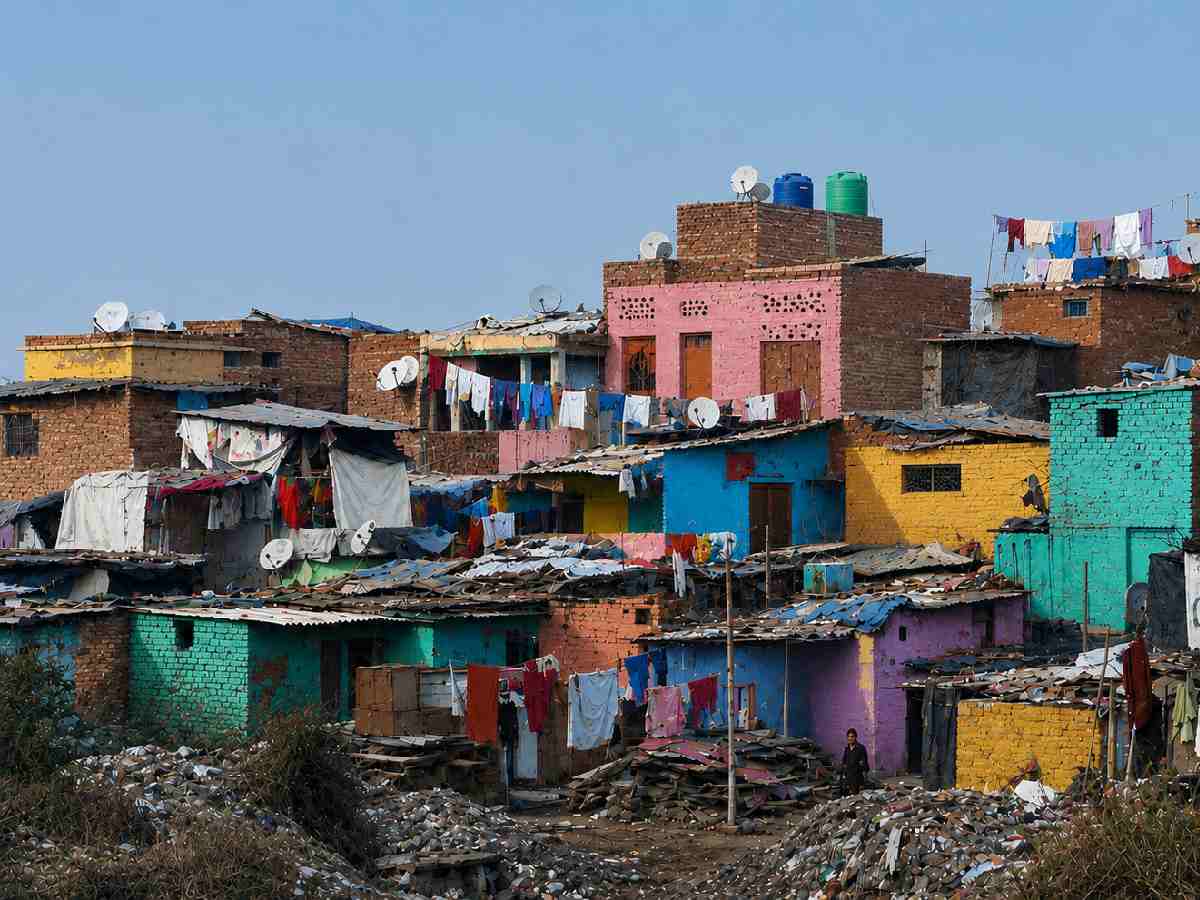
In Shashi Garden, where houses stand shoulder-to-shoulder along narrow lanes, many families have spent decades building homes despite limited civic infrastructure. At a small shop tucked between rows of houses, Dharampati attended to customers while discussing the government announcement.
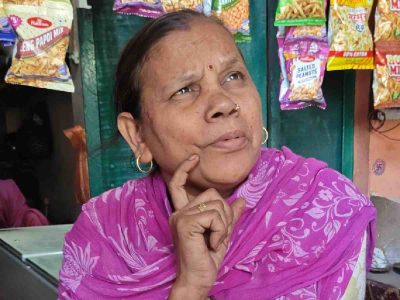
“When we first came here, there was almost nothing,” she said. “Over the years, we saved money and built our home little by little. If redevelopment takes place, the government should clearly tell people where they will stay during construction and for how long.”
For Dharampati, housing is more than bricks and mortar. “Our relatives, neighbours and children’s schools are all here. A better house is welcome, but people should remain connected to the communities they have built over decades.”
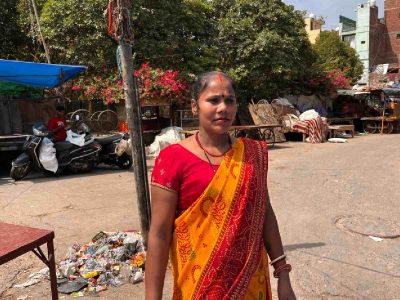
Manju Devi, a homemaker who migrated to Delhi from Bihar’s Begusarai district 20 years ago, said residents supported redevelopment but feared displacement. People from different regions, religions and social backgrounds had built a close-knit community in the settlement over the years, she said.
“We also want better roads, parks and sanitation,” Manju said. “But if the government redevelops the slum, it should ensure that the sense of fraternity and community remains intact.”
The concerns are not unique to Shashi Garden. Similar conversations are taking place in settlements across the city after the Delhi government approved a policy that promises permanent housing to nearly four lakh families living in jhuggi-jhopri (JJ) clusters.
Questions remain
Across the Yamuna, in Seelampur’s Sriram Colony, residents greeted the announcement with cautious optimism.
“We want development in this area,” said Haji Mehardeen Rangrez, a resident of the locality. “But every government comes with promises, and then nothing really changes. Until work actually begins on the ground, people will find it difficult to trust these assurances.”
Having witnessed multiple rehabilitation announcements over the years, Rangrez said residents were no longer swayed by promises alone. “People simply want clarity about what is going to happen and how it will affect their lives.”
Tahir Ali, 48, questioned whether policymakers fully understood the importance of location for working-class families. “Getting a permanent house is a good thing, but livelihoods are equally important,” he said. “If people are moved far away, what will happen to their jobs and businesses? The government should answer those questions as well.”
Like many residents of Seelampur, Ali depends on work opportunities located close to the settlement. “Most families here depend on nearby work. Housing and employment cannot be separated.”
Awaiting clarity
In a slum cluster near Lajpat Nagar, residents welcomed the promise of permanent housing but expressed concerns about eligibility criteria. “The biggest question is who will be considered eligible and who will not,” one resident said. “In the past, many families were left out of rehabilitation lists, and people do not want that to happen again.”
Another resident described permanent housing as a dream shared by almost every family in the settlement. “A permanent home is everyone’s dream. But residents will feel reassured only when they receive clear guarantees that they will actually benefit from the scheme.”
Another resident and community leader stressed that while redevelopment was welcome, execution remained the key concern.
“It is a good step, but we want proper rehabilitation with complete clarity on our future — where we will be shifted, how long it will take, and whether our livelihoods will remain intact,” said Vijay Kumar, a resident of JJ Basti in Sultan Puri.
Their concerns are particularly relevant because earlier rehabilitation schemes often triggered disputes over beneficiary lists, leaving some families excluded while others qualified for housing.
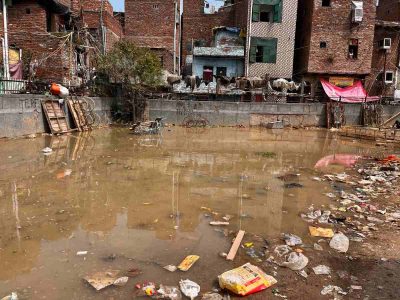
In the Jal Vihar slum area of Lajpat Nagar, anxiety runs deep. “People are anxious because they do not know what comes next. Families want clear information about rehabilitation, timelines and eligibility before any relocation takes place,” said Reema, 45.
For many, the concern is not redevelopment itself, but the prospect of losing a community built over decades.
“We want better housing and better living conditions, but we also want reassurance that families will not be left behind during the transition,” said another resident, Anjali Devi.
Waiting for proof
In Yamuna Khadar, where thousands of families live along the floodplains, residents said they would judge the new policy by its implementation rather than its promises.
“We have heard announcements before, but very little has changed,” said a resident. “People will believe in the project when they see construction begin and houses being handed over.”
Also Read: Delhi: Waterlogging makes a comeback ahead of monsoon
Many acknowledged the transformative potential of redevelopment if executed properly. “If the government can provide proper housing, sanitation and basic services, it will improve the lives of thousands of families. The challenge is making sure the promises are fulfilled.”
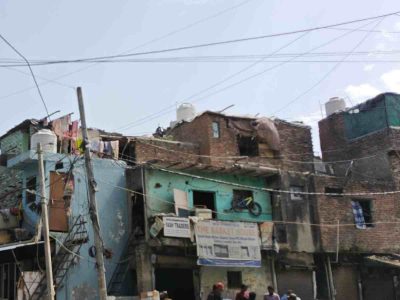
The sentiment was echoed by several residents who said they were willing to cooperate with redevelopment efforts provided authorities maintained transparency and kept communities informed throughout the process.
Slow progress
Pushkar Pawar, a Town Planner with the MCD, said Delhi’s slum rehabilitation projects have historically been slowed by fragmented land ownership, lengthy approval processes, legal disputes, funding constraints and difficulties in identifying beneficiaries.
“In many cases, projects progressed slowly because multiple agencies were involved and there was no clear, unified framework for implementation,” he said. “Another challenge was that relocation-based approaches often disrupted livelihoods, making communities reluctant to move from their existing locations.”
According to Pawar, the new policy addresses some of these longstanding issues through a clearer rehabilitation framework, an expanded eligibility window and greater private-sector participation.
“These measures have the potential to accelerate project implementation and bring greater certainty to both residents and developers,” he said. “However, the success of the policy will depend not only on constructing housing units but also on ensuring that rehabilitation projects are integrated with transport networks, employment opportunities, schools, healthcare facilities and other essential services.”
On the government’s promise of “Jahan Jhuggi Wahan Makan,” Pawar said in-situ rehabilitation remained the preferred planning approach wherever feasible.
“From an urban planning perspective, in-situ rehabilitation is both desirable and necessary because it minimises displacement and allows residents to continue accessing employment opportunities, schools, healthcare facilities and community networks,” he said.
He observed that Delhi’s land constraints presented significant challenges. “Many jhuggiclusters are located on high-value land near transport corridors, commercial centres or major public infrastructure projects, making redevelopment a complex exercise. The policy attempts to address this challenge by encouraging higher-density redevelopment and the use of PPP models to optimise land use while accommodating existing residents.”