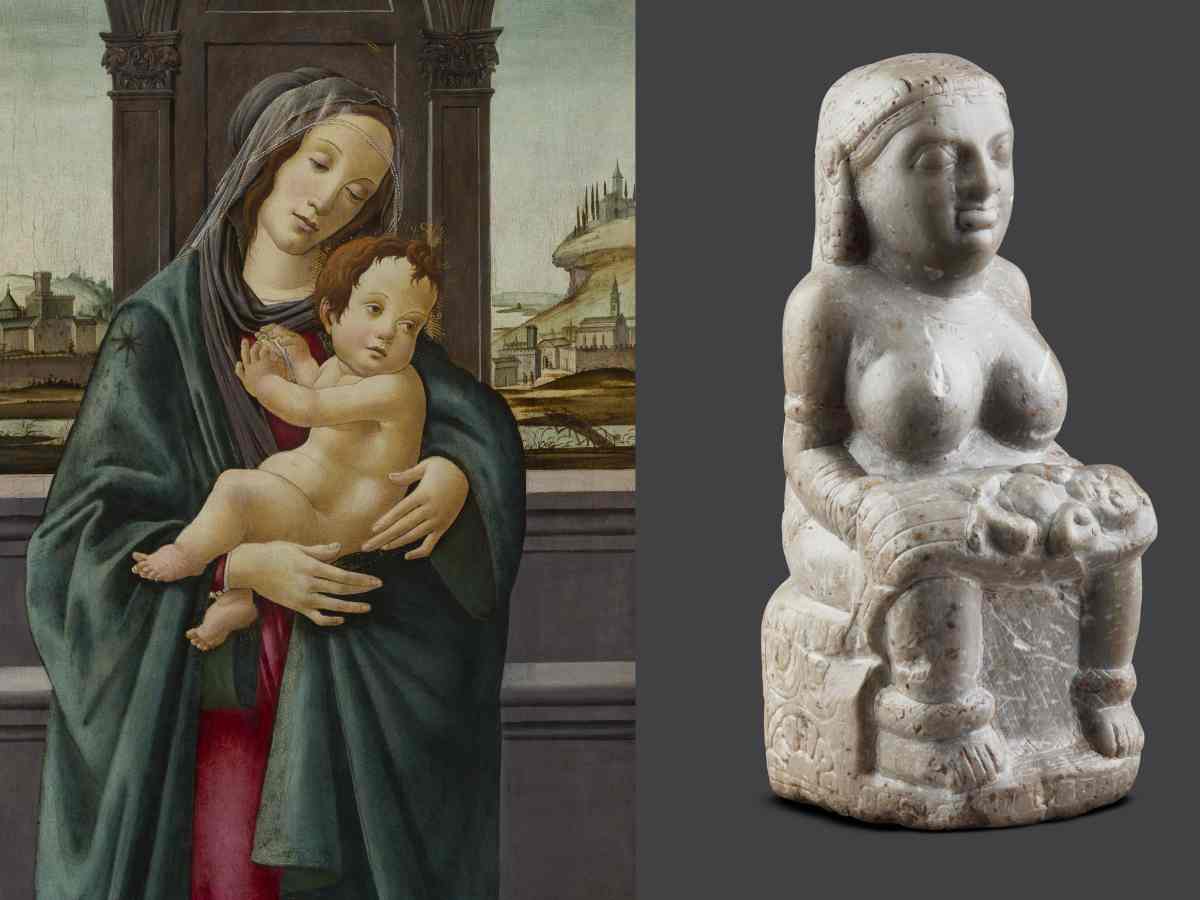
As visitors enter the Humayun Tomb Museum in New Delhi, they are greeted by a quiet garden of marble, sandstone, schist and terracotta sculptures before encountering a striking burst of colour — an exquisite Renaissance painting by Sandro Botticelli. The deliberate curatorial contrast sets the tone for One Mother, Many Mother Tongues, an ambitious exhibition that uses one of humanity’s oldest visual motifs — the mother and child — to explore how cultures across continents have borrowed from, transformed and reimagined one another over nearly five millennia.
The exhibition, which started on June 22 and will continue till August 8, is the result of a rare collaboration between India and Italy, bringing together masterpieces from 17 museums and collections. Beyond the remarkable objects on display lies a larger conversation about identity, globalisation and the ways in which people interpret shared images through their own cultural experiences.
Professor Naman Parmeshwar Ahuja, curator of the exhibition, says the project grew out of an academic inquiry that has acquired renewed significance in an increasingly interconnected world.
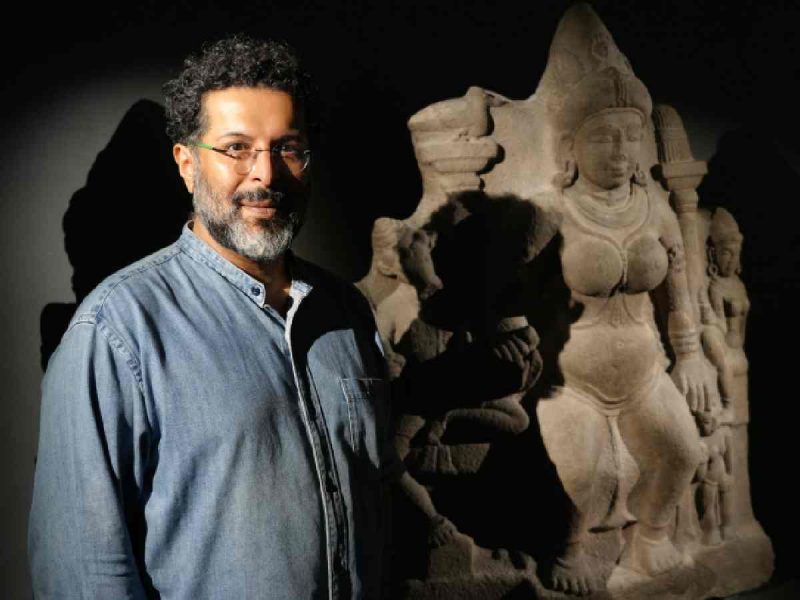
“When you work in media, advertising or communication design, you are always taught that a single image should appeal to different sections of society,” Ahuja tells Patriot.
“About 10 years ago, I wrote a paper called One Mother, Many Mother Tongues. It became a case study for understanding how the mother-and-child motif has been understood by different communities over the last 5,000 years.”
His research centred on second-century Peshawar, then a thriving crossroads where Greeks, Central Asians, Egyptians, Zoroastrians, Lebanese and Indian communities lived side by side. While art historians identify the sculptures as representations of Buddhist goddess Hariti, contemporary viewers tend to interpret them differently.
“For Hindus living in Peshawar, she was Parvati. The Lebanese and Egyptians regarded her as Isis or Demeter,” Ahuja explains. “The same image appealed to diverse populations in their own mother tongues. They were all reading the same image differently.”
That historical observation forms the intellectual backbone of the exhibition. At a time when globalisation fuels anxieties about cultural homogenisation, Ahuja argues that societies have always adopted shared visual languages without surrendering their own identities.
“Today, in the age of post-colonialism, where English has become the lingua franca, many people worry about losing their culture,” he says. “But history shows that no culture was lost in such a way. We have always used global languages to express our own identities. The same image can speak to everyone, but no two people will read it in exactly the same way.”
Masterpieces in conversation
The exhibition spans some of the most significant phases of Indian art history, bringing together objects from the Harappan civilisation, the Kushan period, medieval temple traditions and regional artistic traditions from Gujarat, Rajasthan, Bengal, Andhra Pradesh and Tamil Nadu. These works are displayed alongside ancient Etruscan sculptures and Renaissance masterpieces from Italy.
“In India, we are often told what was happening here when something important was happening in Europe,” Ahuja observes. “This exhibition reverses that perspective.”
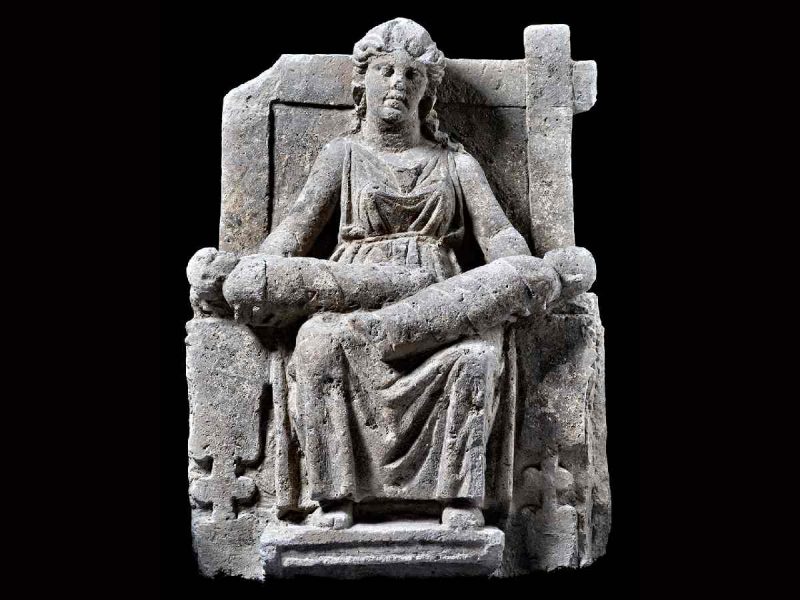
The dialogue extends beyond artistic chronology to shared ideas about motherhood, protection, fertility and the evolution of religious imagery. Ancient images of the Indian Matrikas and Hariti converse with representations of the Etruscan goddess Mater Matuta.
The exhibition also raises questions about gender, motherhood and representation.
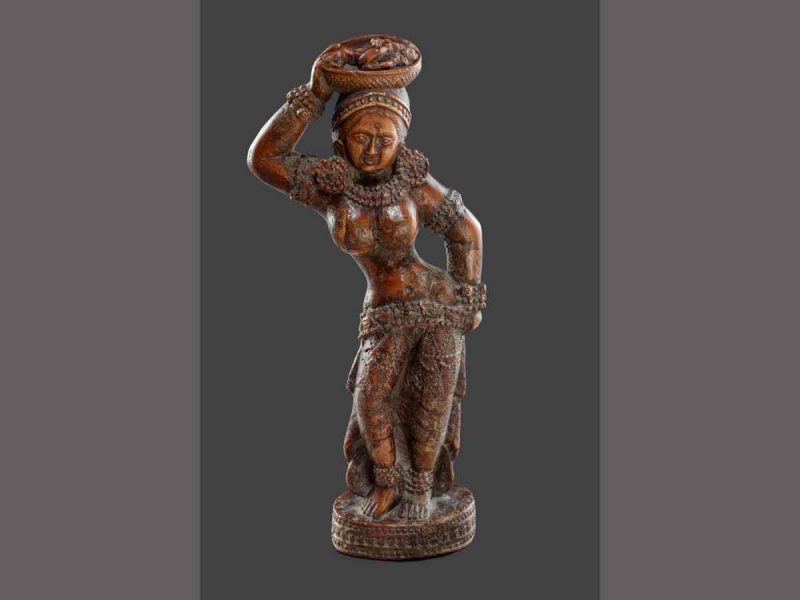
Among Ahuja’s favourite exhibits is a delicate ivory sculpture that offers an unusually intimate portrayal of motherhood.
“The woman doesn’t know whether to protect her daughter or preserve her modesty because her skirt is slipping while she is trying to save the child,” he says. “It is such a deeply human moment.”
The sculpture also stands out because it celebrates something rarely seen in ancient art.
“It depicts a girl child,” he points out. “Most of these traditions show little boys with their mother-goddesses. This is one reason this piece is so special.”
Another favourite is a Kushan-period bronze from the Allahabad Museum depicting a leopard-faced mother tenderly playing with a baby mongoose.
“The emotional quality is extraordinary,” the curator says. “The relationship between the animal mother and the mongoose child creates this remarkable interspecies bond. It is playful, affectionate and completely unique.”
Yet the exhibition’s most striking curatorial pairing is the emotional dialogue between Botticelli’s celebrated Madonna and Child and the fierce Hindu goddess Chamunda.
“Botticelli’s mother knows her child will save the world, but she also knows he will die,” he says. “Chamunda, on the other hand, is a mother who will destroy every enemy rather than letting her child perish. The emotional dialogue between these two mothers fascinated me, and I felt it was important to bring them together.”
Cultures in conversation
Among the visitors is Arjun Dev, 32, who holds a doctorate in history from Jawaharlal Nehru University. He feels the exhibition succeeds in making complex historical exchanges accessible to a wider audience.
“It helps people understand that cultures have never existed in isolation,” Dev tells Patriot. “When you walk through the galleries, you realise that ideas, artistic traditions and religious symbols have travelled across regions and civilisations for centuries. The exhibition shows that cultures have constantly borrowed from one another without losing their own identities.”
For Neha Sharma, an art enthusiast from Vikaspuri, the exhibition offers much more than an opportunity to admire celebrated works of art.
“I came expecting to see beautiful artworks, but I ended up spending a lot of time reading the stories behind them,” she says. “The exhibition makes you realise that the image of a mother means different things to different cultures, yet the emotions remain universal. It is rare to find an exhibition that is visually stunning while also making you think about history, identity and shared human experiences.”
Beyond national boundaries
For co-curator Andrea Anastasio, Director of the Italian Cultural Centre in India, the exhibition is more than an exhibition of artworks; it is a dialogue between two ancient civilisations that have long expressed similar ideas through different artistic traditions.
“We wanted visitors to discover that images travel just as people and ideas do,” Anastasio tells Patriot. “The mother-and-child motif appears across cultures, yet every society transforms it according to its own beliefs, history and artistic language. That is what makes this exhibition so fascinating.”
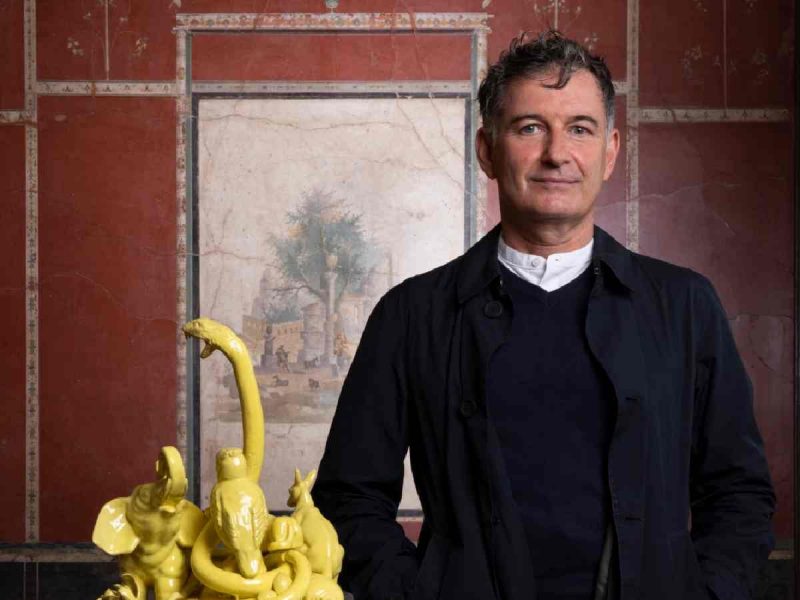
Having spent decades studying Indian philosophy, languages and visual culture, Anastasio believes the exhibition demonstrates that cultural identity is strengthened — not diminished — through exchange.
“It is easy to think of traditions as isolated, but history tells a different story,” he says. “Art has always crossed borders. Artists have always borrowed, adapted and reinvented ideas. When visitors see Indian sculptures alongside Etruscan and Renaissance masterpieces, they begin to understand that cultural dialogue has always been part of civilisation.”
He says the collaboration reflects the enduring artistic ties between India and Italy. “This exhibition is an invitation to look beyond national boundaries and appreciate how our histories intersect. I hope it opens the door to many more collaborations between our museums, scholars and artists.”
‘No small achievement’
Organising the exhibition was no easy task, says Ahuja.
“It was extremely challenging. Our institutions rarely participate in collaborations of this scale. Bringing together seventeen museums and collections for one exhibition is no small achievement,” he says.
The logistical effort involved official approvals, international loan agreements, insurance policies, specialist art handlers, conservators, security personnel and curators working together across two countries.
The exhibition reflects a broader cultural partnership between India and Italy, involving institutions such as the National Museum in New Delhi, the Indian Museum in Kolkata, the Government Museum in Mathura, the Allahabad Museum, the Maharaja Sayajirao University Museum in Baroda, Museo Etrusco ETRU in Rome, Museo Provinciale Campano di Capua and Museo Stibbert in Florence.