
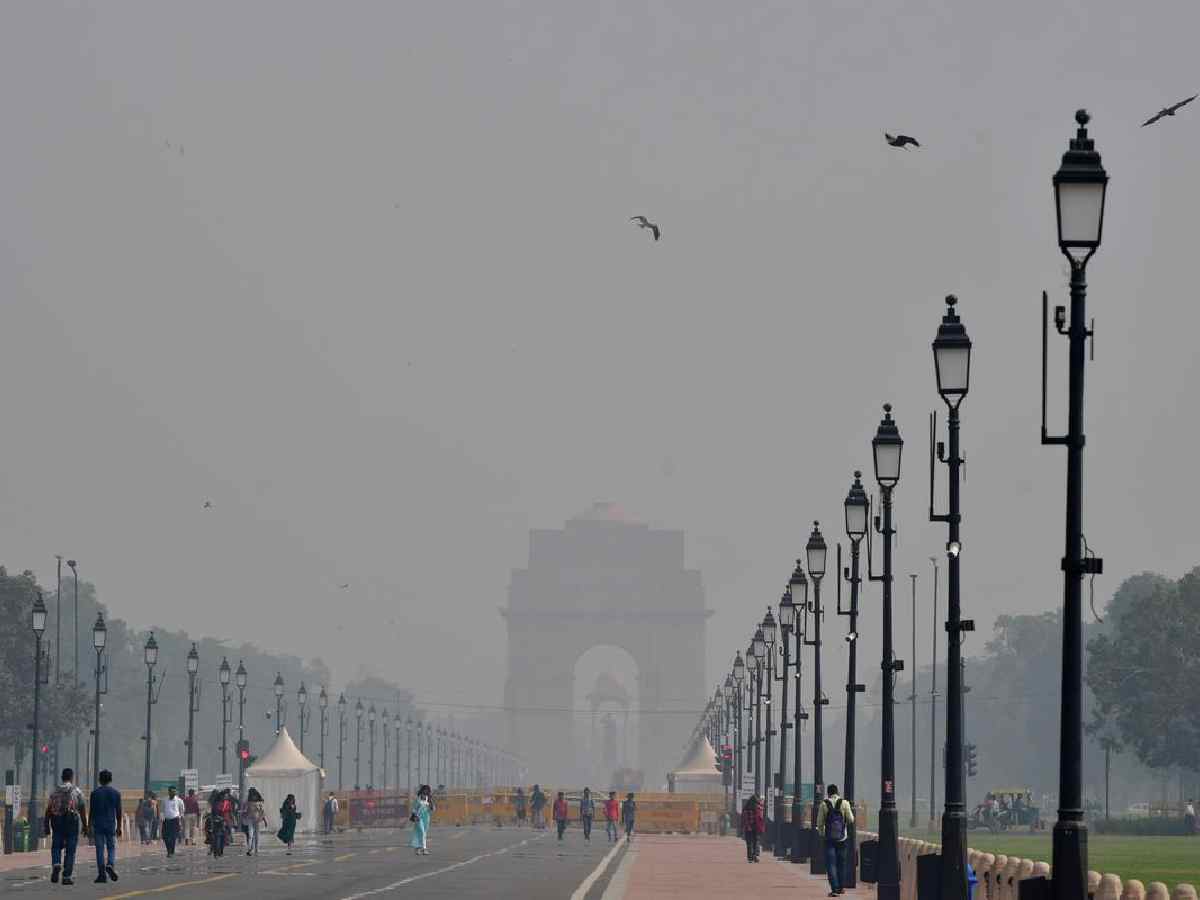
Delhi continued to struggle with poor air quality in 2025 despite a marginal improvement over the previous two years, recording 200 good air quality days and 165 bad air quality days, according to data tabled in the Lok Sabha by the Ministry of Environment, Forest and Climate Change.
The data, submitted in response to a starred question on measures to curb air pollution, shows that Delhi recorded 79 ‘Good’ AQI days, 121 ‘Satisfactory’ days and 86 ‘Moderate’ days in 2025, taking the total number of good air quality days to 200. The city also witnessed 71 ‘Poor’, eight ‘Very Poor’ and no ‘Severe’ air quality days, adding up to 165 bad air quality days.
The figures indicate a modest improvement compared with the previous two years. In 2024, Delhi recorded 207 good days and 159 bad days, while in 2023 it registered 206 good days and 159 bad days. Although the number of good air quality days dipped slightly in 2025, the city did not record any “severe” AQI day during the year, according to the ministry’s data.
In its reply, the Centre said air quality management in the National Capital Region is being overseen by the Commission for Air Quality Management (CAQM), constituted under the Commission for Air Quality Management in NCR and Adjoining Areas Act, 2021. The ministry said the CAQM has issued 101 statutory directions and 17 advisories/executive orders to NCR states and agencies, while compliance is being monitored through periodic reviews.
The government said the National Clean Air Programme (NCAP) is being implemented in 130 non-attainment and million-plus cities across 24 States and Union Territories. It added that ₹16,423.56 crore has been released to cities for implementing clean air action plans and that 108 cities recorded a reduction in PM10 concentrations in 2025-26 compared with 2017-18, with 14 cities meeting the National Ambient Air Quality Standards, up from six in 2017-18.