For students living in PG accommodations in and around Satya Niketan, housing problems go far beyond high monthly rents. Electricity, gas, maintenance, food, deposits, penalties and other charges add to the amount they eventually spend each month.
Some students say they are now exploring rented houses or shared flats instead of staying in PGs, but the alternatives are not necessarily affordable either — beds in some PGs can cost around Rs 18,000 a month. Others have struggled to get their security deposits back when they decide to leave.
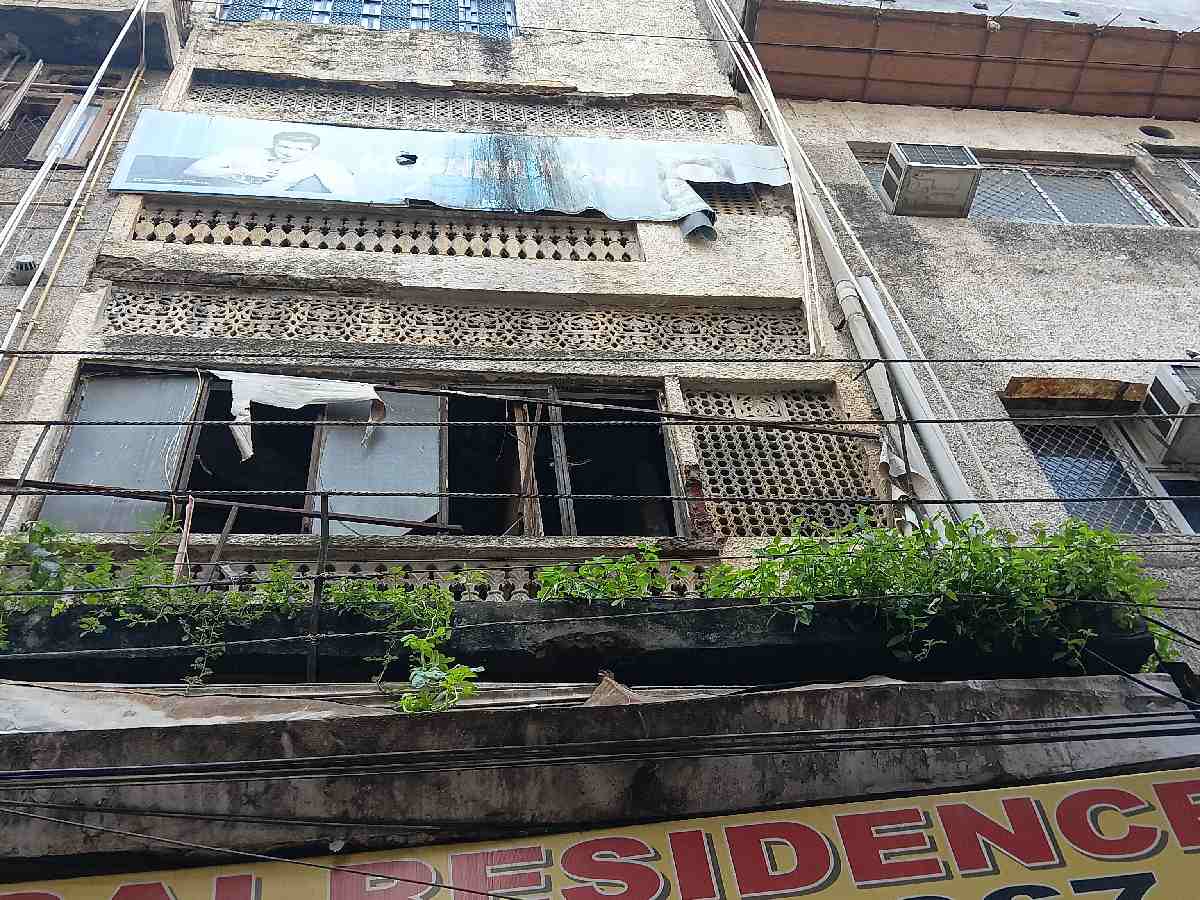
The concerns have become particularly pronounced following the September 6 building collapse in the area, which killed seven people, including five students. Students allege that some PG owners are now taking steps to avoid scrutiny while continuing to charge residents high rents and additional fees.
PG registration
Siddhi Deep Srivastava, 21, who stays in a PG near the collapsed structure, alleged that her accommodation is not registered as a PG. She claimed that despite this, the owner has continued to increase the rent and impose additional charges on residents.
“My accommodation is not registered as a PG, and the owner also removed his board during the collapse to avoid media attention and accountability,” she said.
According to Srivastava, residents are being charged Rs 12 per unit for electricity, while the bill they receive shows a rate of around Rs 8.5 per unit. She said students living in the property have questioned the difference but still face the additional power cost.
She alleged the situation has become more complicated after the building collapse. Srivastava said the owner asked residents to vacate the premises for around two to three weeks and return only after inspections of PGs in the area were completed.
She further alleged that gas stoves and cylinders were removed from the premises during this period so that the property would not appear to be operating as a PG during inspection. Srivastava said, “We were instead asked to eat outside while the accommodation was being kept without the usual cooking arrangements.”
“For students dependent on their PGs for everyday meals, this created an additional burden,” she said. Many students have alleged that they were forced to spend money on food outside even as they continued to pay for their accommodation.
Rent increase
At the same time, Srivastava claimed that the rent was increased despite the disruption. She also alleged that residents are being charged Rs 500 per person for gas.
“Students are being charged Rs 500 per person for gas even after the collapse,” she said.
The situation has created considerable tension between residents and the owner, with students who questioned the charges allegedly being shouted at or pressured to comply.
The concerns raised by Srivastava also highlight a broader problem faced by students living in private accommodation around Delhi University campuses and the lack of affordable alternatives.
With hostel accommodation limited, students who come to Delhi from other cities and states often have little option but to depend on PGs, rented rooms or shared accommodation. This dependence, students say, leaves them in a weak position when disputes arise over rent, utility charges, deposits or other payments.
Deposit disputes
Another student, Mayank, 20, spoke about the difficulty students face when they decide to move out of a PG. According to him, some students have changed accommodation without the PG owners returning the owed money.
Also Read: After Satya Niketan collapse, fears mount over unsafe buildings
Mayank said that in some cases, students have been told that if they want to leave, they are free to do so, but their security deposits would not be returned.
He said, “My PG owner told me if I want to vacate the room, I can surely do that, but I cannot expect to get my deposit money back. Now tell me what I can do; I have given three months’ advance, and he has refused; it is around Rs 50,000 deposit.”
For students who have already paid substantial amounts as deposits, losing that money can make shifting accommodation financially difficult. A student may have to pay a new security deposit, advance rent, and moving expenses while waiting for money from their previous accommodation.
Mayank said this has become an important consideration for students looking for alternative housing. Even when they are unhappy with their current PG, they may hesitate to leave because they may lose their deposit.
Cash rent payments
Students also raised concerns about how rent is collected. Some students said certain PG owners have started asking residents to pay next month’s rent in cash instead of online.
According to the students, the change has come amid increased scrutiny of PGs and accommodation arrangements in the area. They said that while they are being asked to pay in cash, there is often little clarity about receipts, records or how these transactions are documented.
For students, this creates another layer of uncertainty. They say that when they are paying large amounts every month for accommodation, they need clear records of their payments and a transparent understanding of what exactly they are being charged for.
Penalty for delay
Ridhima Singh, 20, alleged that some PG owners impose fines when students fail to pay their rent on time. She said students are given a fixed deadline, and any delay can result in additional charges.
“We are expected to pay within a fixed deadline, and if we don’t pay on time, Rs 50 is charged for each day of delay. Even in cases of emergencies, there is no exception,” she said.
She added that students facing family emergencies or other genuine difficulties are still expected to make their rent payments on time. Those unable to pay because of such situations may not be given any consideration and have, at times, been humiliated over the delay.
No easy alternatives
For students without access to university hostels, the situation is particularly difficult. Once hostel seats are filled, students are forced to look towards private accommodation, where rents can vary significantly and where residents may have limited bargaining power.
Some students said they are considering moving into independent homes or shared flats because they feel the conditions in certain PGs do not justify what they are paying.
The issue is therefore not simply about whether rents are high. Students say they are concerned about whether the accommodation they receive in return is safe, transparent and adequately managed.
The recent scrutiny of PGs following the building collapse has further heightened these concerns. Students living in the area say they want authorities to examine not only the structural safety of accommodation but also how PGs operate, including registration, rent collection, utility charges, deposits and basic facilities.
For students, uncertainty around accommodation can directly affect their everyday lives. Moving out is not always an easy option when deposits are at stake, while staying can mean continuing to pay high rents and additional charges.
The accounts shared by Srivastava, Mayank and Ridhima also show how students can become financially vulnerable when accommodation arrangements are informal or poorly documented. Without clear agreements over rent, deposits and utility charges, disputes can become difficult for residents to resolve.