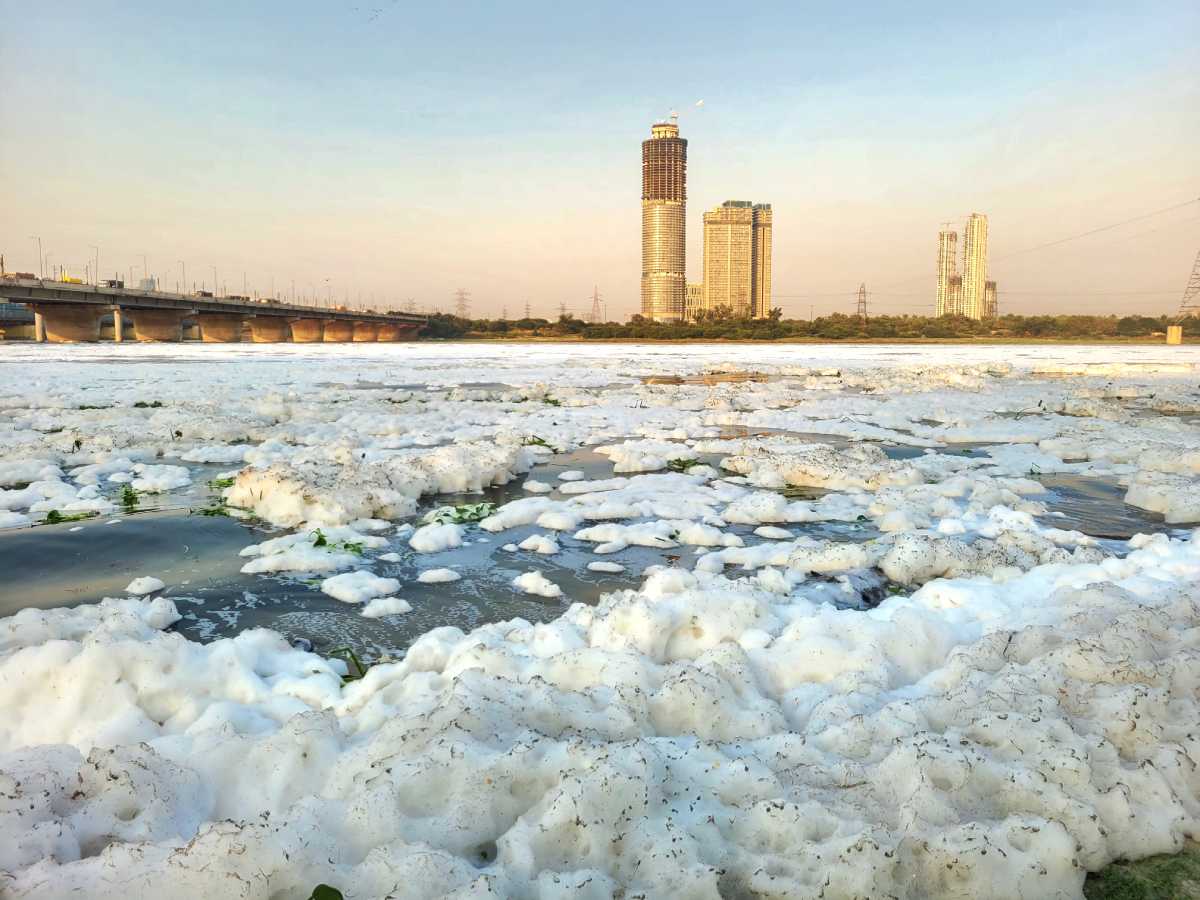
The Yamuna river, which enters Delhi at Palla Village and exits at Jaitpur, recorded a slight deterioration in the water quality at certain locations in September, with faecal coliform levels declining sharply from the previous month, according to the data from the DPCC.
The Biological Oxygen Demand (BOD) levels, meanwhile, remained high and well beyond the permissible limit for September.
The water quality testing by DPCC involves collecting water samples from seven locations along the course of the Yamuna river through the national capital, measuring several parameters such as BOD, dissolved oxygen, chemical oxygen demand, pH and faecal coliform, to determine the pollution level.
The seven locations include major points like Palla, Wazirabad, ISBT Bridge, ITO Bridge, Nizamudin Bridge, Okhla Barrage and Yamuna river at Asgarpur (Kidwali, Haryana).
Three of the locations showed further deterioration, two locations showed slight improvement, while two more locations showed no change from the August data.
The September report showed improvement at Palla, as levels of faecal coliform went down to 1100 Most Probable Number per 100 millilitres (MPN/100 ml), as compared to 1400 MPN/100 ml in August. The MPN gives the statistical estimate of the concentration of viable microorganisms in a sample.
The river also showed improvement at Okhla Barrage, where levels of faecal coliform remained at 21,000 (MPN/100 ml) in September, an improvement from 23,000 in August.
The three locations which showed deterioration were Wazirabad, where faecal coliform levels increased to 1,300 MPN/100 ml in September from 1,100 MPN/100 ml in August; Nizamudin Bridge where the level went from 13,000 MPN/100 ml to 15,000 MPN/100 ml; and Yamuna river at Asgarpur where the level increased from 36,000 MPN/100 ml in August to 38,000 MPN/100 ml in September.
Two locations where the level remained the same were ISBT Bridge, where the level was 35,000 MPN/100; and ITO Bridge, where the level remained at 17,000 MPN/100 ml.
BOD levels for September remained beyond the permissible limit at certain locations, ranging from 2-30 milligrams per litre (mg/l), while the water quality criteria stipulates a maximum of 3 mg/l.
The highest BOD was recorded at ISBT Bridge at 30 mg/l. The highest BOD in August was also recorded at ISBT Bridge, with a level of 28 mg/l.
The DPCC has also uploaded the data for wastewater quality at Delhi’s major drains for September, according to which several drains, discharging directly into the Yamuna, as well as supplementary drains of the Najafgarh canal, showed high BOD and TSS (Total Suspended Solids) levels.