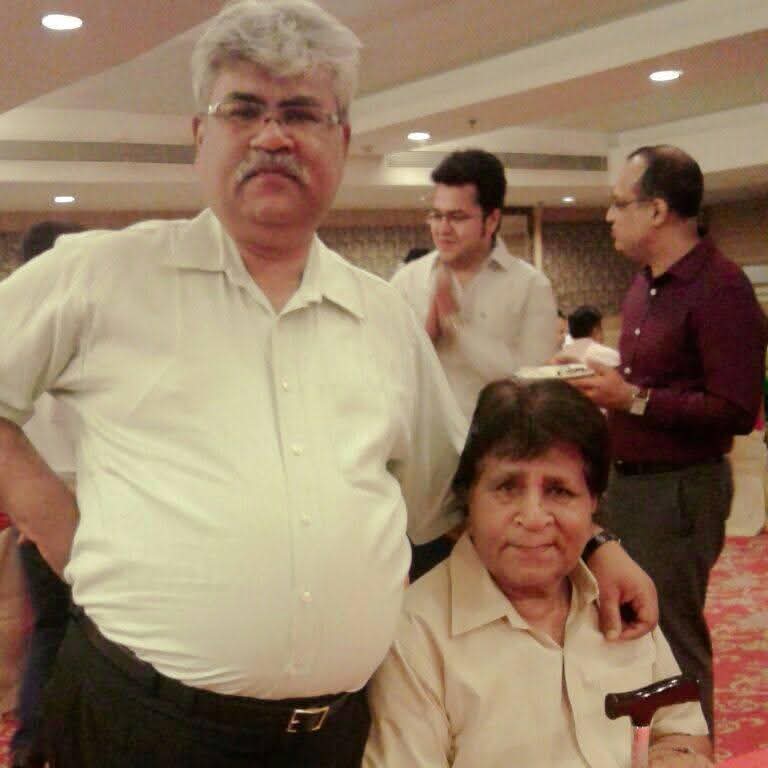
For East Delhi-based tax consultant SK Gambhir, travelling to Faridabad to watch Ramlila with his family and friends has become an annual tradition. He prefers the Shri Shraddha Ramlila in Sector 12, Faridabad, because its language and atmosphere remind him of Multan, where his ancestors lived.
This Ramlila is known for performing most of its dialogues in Urdu. Its actors are busy preparing for the annual show, rehearsing their lines day and night.
Here is Rama challenging Ravana:
Rama: “Ravana, tum zulm-o-sitam ki ek nishani ho. Tumhein zinda rehne ka koi haq nahin. Tumhari maut ab bahut qareeb hai. (Ravana, you are a symbol of oppression and cruelty. You have no right to live. Your death is now very near.)”
Ravana: “Rama, main maut ko bhi shikast de chuka hoon. Poori kainaat mein mujhse bada aur taaqatwar koi nahin. Aasmaan bhi mujhse khauf khaate hain. Jao, apna kaam karo. (Rama, I have even defeated death. There is no one greater or more powerful than me in the entire universe. Even the skies fear me. Go, do your duty.)”
Also Read: Seven Navratri thalis to try in Delhi-NCR
Hanuman also warns Ravana:
Hanuman: “Tumhare paas aaj bhi ilm aur khoobiyan hain, lekin tumhara ghuroor hi tumhari barbaadi ka sabab banega. (You still have knowledge and talents today, but your arrogance will be the reason for your downfall.)”
Faridabad is home to many families whose ancestors came from Multan, Bannu and the Khyber Pakhtunkhwa region. Three generations of these families have grown up in India, yet they have preserved the traditions their elders followed in their ancestral homes. Even after Partition, they kept this distinctive form of Ramlila alive, passing it down from one generation to the next.
An Urdu andaaz
The Chawla family of Faridabad has played an important role in preserving this tradition. Around five members of the family perform different characters. Anil Chawla, a businessman, has played Lakshman for the past 16 years and also directs the production. His two younger brothers play Ravana and Hanuman.
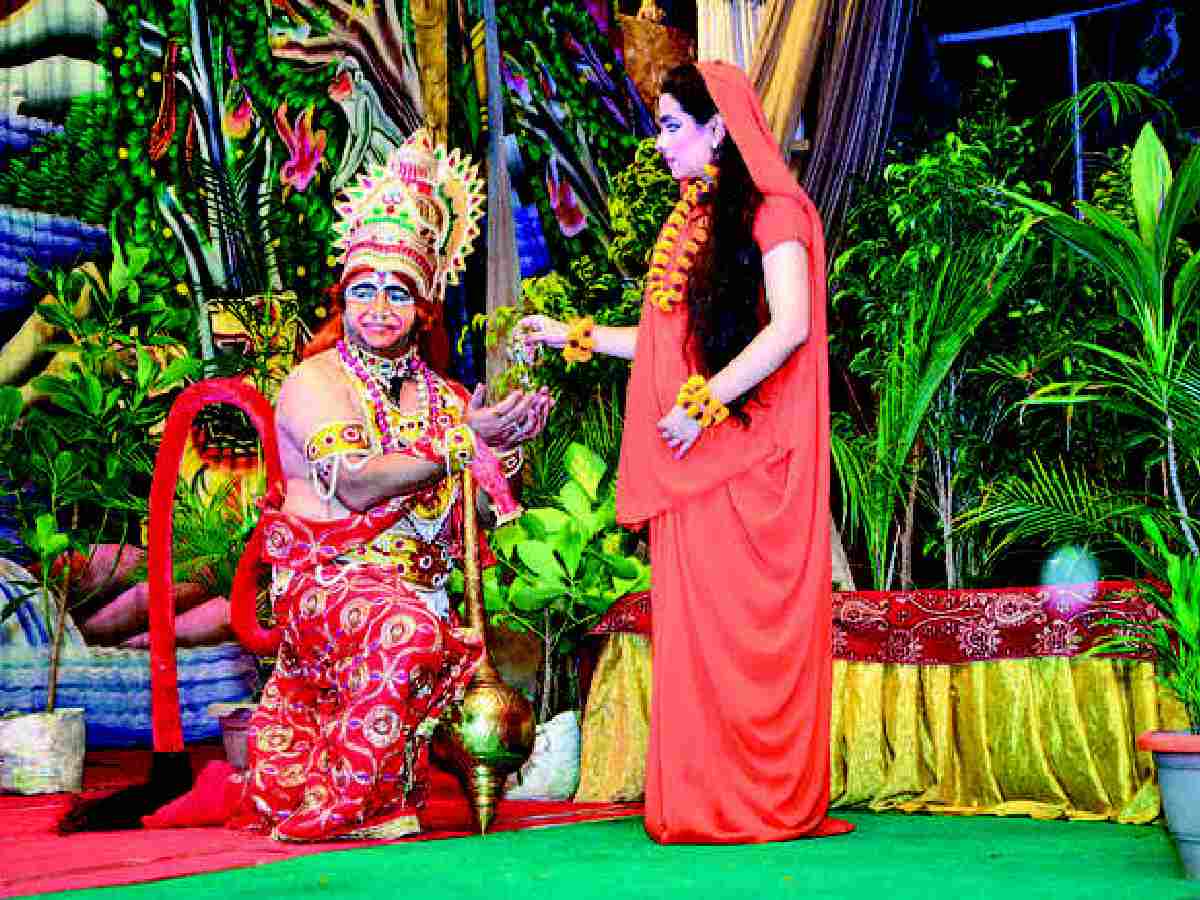
One moving scene shows Hanuman reaching Ashok Vatika, where Sita is being held under Ravana’s guard. After bowing respectfully before her, he says:
Also Read: Festive shopping in Delhi: where to go this Navratri
Hanuman: “Mata, aap bilkul fikr na karein. Main aapko mehfooz tareeqe se Prabhu Shri Ram ke paas le jaaunga. Abhi mujhe Prabhu Shri Ram ki ijazat nahin hai ki main aapko wapas le jaaun. Agar unki ijazat hoti, toh main aapko in shaitaanon ke changul se abhi chhuda le jaata. (Mother, please do not worry at all. I will take you safely to Lord Shri Ram. Right now, I do not have Lord Shri Ram’s permission to take you back. If I had his permission, I would have rescued you from these demons’ clutches already.)”
In another scene, Ravana tells Sita: “Apne shohar ko bhool jao. Ab main hi tumhara shohar hoon. (Forget your husband. I am your husband now.)”
Sita cries out in anger: “Tum mujhe fareb aur dagha dekar yahan laaye ho. Beghairat insaan! Tumhari taqdeer mein khaak hona hi likha hai. (You have brought me here through deceit and betrayal. Shameless person! Your destiny is written to end in dust.)”
Ravana’s brother Vibhishana, too, tries to reason with him: “Ravana, apna ghuroor chhod do. Neki aur sachchai ke raaste par chalna shuru karo. (Ravana, abandon your arrogance. Begin to walk on the path of virtue and truth.)”
A tale of three Ramlilas
While Faridabad’s Urdu Ramlila offers a glimpse of a tradition preserved by families with roots across the border, Delhi’s celebrations tell another story of how Ramlila has become part of the city’s shared cultural life.
Also Read: World Food Day: 4 Delhi-NCR kitchens giving food a second life
If Delhi is the capital of Ramlila celebrations in India, the three Ramlilas held near the Red Fort deserve a special place among them. Every year, thousands of residents visit the celebrations organised by the Luv Kush Ramlila Committee, Shri Dharmik Leela Committee and Nav Shri Dharmik Leela Committee. Together with the many other performances across the Delhi-NCR region, they showcase the different forms the tradition has taken over the years.
A split in the story
The three Red Fort Ramlilas have links with the tradition of Ramlila at Ramlila Maidan, which began in 1920. It was started mainly by members of Delhi’s Khatri community, with participation from the Vaishya community as well. The first major split came in 1924, when the Shri Dharmik Leela began near the Red Fort. Among its founders were Lala Kokan Mal Johri and Lala Jagannath of Sabzi Mandi. Later, Lala Om Prakash Gupta, Braj Bhushan Sharan and Lala Bansidhar also became associated with it.
Another split followed in 1936, when some people associated with the Shri Dharmik Leela started the Nav Dharmik Ramlila. Today, the three organisations continue to hold their celebrations near the Red Fort, drawing crowds from across the city.
More than spectators
The Ramlilas are also a reflection of Delhi’s Ganga-Jamuni tehzeeb, a shared culture shaped by Hindu and Muslim traditions. Ashish Ashu, Vice-President of the Shri Dharmik Leela Committee at the Red Fort, says Muslims play an active role in organising the celebrations. Dozens of Muslim families also visit the Ramlila every day.
Also Read: Behind kitchen doors: Delhi restaurants and meaning of sustainability
The organisers themselves reflect this participation. Mohammad Usman is the Vice-President of the Nav Shri Dharmik Leela Committee, while his younger brother, Mohammad Meherban, is an active member of the Luv Kush Ramlila Committee. Mohammad Taqi, a social worker who lives near Jama Masjid, can also be seen volunteering every day to help make the Red Fort Ramlilas a success.
A festive evening
The celebrations draw Muslim families from different parts of the city. After 8 PM, hundreds of families from Old Delhi, popularly known as Delhi-6, and East Delhi can be seen at the Red Fort grounds. Some enjoy the rides at the fair, while others gather around food stalls. Many women wear burqas or hijabs.
For these families, the Ramlila is not just a religious performance but also an opportunity to spend an evening together and enjoy the city’s festive atmosphere.
The tradition of participation extends beyond the Red Fort, too. In East Delhi, several Ramlilas have built up loyal followings over the decades, attracting families who return year after year.
An enduring tradition
One such celebration is the Ramlila held on Circular Road in Shahdara, which has been staged regularly since 1951. According to Naresh Kaushik, a local social worker, Prabhu Dayal, a respected local figure, played an important role in starting it, along with people such as Lala Jai Narayan Goel and Raja Ramesh Chandra.
The organisers had wanted to stage a large Ramlila in Shahdara as early as 1945, but the British authorities created several obstacles to holding the event in the area. It was only after India became independent that the Ramlila began to be staged successfully.
Also Read: Whose festival is it, anyway?
Until the 1980s, Shahdara was almost synonymous with East Delhi, and people from across the Yamuna travelled there to watch the performances. The Ramlila has retained its following over the years, even as the city has expanded and new neighbourhoods have developed.
A familiar annual outing
A similar attachment can be found in Jhilmil Colony, near Vivek Vihar, where the local Ramlila has completed around 50 years. Aslam Zaki, a resident of Vivek Vihar, says he has been watching it for decades, and some members of his family have also taken part in the performances.
The famous Indraprastha Ramlila in East Delhi, too, attracts many Muslim families. Some come to watch the performances, while others enjoy the fair organised alongside them.
Suresh Bindal, who is associated with the organising committee, says the crowds begin to grow when Ravana makes his entry. People then arrive in large numbers, including Muslim families from Hasanpur, Ghazipur and IP Extension.
Ramlila continues to draw people for different reasons. For some, it is a connection to their ancestral past; for others, it is a family tradition or simply an evening of festive entertainment. These celebrations offer a glimpse of the many ways in which Ramlila has become woven into the cultural life of Delhi and its neighbouring towns.