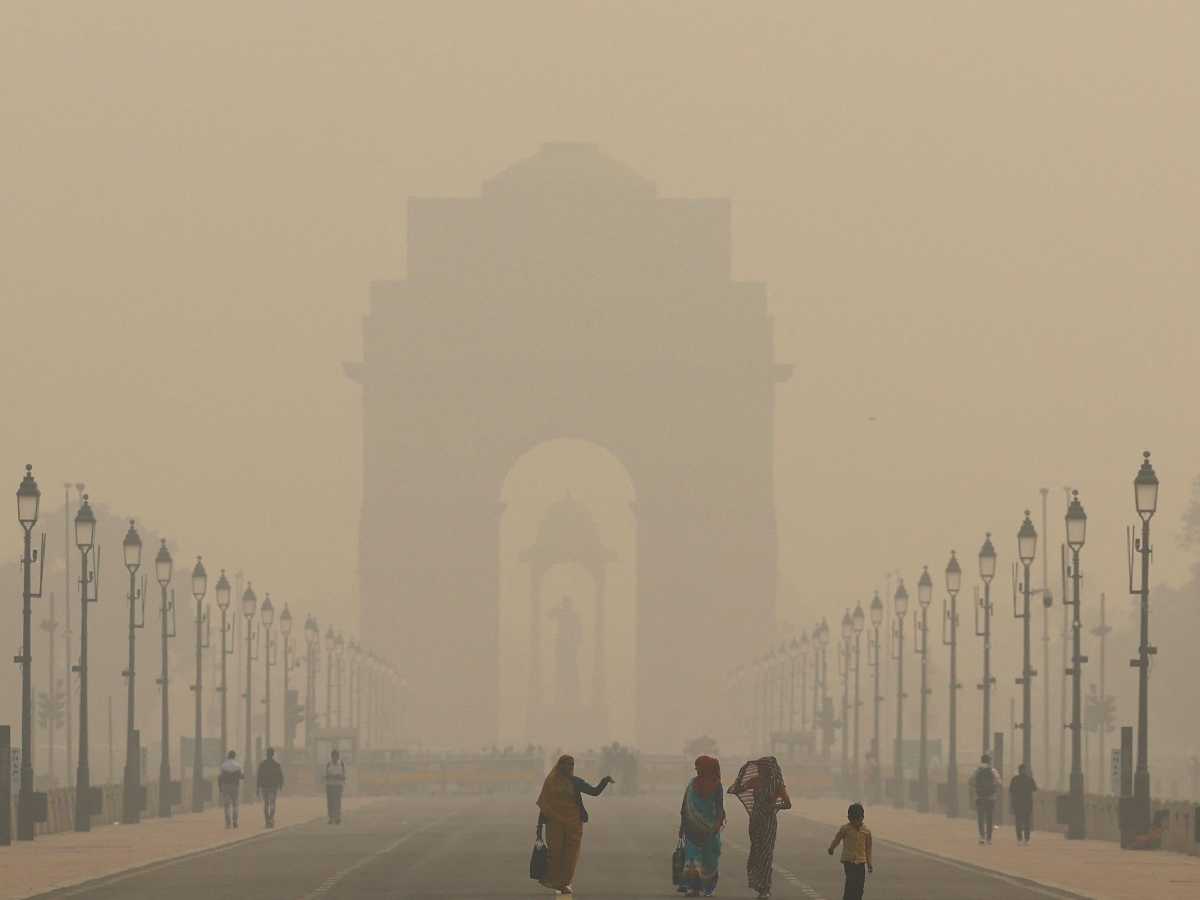
As temperatures begin to drop, Delhi recorded its first ‘poor’ air quality day of the season on Wednesday, with the Air Quality Index (AQI) settling at 245 — the highest in 100 days.
The last time the city recorded a comparable AQI was on July 13, when the index stood at 246, according to data.
The Commission for Air Quality Management on Wednesday imposed Stage I of GRAP across Delhi-NCR after the capital’s air quality slipped into the ‘poor’ category.
The air quality is likely to remain in the ‘poor’ category until October 23, according to the forecast by the Air Quality Early Warning System. The outlook for the subsequent six days also indicates that air quality is likely to remain poor.
Also Read: ‘Khoya-Paya’: how Delhi festivals handle missing children
A ventilation index below 6,000 square metres per second, along with an average wind speed of less than 10 kmph, is unfavourable for the dispersion of pollutants, according to the system.
The deterioration comes a day after Vijayadashami, when Ravan effigies were burnt at several locations across the city. However, no direct link has been established between the celebrations and the deterioration in air quality.
According to the Decision Support System for Air Quality Management in Delhi, developed by IITM Pune, the transport sector within Delhi was the largest contributor to the city’s pollution on Tuesday, accounting for 20.5 per cent.
Stubble burning contributed up to 8 per cent, while residential sources accounted for 5.2 per cent, peripheral industries 4.3 per cent, construction 2.8 per cent, waste burning 1.8 per cent, road dust 1.4 per cent and other sources 1.3 per cent.
Also Read: Health warnings force Delhi-NCR pet owners to rethink costumes
Among the NCR districts, Jhajjar contributed 8 per cent, followed by Gurugram at 5.7 per cent, Sonipat at 4.8 per cent, Ghaziabad at 3.04 per cent, Panipat at 2.9 per cent, Gautam Buddh Nagar at 2.6 per cent, Baghpat at 2.27 per cent, Faridabad at 1.7 per cent, Rohtak at 1.5 per cent, Karnal at 1.2 per cent, Rewari at 1.19 per cent, Bhiwani at 0.8 per cent, Alwar at 0.7 per cent and Mahendragarh at 0.5 per cent. Other sources accounted for 13.28 per cent.
The Central Pollution Control Board classifies AQI between 0 and 50 as ‘good’, 51 and 100 as ‘satisfactory’, 101 and 200 as ‘moderate’, 201 and 300 as ‘poor’, 301 and 400 as ‘very poor’, and 401 and 500 as severe’.