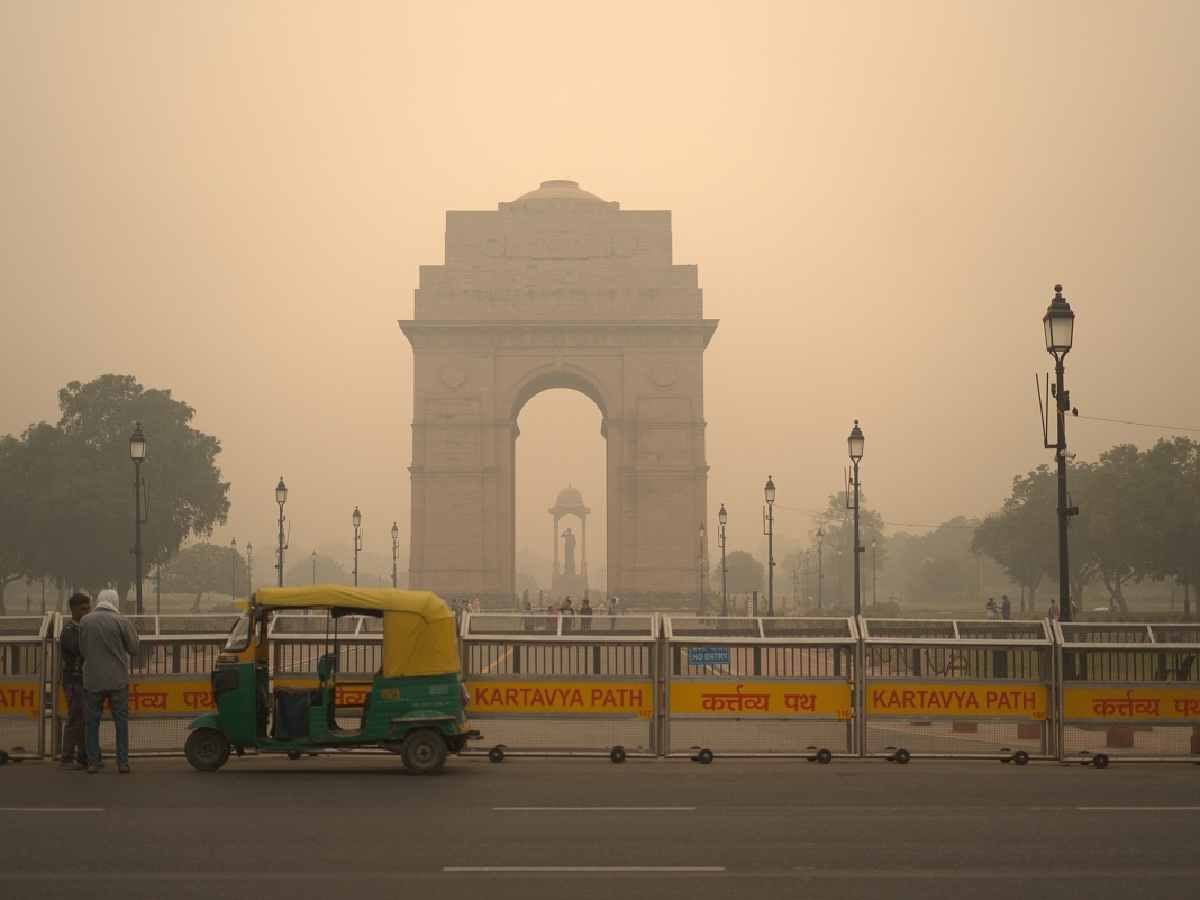
Delhi’s air pollution intensified on Thursday, with the Air Quality Index (AQI) climbing to 280 in the ‘poor’ category from 232 on Wednesday and 204 on Tuesday, as biomass burning emerged as the biggest source of fine particulate pollution in the national capital.
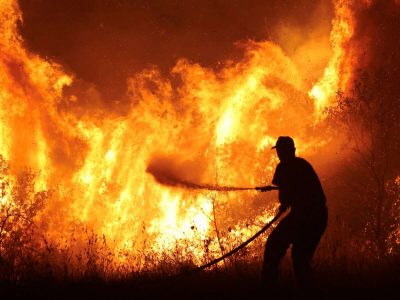
According to real-time source apportionment estimates released by the Air Quality Early Warning System, biomass burning, which includes agricultural stubble fires and the use of solid fuels such as wood and dung cakes for domestic purposes, accounted for 33.3 per cent of Delhi’s PM2.5 pollution on Thursday. Its contribution was 24 per cent on Wednesday and 18 per cent on Tuesday.
Of the 56 monitoring stations that reported air quality readings on Thursday, 37 recorded ‘poor’ air quality, while 16 fell in the ‘very poor’ category. Only three stations reported ‘moderate’ conditions. Jawaharlal Nehru University registered the highest pollution level, with an AQI of 376, followed by Sirifort at 363.
The Central Pollution Control Board (CPCB) classifies AQI readings between zero and 50 as ‘good’, 51-100 as ‘satisfactory’, 101-200 as ‘moderate’, 201-300 as ‘poor’, 301-400 as ‘very poor’ and 401-500 as ‘severe’.
Apart from biomass burning, waste burning was another major source of pollution, contributing 19.7 per cent to the city’s PM2.5 concentration. Vehicular emissions accounted for 18 per cent, while secondary organic aerosols contributed 14.1 per cent, the estimates showed.
Secondary inorganic aerosols made up 9.5 per cent of the pollution load, followed by coal combustion at 1.8 per cent. Industrial activities and firecrackers contributed 1.5 per cent each, while road dust and soil accounted for 0.7 per cent.
Satellite observations by the Consortium for Research on Agroecosystem Monitoring and Modelling from Space (CREAMS) laboratory at the ICAR-Indian Agricultural Research Institute recorded two farm fire incidents in Delhi on Tuesday and one on Wednesday.
Across seven monitored states, a total of 772 stubble-burning incidents were detected on Wednesday. Madhya Pradesh reported the highest number at 370, followed by Punjab with 202, Uttar Pradesh with 109, Rajasthan with 59 and Haryana with 30. Delhi and Uttarakhand recorded one incident each.
The Air Quality Early Warning System has cautioned that pollution levels in Delhi are expected to remain in the ‘poor’ category on Thursday before slipping into the ‘very poor’ category from Friday. The adverse conditions are likely to continue until November 22, with the forecast for the following six days also indicating ‘very poor’ air quality.
The warning system has attributed the expected deterioration partly to unfavourable weather conditions that could prevent pollutants from dispersing effectively.
The maximum mixing height, which determines how high pollutants can rise and spread in the atmosphere, is projected to remain around 1,100 metres on Thursday. It is expected to decline to 1,000 metres on Friday before improving to 1,400 metres on Saturday and 1,500 metres on Sunday.
A lower mixing height limits the vertical movement of pollutants, trapping polluted air closer to the ground and worsening the impact of emissions.
The ventilation index, another indicator of the atmosphere’s ability to disperse pollutants, is also expected to remain unfavourable. It is forecast at 5,000 square metres per second on Thursday and could fall sharply to 1,000 square metres per second on Friday. The index is projected to improve to 2,800 square metres per second on Saturday and 3,100 square metres per second on Sunday.
According to the early warning system, a ventilation index below 6,000 square metres per second, combined with average wind speeds of less than 10 kmph, creates conditions unfavourable for the dispersal of pollutants. Such weather patterns can cause pollutants to accumulate near the surface.
Meanwhile, Delhi’s AQI was recorded at 289 at 9 am on Thursday, remaining in the ‘poor’ category, according to CPCB data. (With inputs from PTI)