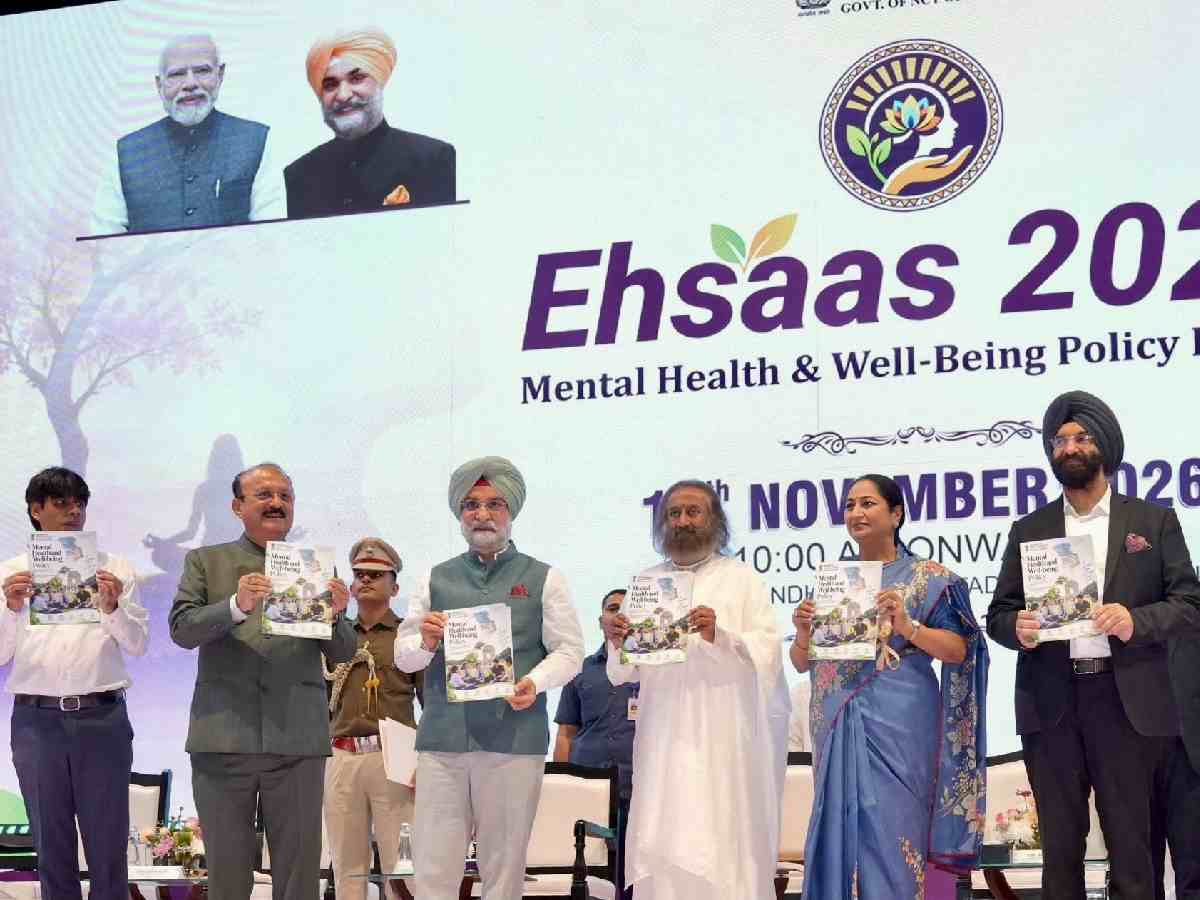
The Delhi government on Thursday introduced a comprehensive mental well-being policy aimed at addressing the emotional and psychological needs of children and young people, with Education Minister Ashish Sood saying the initiative was formulated in response to growing concerns over students’ mental health and the need for stronger emotional support systems.
The policy was launched in the presence of Lieutenant Governor Taranjit Singh Sandhu, Chief Minister Rekha Gupta, spiritual leader Sri Sri Ravi Shankar and Environment Minister Manjinder Singh Sirsa.
Sood said the government began working on the initiative following a recent incident in which a school student attempted suicide. The incident prompted him to write to school principals and consult them, along with mental health professionals, to develop a comprehensive framework for students’ emotional well-being.
A student’s growth is measured not just by academic excellence, but also by emotional well-being and inner resilience.
Joined @Gurudev Sri Sri Ravi Shankar Ji, Hon’ble CM Smt. @gupta_rekha Ji and Ministers Shri @ashishsood_bjp Ji & Shri @mssirsa Ji at the launch of ‘Ehsaas 2026’, Delhi’s landmark Mental Health & Well-Being Policy initiative.
Embedding mindfulness, emotional support and holistic well-being in our educational institutions is essential to nurturing a healthier, happier and more resilient generation for a #ViksitBharat.
— LG Delhi (@LtGovDelhi) November 19, 2026
Highlighting the challenges faced by young people, the minister said children frequently experience loneliness as parents remain occupied with work and financial responsibilities. He added that academic competition, uncertainty about the future and pressure to meet expectations further contribute to emotional stress among students.
Emphasising the need to break the stigma surrounding mental health, Sood said the government wanted to encourage open conversations about psychological well-being and create greater public awareness.
The policy aims to establish a supportive atmosphere in which children can freely express their emotional concerns and seek assistance without fear of discrimination or social stigma.
Its coverage will include CM SHRI schools, government-run and government-aided institutions, private schools, higher education establishments and children with special needs. The initiative also seeks to reach young people up to the age of 29, including those who are not enrolled in formal educational institutions.
As part of the framework, psychometric assessments are proposed for teaching and non-teaching employees, as well as transport staff who regularly interact with children.
The government also plans to introduce handbooks containing structured questions, practical exercises and activities to help staff understand children’s concerns and respond to them with greater sensitivity.
The policy seeks to shift the focus of education beyond examinations and academic achievements, placing greater emphasis on emotional stability, resilience, self-confidence and the overall well-being of children and young people.