Three boys walk hesitantly into the admission centre at the Delhi Gate de-addiction facility. The green walls seem to swallow the light, casting a sudden gloom over the room.
“What is your name?” asks Fazle Haque, the in-charge at the centre. Silence follows.
“They will take some time to open up. We do not believe in reprimanding the children since that will only lead to them thinking of us like enemies,” he explains.
But with a steady influx of children and no pause in sight, simply accommodating them has become an almost impossible task.
State of juvenile de-addiction centres
At present, Delhi has eight juvenile de-addiction centres, six of them government-run. Lal Bahadur Shastri Hospital in Khichripur, Kalyanpuri, reserves five beds for juveniles. GB Pant Hospital at Delhi Gate has a five-bed de-addiction clinic. Deep Chand Bandhu Hospital in Ashok Vihar Phase IV operates a 30-bed model facility.
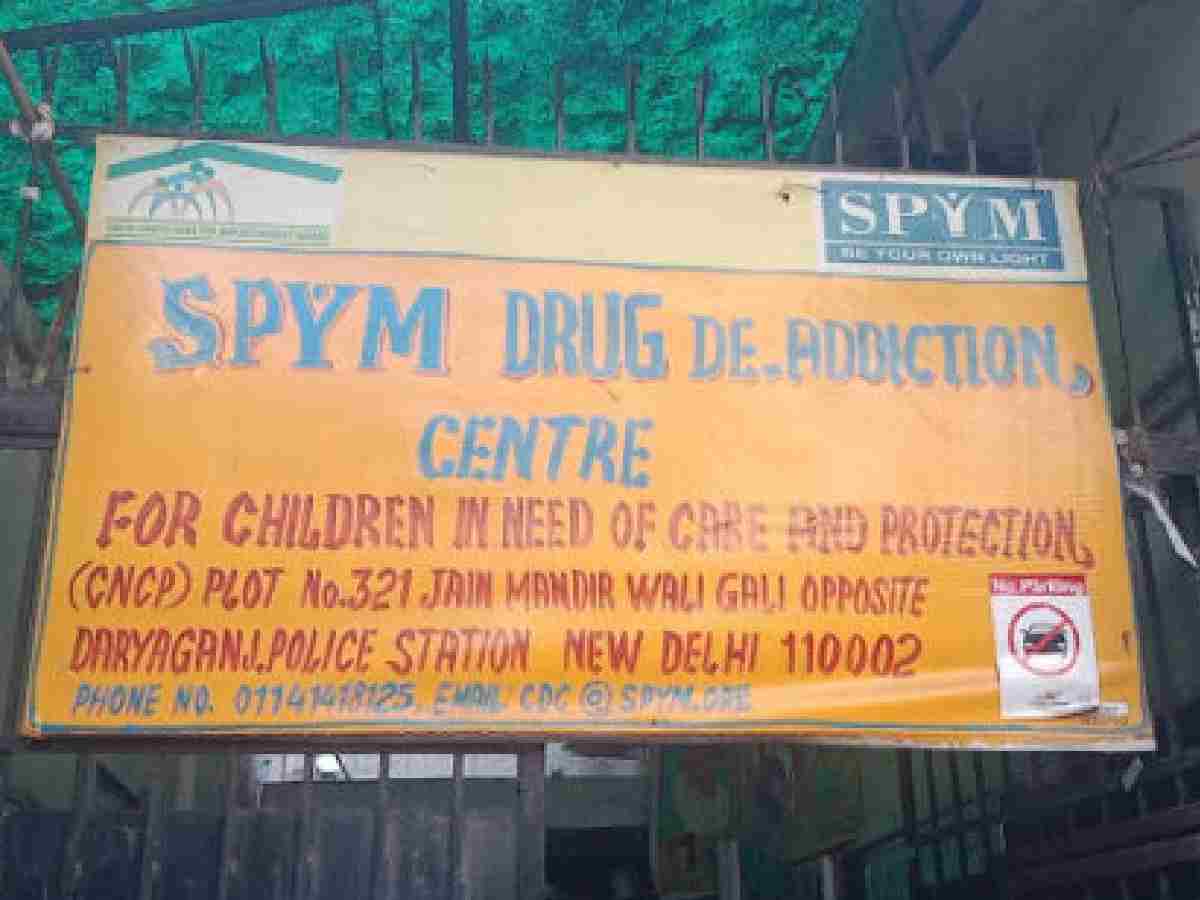
The Sahyog Detox Centre, run by the Department of Women and Child Development at Sewa Kutir, provides 50 beds exclusively for juveniles, with admissions routed through the Child Welfare Committee. SPYM operates two centres: a 38-bed facility opposite Daryaganj Police Station and a nine-bed centre at Parda Bagh.
Yet every centre is functioning beyond capacity. Instead of steering young users towards treatment, law enforcement often defaults to “jail, not bail.” “India needs more free rehab centres, counsellors, mental health professionals, and former addicts as life coaches, rather than young people behind bars,” says Haque.
Inside his office, a whiteboard lists the number of children: 56. The facility is 86% over capacity. “Thankfully, a few of them are at the hospital. However, they will be back in a few days. It will be difficult to manage then,” he sighs.
The post-pandemic shift in drug use
Many of the children come from migrant households in Delhi. “This is a pattern we have noticed time and again. The reasons are fairly normal—absent parents, anxiety caused due to poverty, and such like. The reasons have always stayed the same but the methods of intoxication have changed considerably post-pandemic,” says Mannan, a volunteer with SPYM.
Police confirm this change. A senior officer notes that while juveniles once used solvents like whitener or cannabis, newer substances are emerging. “After the pandemic, there has been an increased availability of Over-the-Counter drugs and injectables. They are still growing in the market but once they get a higher share, it will be difficult to rehabilitate the children,” he says.
Law enforcement admits its limits. “We can only intervene if addicts disrupt law and order or are in critical condition. We cannot take action against the peddlers on this pretext. There is a procedure attached to it,” the officer explains.
Some children are runaways from Bihar, Rajasthan, and West Bengal. “They run away to escape abusive parents, or sometimes it is the drugs taking the action for them. We cannot scare them into rehabilitation,” says Haque.
A senior doctor from AIIMS’ National Drug Dependence Treatment Centre is critical: “The government seems focused on sending a message—drug use leads to prison. But where is the plan to prevent it? What resources are allocated for rehabilitation?”
How adult rehab centres are coping
At Ram Manohar Lohia Hospital’s mental health ward, Imran’s mother struggles to calm her 30-year-old son. Still high on cannabis, his incessant chatter disturbs patients until a guard returns him to bed.
This ward, one of six set up in April 2016 for children and adolescents, initially had just five beds per hospital. RML has since expanded to 30.
“He hasn’t eaten for 12 days and has low blood pressure,” his mother says. She has travelled from Gorakhpur to seek treatment. Imran, a cannabis user for eight years, has repeatedly failed to stay clean despite medication.
Unlike private centres, RML requires a family member to remain with each patient due to their volatility. “They are often violent when admitted. It is hard to manage without a family member present,” says nursing officer Ajay Meena.
Patients say care is minimal beyond daily medication and morning exercise, with doctors checking in once a day.
Weak regulation of private facilities
Private rehab centres operate under the Narcotic Drugs and Psychotropic Substances Act 1985, the Clinical Establishment Act 2010, and the Mental Healthcare Act 2017. But few states have enforced NDPS regulations, according to the National Centre for Biotechnology Information.
A May 2020 paper from the United States National Library of Medicine noted that social distancing and isolation—though necessary—triggered irritability, anxiety, and boredom, driving relapses and heightened drug use.
Root causes of addiction
Poverty drives many under-18s to substances like alcohol, inhalants, heroin, and cannabis, often through peer pressure and easy availability. Experts blame government inaction for the unchecked spread of drugs.
“The government is not doing enough. The new excise policy will extend alcohol availability late into the night, tempting addicts. It needs legal control,” says Dr Singhal.
Lack of awareness about government hospital facilities and inadequate staffing worsen the crisis. Follow-up to prevent relapses is almost absent.
After Aryan Khan’s arrest in a “drug ring” case, the government began considering amendments to the NDPS Act to tackle online drug trafficking and shift oversight to the home ministry. But objections from the Social Justice and Empowerment and Health and Family Welfare ministries—warning against over-criminalising drug use—have been ignored.
Dr Samir Parikh, Director of Mental Health at Fortis Hospital, urges a rethink: “We should treat substance abusers but have zero tolerance for suppliers.”
The challenge of relapse
Doctors warn that while quitting may take two to four weeks with medical support, relapse prevention requires months of care. “Around 60–70% of users relapse within a year without long-term treatment,” says a senior doctor.
Also Read: Delhi: Demand for smuggled gold stays alive despite crackdowns
SPYM attempts to follow up by calling families and asking them to return after 15 days. But compliance is low. “We call to check on kids’ behaviour and ask families to bring them back, but few do,” says Haque.
“They are a transient population—here today, gone tomorrow.”