
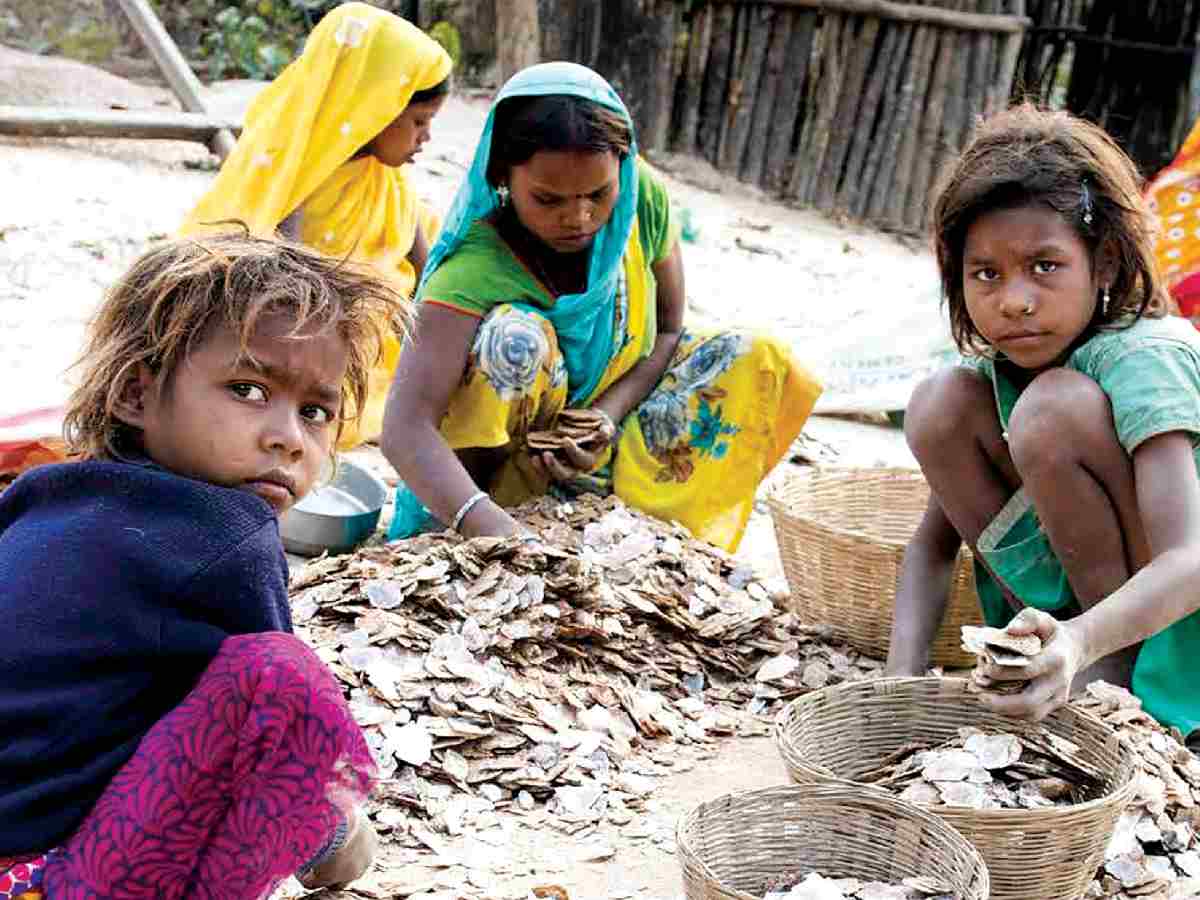
The exploitation of child labour in the national capital has persisted for decades, with children’s bodily autonomy routinely traded in public for meagre sums. A recent report by Just Rights for Children (JRC) paints a grim picture of this nationwide crisis, revealing that child labour continues under extreme and hazardous conditions.
Titled Building the Case for Zero: How Prosecution Acts as a Tipping Point to End Child Labour, the report details that 2,588 children were rescued from such conditions in Delhi alone between April 2024 and March 2025. The report places the Capital among the top five regions in India for child labour rescues, highlighting its continued vulnerability despite legal protections.
‘Worst forms’ of child labour
The ‘worst forms of child labour’, as defined by Article 3 of the ILO Convention No 182, include slavery and practices akin to slavery such as trafficking, debt bondage, and forced labour. It also covers forced recruitment of children for armed conflict; the use or offering of children under 18 for prostitution, pornography, or pornographic performances; their involvement in illicit activities like drug production and trafficking; and any labour likely to harm their health, safety, or morals.
India has ratified this convention, but the report by JRC, in collaboration with over 250 NGOs and law enforcement agencies, reveals that such practices are still widespread. Between April 2024 and March 2025, 38,889 rescue operations were conducted across 24 states and Union Territories, resulting in the rescue of 53,651 children. Many of these children were trapped in hazardous, exploitative work environments that included forced labour, prostitution, and drug trafficking.
According to the report, nearly 90% of rescued children were employed in spas, massage parlours, domestic labour, and informal entertainment services. Many were sexually exploited or subjected to extreme forms of indentured labour.
Delhi’s disturbing rank
The highest number of rescues was reported in Telangana (11,063), followed by Bihar (3,974), Rajasthan (3,847), Uttar Pradesh (3,804), and Delhi (2,588). Delhi’s position in the top five has raised concerns among both NGOs and law enforcement agencies.
Ravi Kant, National Convenor of JRC, expressed alarm at the data. “The fact that such a large number of children were engaged in the worst forms of child labour shows that despite the efforts of the government and civil society, our resolve to eliminate child labour remains incomplete. India is a signatory to Convention 182 of the ILO, which commits to eliminating all hazardous forms of child labour,” he said.
Kant further emphasised that prosecution is a key deterrent. “This report establishes that legal action creates a fear of the law in the public mind, which acts as a deterrent against child labour. Justice for children trapped in the worst forms of child labour will only be achieved when the culprits are punished and robust mechanisms for the protection and rehabilitation of victims are in place. The government must strengthen the prosecution system, establish a Child Labour Rehabilitation Fund, and formulate a comprehensive rehabilitation policy to make these children self-reliant.”
Orchestra culture and regional differences
While Bihar, Uttar Pradesh, and Rajasthan have seen cases of children trafficked into the orchestra circuit—an area of concern flagged by activists—Telangana and Delhi did not report any rescues from such settings.
Also Read: Stolen childhood: The role of placement agencies in abuse and child labour
On July 2, Saran Police in Bihar raided several orchestra groups and rescued six minor girls from conditions of sexual exploitation and abuse. The girls, aged between 15 and 17, were from Bihar, West Bengal, Delhi, and Nepal. They disclosed being forced to perform obscene songs and subjected to physical torture if they resisted.
This crackdown followed a Patna High Court hearing triggered by a JRC petition. The court had issued a notice to the Bihar government, calling for urgent monitoring and regulation of orchestra groups. The raid targeted groups including New Orchestra Group, Shiv Shakti Orchestra, and Muskan Orchestra and Musical Group.
Child trafficking and forced labour in Delhi
In 2024, Delhi authorities rescued 1,170 children in nearly 100 raids. These children, often paid paltry wages for hazardous work, endured long hours in exploitative conditions—underscoring the capital’s continued struggle against child exploitation.
Delhi Police’s Crime Branch has stepped up efforts, deploying Anti-Human Trafficking Units (AHTUs) across the city. “We are working tirelessly to curb trafficking in Delhi,” said a senior police official, noting that strategic deployment of AHTUs and better coordination have improved their ability to dismantle trafficking networks. However, NGOs caution that underreporting and increasingly sophisticated trafficking methods continue to hamper sustained progress.
The illusion of falling numbers
Despite a seeming decline in reported cases, activists warn of a worsening scenario. Rogue placement agencies are taking advantage of legal loopholes, placing minors in homes and businesses under unsafe conditions and for negligible pay. Delhi’s location—close to Gurugram and Noida—makes it a key transit point in trafficking networks. Many children are trafficked from rural areas or neighbouring states and forced into labour-intensive roles.
Naved Anjum of Prayas Juvenile Aid Centre explained how traffickers adapt to evade detection. “While reported cases have dipped, perpetrators exploit loopholes. Placement agencies lure impoverished families with payments or pose as relatives to gain custody of children,” he said. He also noted that trafficking is sometimes misclassified as kidnapping, further obscuring the scale of the problem. “The nature of exploitation has shifted. Some children are sent by families or come voluntarily, only to be trapped by deceptive agencies.”
The Child Labour (Prohibition and Regulation) Act, 1986, bans the employment of children under 14 and restricts hazardous work for those aged 14 to 18. Yet enforcement remains patchy due to systemic gaps and the secretive operations of trafficking rings.
Orchestrating rescues: Inside the operations
Jeebanjyoti Mohanty, Joint Director at Prayas, described how months of surveillance and planning precede rescue operations. Coordination with police is crucial, especially when it comes to factories or households using child labour.
“These agencies send representatives to villages in Jharkhand, Odisha, Uttar Pradesh, and Bihar, offering money to poor families. Once in Delhi, children are forced into factories or homes, often enduring horrific treatment,” she said.
Mohanty added that children typically earn Rs 100–150 daily or Rs 3,000 monthly, with even minor mistakes leading to beatings or injuries—particularly in domestic settings. Many placement agencies operate from hubs such as Shakurpur, Karol Bagh, Gurugram, and Noida. In one case in Noida, five people—including the child’s mother, uncle, aunt, and employers—were charged.
High Court’s call for accountability
In response to these systemic issues, the Delhi High Court—led by Acting Chief Justice Vibhu Bakhru and Justice Tushar Rao Gedela—ordered the Delhi government to submit a detailed status report. This report, to be certified by Chief Secretary Dharmendra, must cover district-wise task force meetings, rescue plans, and rehabilitation efforts.
The court stressed the importance of district-level accountability and sought updates on a 2023 FIR concerning the assault of volunteers during a child labour rescue. The FIR was filed after a deadly factory fire in Anaj Mandi in 2019, prompting a petition by Bachpan Bachao Andolan.
Advocate Prabhsahay Kaur, representing the NGO, pointed out that Rule 17C of the Child and Adolescent Labour Rules mandates monthly district task force meetings. “Many districts failed to comply in 2024, with action often spurred only by court orders,” she had noted.
Broken systems and vacant posts
A major obstacle to child protection has been the dysfunction of the Delhi Commission for Protection of Child Rights (DCPCR), which has remained non-functional since July 2023. Vacancies remain unfilled despite court orders, severely weakening the capital’s child protection framework.
On July 23, the Delhi High Court granted the government an additional three months to restore the department’s functionality. During the hearing, government counsel informed the court that Chief Minister Rekha Gupta—who also holds the Women and Child Development portfolio—had deemed the earlier shortlist of 927 candidates inadequate. New advertisements would be issued, with positions expected to be filled within three months. The bench expressed hope that the government would meet the new deadline and scheduled a follow-up hearing in November.