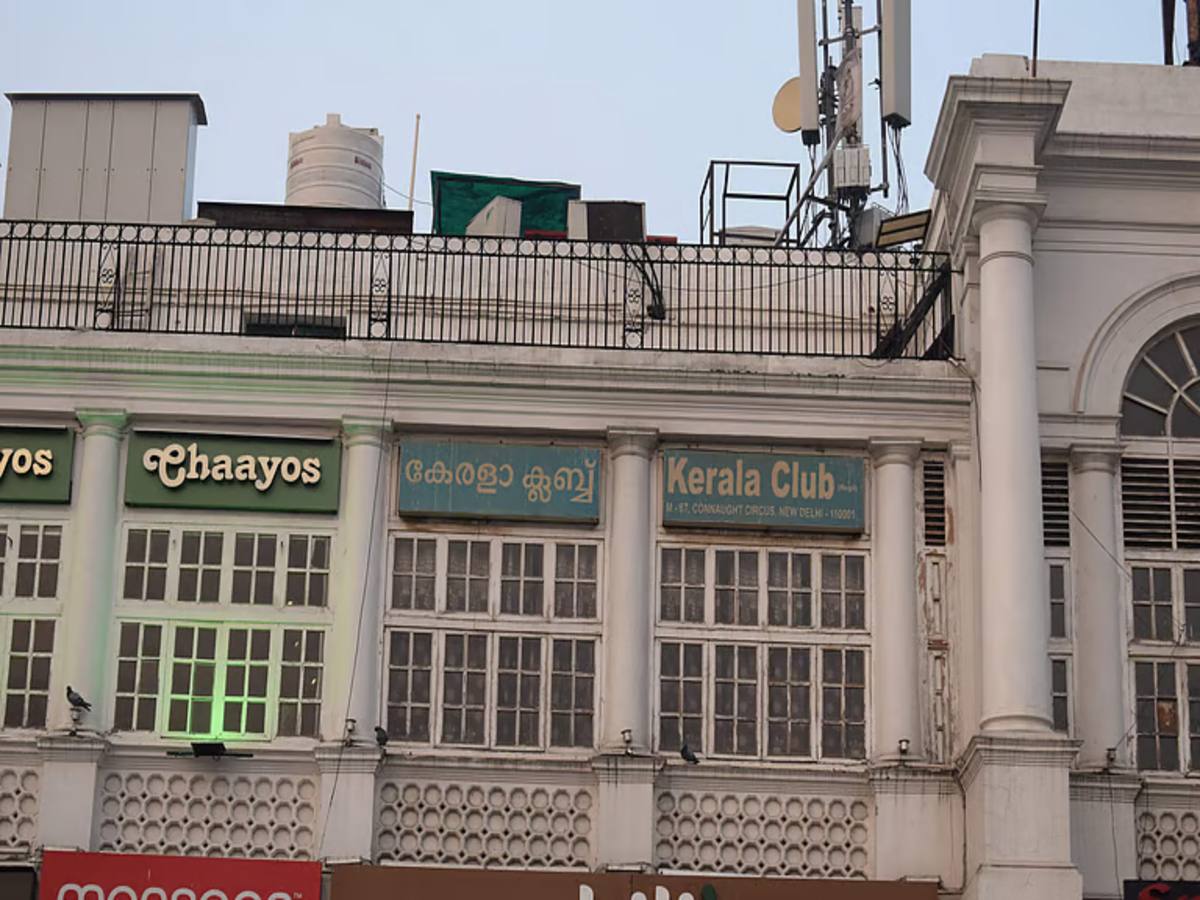
The idea of Kerala Club was born in the house of former bureaucrat KPS Menon
Behind an old signboard at the outer circle of Connaught Place’s M-Block sits one of Delhi’s oldest cultural institutions. The Kerala Club has welcomed generations of Malayalis since 1943, but it is now in trouble.
Niyam Holding, which owns the property, has served a notice asking the club to vacate the premises. No specific reason has been given.
If the Kerala Club is forced to leave these premises, it would bring to a close one of Delhi’s oldest community institutions. The club has quietly supported generations of Malayalis who moved to the capital for jobs, education, or business. Many found their first support network here. Students received guidance, young professionals made friends, and elders shared stories of their homeland.
The early years
When the club was founded in 1943, Kerala did not yet exist as a state. Travancore, Cochin and Malabar were separate administrative units. VP Menon, a close advisor to Sardar Vallabhbhai Patel, played a key role in bringing the club to Connaught Place, and after independence, assisted Patel in the difficult task of integrating more than 550 princely states into the Indian union.
According to the writer and educationist AJ Philip, C Krishna Nair, a Member of Parliament from outer Delhi during the first two Lok Sabha tenures post-independence, had a strong bond with the club. He often visited the place.
Nair was called the “Gandhi of Delhi’s villages” because of his work for the poor. His efforts helped set up the Delhi Development Authority (DDA). Despite having served the city, Nair lived in a rented house all his life. Photographs of him and many other prominent Malayalis of Delhi continue to hang inside the club premises.
Former Chief Minister of Kerala EMS Namboodiripad also visited the club during his visits to Delhi. His presence added political and intellectual depth to the club.
In 1954, the club brought authentic Kathakali dance to Delhi for the first time. Then Prime Minister Jawaharlal Nehru himself came to inaugurate the event. The club’s library still holds books donated by KPS Menon, VP Menon and John Mathai, the first Railway Minister of India.
A living community
Now, hundreds of active members, including children, senior citizens, government officers, journalists and artists gather here regularly. Every Friday, a literary gathering takes place where members discuss new books.
Professor Sakhi John, who is associated with the Jamia Hamdard University, says the club feels like a home for Malayalis in Delhi. For anyone arriving from Kerala, the club offers a connection to home.
An uncertain future
The notice to vacate has been issued, but members of the club and the wider Malayali community are hopeful that this heritage can be saved. After all, as AJ Philip rightly says, this small corner of Connaught Place is a symbol of Delhi’s diversity.
In today’s fast-changing Delhi, such cultural spaces help people stay connected to their identity while building bridges with others. They teach tolerance, celebrate regional pride and strengthen the idea of unity in diversity that defines India.
It is hoped that city planners, heritage lovers, and authorities all step in to find a solution so that this inclusive institution can continue serving the community for many more years.
The Supreme Court will hear a plea on Sunday seeking contempt action against authorities for…
Over 7,000 protesters, including CJP chief Abhijit Dipke, were detained as security forces sealed off…
Mamata Banerjee called Delhi’s crackdown “beyond Emergency” after being detained during a protest against Gyanesh…
From kuttu ki poori and sabudana to paneer and festive desserts, these restaurants have put…
Sonam Wangchuk condemned the arrests of student and youth leaders in Delhi, calling the situation…
Court said Sharjeel Imam apparently violated bail conditions by contacting media but refused to cancel…

