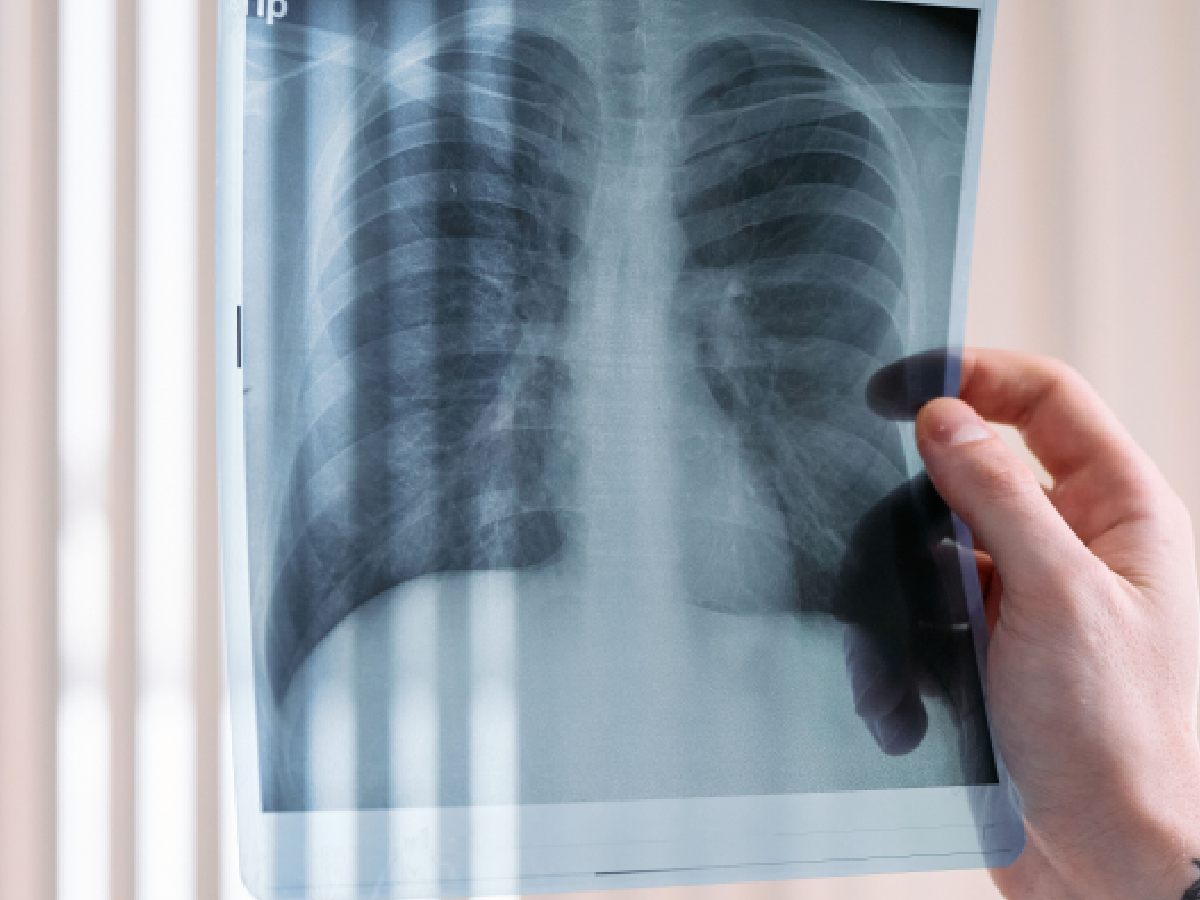
An artificial intelligence-based tool flagged 18,377 people for further tuberculosis testing after analysing chest X-rays of 1,68,568 residents in the national capital’s urban slums, with molecular tests subsequently confirming TB in 877 people, according to a study.
The researchers said the tool could address a key limitation of symptom-based TB screening, since many TB cases may not present with the symptoms commonly used to identify people for testing.
The study cited National TB Prevalence Survey findings that more than 40 per cent of bacteriologically confirmed TB cases detected in that survey did not report such symptoms. Researchers from the Delhi State Health Mission, Department of Health and Family Welfare, the International Union Against Tuberculosis and Lung Disease, India, and the Delhi State TB Elimination Programme conducted the study.
The paper was published on August 23, 2026, in the Indian Journal of Tuberculosis.
The AI technology used in the programme was “Qure.ai”, which analysed digital chest X-rays taken at community screening sites and identified images showing findings suggestive of TB. The AI did not provide the final diagnosis; people whose X-rays were flagged were offered sputum collection, with samples sent through programme networks for molecular testing to confirm TB.
The researchers said this allowed screening to be extended to people irrespective of whether they had symptoms, clinical vulnerability or known TB risk factors. All residents aged 15 years and above in the selected communities were screened.
The intervention covered 349 notified urban slum clusters across six districts under the National Tuberculosis Elimination Programme, with an estimated population of 18.3 lakh.
It was implemented at scale in July 2025 and evaluated in April 2026.
Between July 2025 and March 2026, 3,566 community screening camps were organised, with 1,68,568 people undergoing chest X-ray screening. Screening was conducted at locations including Anganwadi centres, schools, community halls and private healthcare facilities.
Of those screened, 18,377, or 10.9 per cent, were flagged by the AI system as having X-rays suggestive of TB. Of those, 16,866 people, or 91.7 per cent, completed follow-up molecular testing, it said. The testing confirmed TB in 877 people. They accounted for 5.2 per cent of those who completed molecular testing and 0.52 per cent of the total population screened.
Also Read: New UPI charge: Delhi traders consider a return to cash
The researchers calculated that the programme detected 520 bacteriologically confirmed TB cases for every one lakh people screened. They also reported that 192 people needed to be screened to identify one bacteriologically confirmed case during the nine-month implementation period.
The researchers said the use of chest X-rays was important because symptom-based approaches can fail to identify some people with TB. The paper cited the National TB Prevalence Survey to underline this limitation, noting that more than 40 per cent of bacteriologically confirmed cases detected in that survey did not report commonly used TB symptoms.
The researchers said bringing services closer to residents, collecting sputum at screening sites and using the existing specimen transport network helped ensure that people flagged by the X-ray screening completed molecular testing.
The researchers said community mobilisation through ASHAs and screening at familiar local venues supported participation and acceptance. Proximity of services, rapid screening and integration with existing frontline health workers were also identified as strengths.