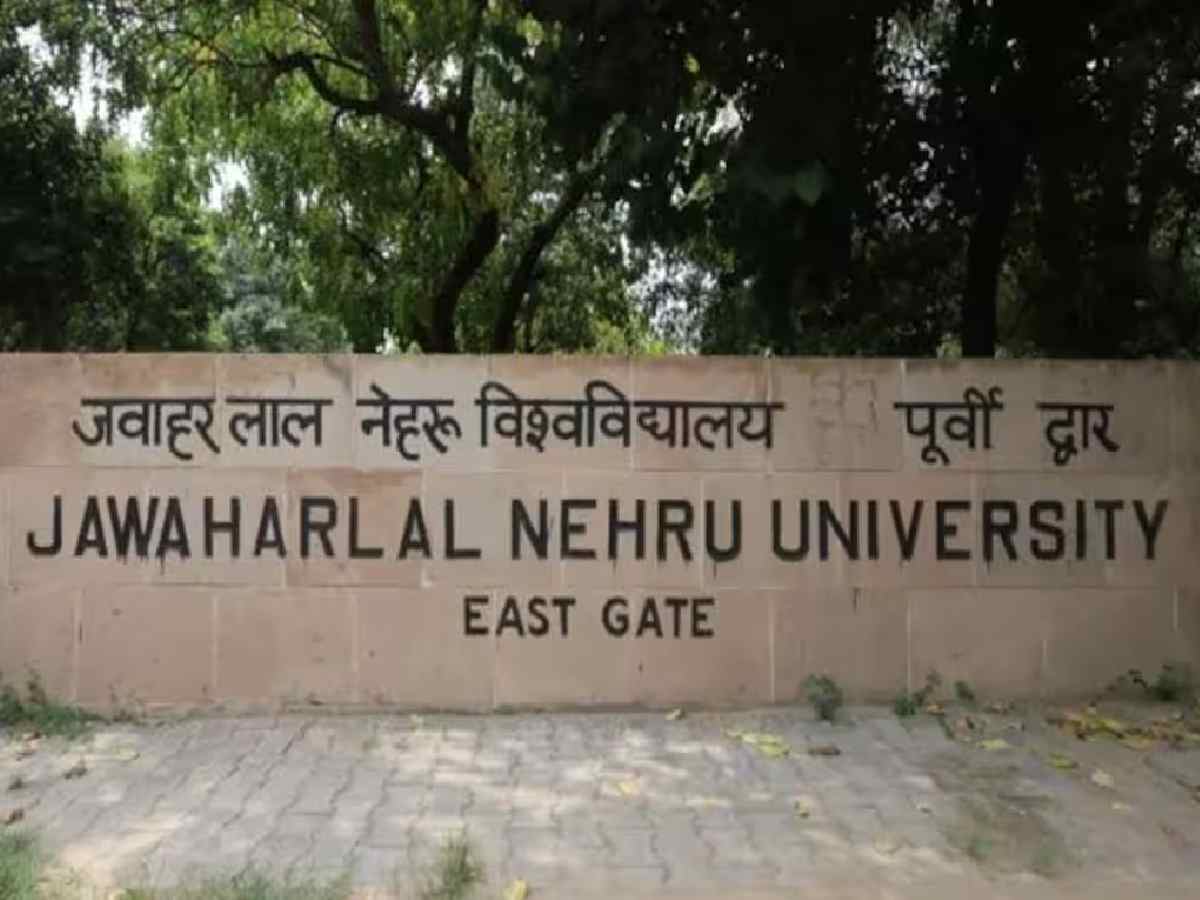
With the students’ union elections approaching at Jawaharlal Nehru University (JNU), students say long-standing issues remain unresolved despite years of promises. From overcrowded hostels and filthy canteens to broken washrooms and inaccessible buildings, they point to daily struggles that continue to plague one of India’s most prestigious public universities.
More than 8,000 students study at JNU, yet many lack access to basic amenities. Drinking water is scarce. Hostels are overflowing. Washrooms are unusable. For disabled students, even navigating the campus is a challenge.
Students say the problems are not new—but they become visible only during election season, when candidates return with fresh promises and little accountability.
Demand for hostels
Among the most pressing concerns voiced by students is the severe hostel shortage. Chunchun, a political science student at JNU, told Patriot that the hostel crisis is not only a long-standing issue but also one that has created deep rifts among student parties, especially on the left.
“There are around 8,000 students in the university, but hostel rooms are not available for everyone. Some students are forced to live outside the campus,” he said. He acknowledged that the recent opening of Barak Hostel has helped a little but believes the larger issue remains unresolved.
“The problem has become more serious over the past few years as the student intake has increased but hostel capacity hasn’t.”
He added that this mismatch is one of the reasons many students feel let down. According to students, in several hostels, the occupancy has exceeded capacity, leading to cramped living conditions.
Abhay, a Master’s student in Spanish, described the situation as extremely frustrating, especially for students coming from economically weaker sections.
“When people come to JNU, they come from diverse backgrounds, and many simply cannot afford to stay in private PGs or rented flats. So, they completely depend on the university hostels. But due to the current shortage of rooms, they are forced to live outside the campus, renting PGs or rooms,” he said.
He added that some students, unable to afford even a PG, are sharing rooms with others under difficult circumstances. “There is a clear need for more infrastructure to meet the growing demand,” he said, adding that this problem is not new but has intensified in recent years.
Abhay also alleged that the root cause of this crisis is the government’s withdrawal of financial support. He said a severe funding cut has stalled infrastructure development and created a situation where even the most basic facilities—fans, lights, coolers—are absent in many hostels.
Teaching gaps and discontinued courses
Students also expressed concern about academic disruptions caused by a persistent shortage of faculty members, particularly in language and interdisciplinary courses. They said several popular programmes had either been reduced or entirely discontinued.
Abhay Kujur, also a language student, pointed to the discontinuation of courses in interpretation and translation. “For example, in the German department, there are two separate courses: Literature and Translation. But next year, the translation course will be shut down due to a lack of teachers,” he said.
He also shared that similar cuts are happening in other departments—such as the MA course in Hindi translation, which was discontinued this year, leaving only the PhD programme.
He noted that academic resources, such as foreign journals, have also become unavailable, further hindering their education. “There’s a strong demand for teachers, but positions aren’t being filled, which leads to course closures.”
Bilal Hussain, another student, blamed the funding cuts and increasing government control for the problem. He said many faculty members who retired were never replaced. “This has severely impacted the academic environment. Many PhD scholars are left without proper guidance, and several students are stuck mid-way through their research,” he said.
“Numerous courses are running below standard or have been discontinued altogether. But due to funding issues and administrative delays, nothing has changed.”
Canteens and washrooms in disrepair
Canteens, once a cornerstone of student life, are now seen as a health hazard. This issue, students said, was one of the key points raised by the ABVP during its election campaign.
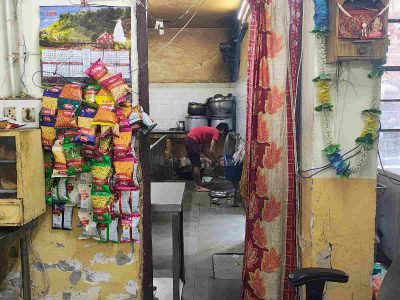
Sonali, a researcher, expressed her concern about hygiene standards. “Only the Indian Coffee House is clean and hygienic, but it’s not affordable for everyone,” she said. According to her, most other canteens fail even the most basic cleanliness standards. From dirty utensils and grimy kitchen corners to poorly stored food, the situation, she said, was grim.
“Students can see the mess both inside the kitchen and in the serving areas, but they still rely on these places due to limited options,” she added. Places like Ganga Dhaba and Mughal Darbar, which are among the most popular hangouts, often serve food in unacceptable conditions, she said.
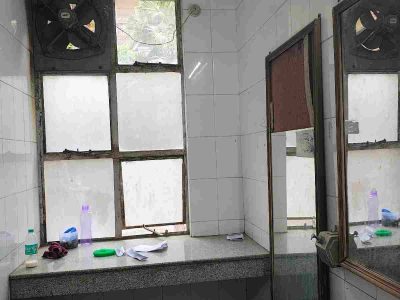
The washrooms across campus also mirror this neglect. Kulsum, a student, highlighted the terrible condition of washrooms in the School of Social Sciences Building 3. “The men’s, women’s, and disabled washrooms are all in a terrible state. There’s no running tap water, the disabled washroom doesn’t even have a lock, and the sanitary pad machine has been non-functional for years,” she said.
She claimed that this has been the situation for more than a year, with no visible attempt by the administration to make repairs. “Sometimes we have to carry bottles of water to wash our hands or walk to distant buildings to find a usable washroom,” she added.
Near the B R Ambedkar Library, the women’s washroom, she said, is infested with mosquitoes and has a tap and soap dispenser that have not been cleaned in months. “The moment you enter, you’re surrounded by mosquitoes to the point where it’s difficult to stand there even for a minute.”
A hostile campus for disabled students
Over 300 students with disabilities study at JNU, but their experience is fraught with systemic neglect. Many parts of the campus are inaccessible due to the absence of tactile pavements, ramps, and working lifts in academic buildings like the School of Arts and Aesthetics.
Kaifi Jamal, a member of the Disabled Students’ Association, said the administration has failed to respond to their repeated requests for infrastructural upgrades. “We keep writing to the admin, but the sensitivity is lacking,” he said.
Amar Pawar, a PhD scholar, highlighted that the central library lift shuts at 5 pm, making it difficult for disabled students to attend evening lectures or seminars. “When you admit students with high support needs, you should respond to their needs,” he said.
Pawar further alleged that although JNU had received Rs 8.5 crore in funds for accessibility improvements, very little progress has been made. “There are still no accessible toilets or signboards. Despite the funds, many parts of the campus remain out of reach, which deeply affects the academic and social lives of PwD students,” he said.
Inadequate libraries and academic space
Beyond physical infrastructure, students say the shortage of academic resources is equally crippling. There is only one large library on campus, which fails to accommodate the growing number of students.
Saad, a student, said, “The number of students is increasing, and we have witnessed some intense quarrels over seats in the library. Sometimes they even end up fighting and slapping each other just for a seat.” He added that demands for additional reading rooms have been raised repeatedly over the past six or seven years, but nothing has changed.
Priyanka Punia pointed out that researchers, too, don’t have designated seats or reading rooms. Laboratory access is another challenge, she said, with many labs effectively restricted to students who are directly under a faculty member’s supervision. “We have to rely on faculty for everything, and many professors only support students they personally mentor,” she added.
Even in the Science Centre, students face practical challenges. A student speaking on condition of anonymity said that in Room No. 3, the classroom whiteboard had become completely unreadable before it was finally replaced—after multiple complaints.
Also Read: Admin stripping students of their basic rights: NSUI’s Pradeep Dhaka
Another student said, “Even the staff room meant for teachers was turned into a reading room, but it has poor ventilation and uncomfortable seating. These changes reflect the growing space and resource crisis we’re facing, even in core academic spaces like the Science Centre.”