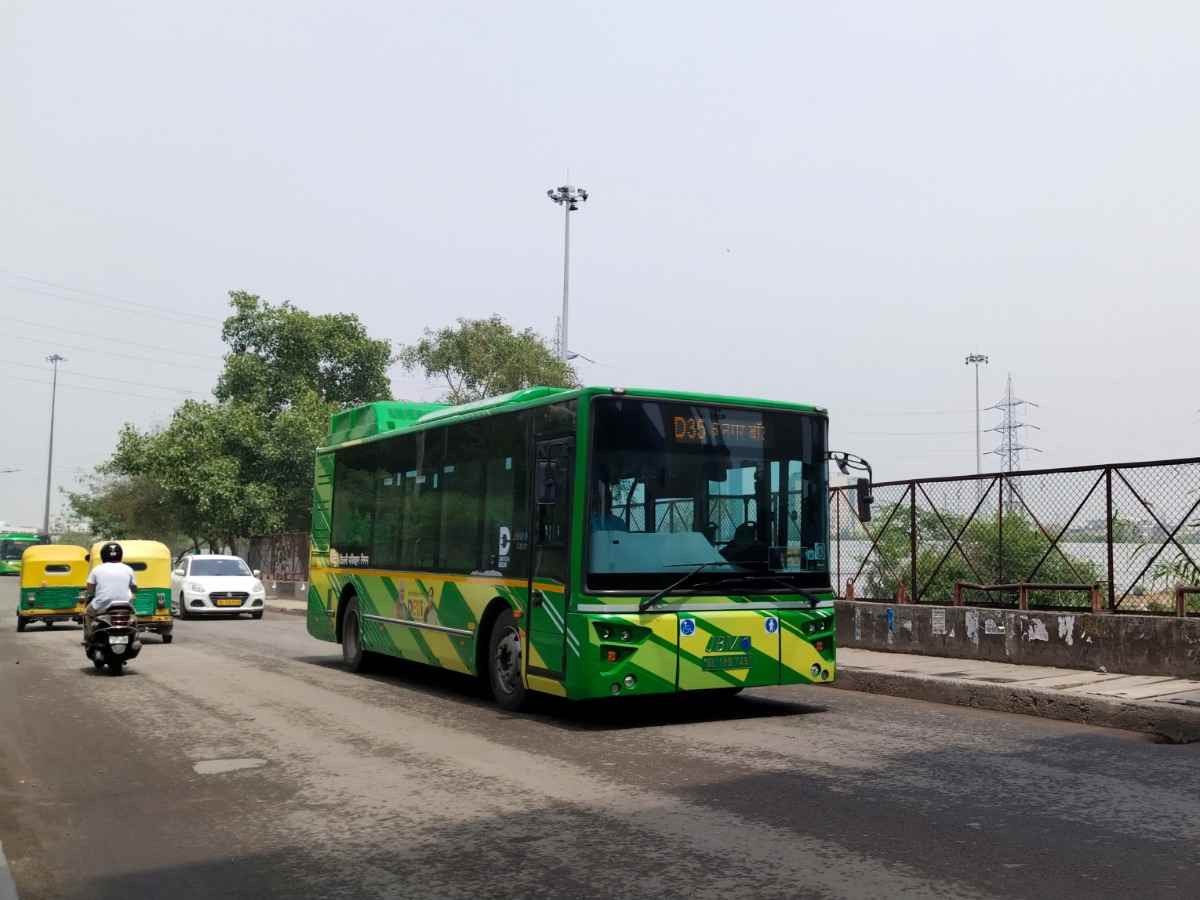
The Delhi government has sent a detailed proposal to the central government agency Convergence Energy Services Limited (CESL) for the immediate procurement of 3,330 electric buses.
Chief Minister Rekha Gupta said the Delhi government has requested the Centre and the Ministry of Heavy Industries to include this additional requirement, separate from the already allotted quota of 2,800 buses, under the subsidy model.
She made it clear that if any technical hurdles arise with regard to subsidies, the Delhi government is fully prepared to bear the cost itself to ensure that there is no delay in procuring the buses.
The Transport Department of the Delhi government has sought a total of 3,330 buses, comprising 500 buses of seven metres, 2,330 buses of nine metres and 500 buses of 12 metres. All buses will be low-floor, air-conditioned electric buses.
The seven-metre buses will serve narrow streets and provide last-mile connectivity, while the nine-metre buses will operate on smaller roads and as feeder services. The 12-metre buses will be deployed on main routes and heavily congested corridors.
Chief Minister Gupta said that with the support from the Centre, the Delhi government aims to make public transport 100 per cent electric.
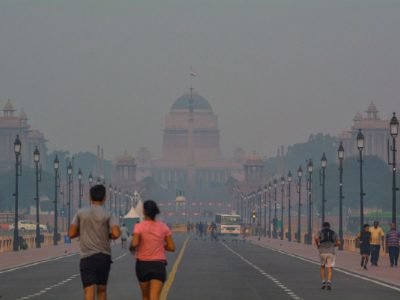
She said ensuring clean air in Delhi and providing citizens with a modern, convenient and affordable public transport system are among her government’s highest priorities.
In a recent high-level meeting of the Delhi government with CESL, it was decided to increase Delhi’s bus allocation under the PM E-DRIVE Scheme (Phase-2), according to a statement from the Delhi Chief Minister’s Office.
According to the chief minister, after reassessing requirements, demand has been placed for buses of different sizes to ensure connectivity from narrow streets to major arterial roads.
The public transport bus fleet of Delhi stands at 5,336, of which 3,535 are electric buses.
These include 1,162 nine-metre DEVI buses, 2,273 twelve-metre buses and 100 feeder buses.
According to the chief minister, more than 5,000 electric buses will be operating on Delhi’s roads by March this year. She said that by the end of 2026, 7,000 electric buses will be made available to the people of Delhi.
After the induction of 2,800 buses under PM E-DRIVE (Phase-1), the total number of buses in Delhi will rise to 10,430, and following the induction of 3,330 buses under PM E-DRIVE (Phase-2), the total fleet will increase to 13,760 buses, she added.
The Prime Minister Electric Drive (PM E-DRIVE) Scheme is an initiative of the Government of India, implemented by the Ministry of Heavy Industries with a budget of Rs 10,900 crore for the period from October 2024 to March 2026.
The primary objective of the scheme is to accelerate the adoption of electric vehicles by providing financial incentives for the purchase of electric two-wheelers, three-wheelers, e-buses and e-trucks, thereby reducing pollution and improving air quality.