Delhi Rain: For over a thousand residents of Harijan Basti, living near Delhi’s Ghazipur landfill is a relentless fight for survival. The noxious fumes from the towering waste heap, particularly during summer and monsoon seasons, trigger widespread health issues, turning daily life into a battle against environmental hazards.
The heavy monsoon rains of 2025, among the most intense in recent years, have worsened conditions, leaving streets in disrepair and compounding an ongoing water scarcity crisis. Despite political pledges to address the landfill by 2026, systemic neglect continues to expose residents to toxic pollution and a dire lack of basic amenities.
Neglecting Ghazipur
The Ghazipur landfill, holding 8.2 million metric tonnes of waste, including 1.9 million tonnes of fresh refuse, looms over Harijan Basti. In summer and during monsoons, the stench and emissions intensify, causing respiratory ailments, skin infections, and chronic illnesses.
Sanjay Kumar, 26, who relocated from Barabanki, Uttar Pradesh, six years ago, said, “Life here is incredibly tough. The landfill brings diseases to everyone. In winter, the fumes are less noticeable, but in summer, it’s unbearable.”
The monsoon rains, while dousing summer fires, churn the waste into a toxic slurry, producing leachate — a hazardous liquid laced with chemicals and pathogens. This seeps into nearby streets and homes, heightening health risks.
Beyond the landfill’s health toll, water scarcity plagues Harijan Basti, particularly in summer when pipelines often run dry. Kumar explained that residents get water only twice daily for two hours, morning and evening. In summer, it becomes worse, forcing families to buy water drums.
Also Read: Teachers must shape students as future leaders rooted in culture: Delhi CM
Struggles for clean water
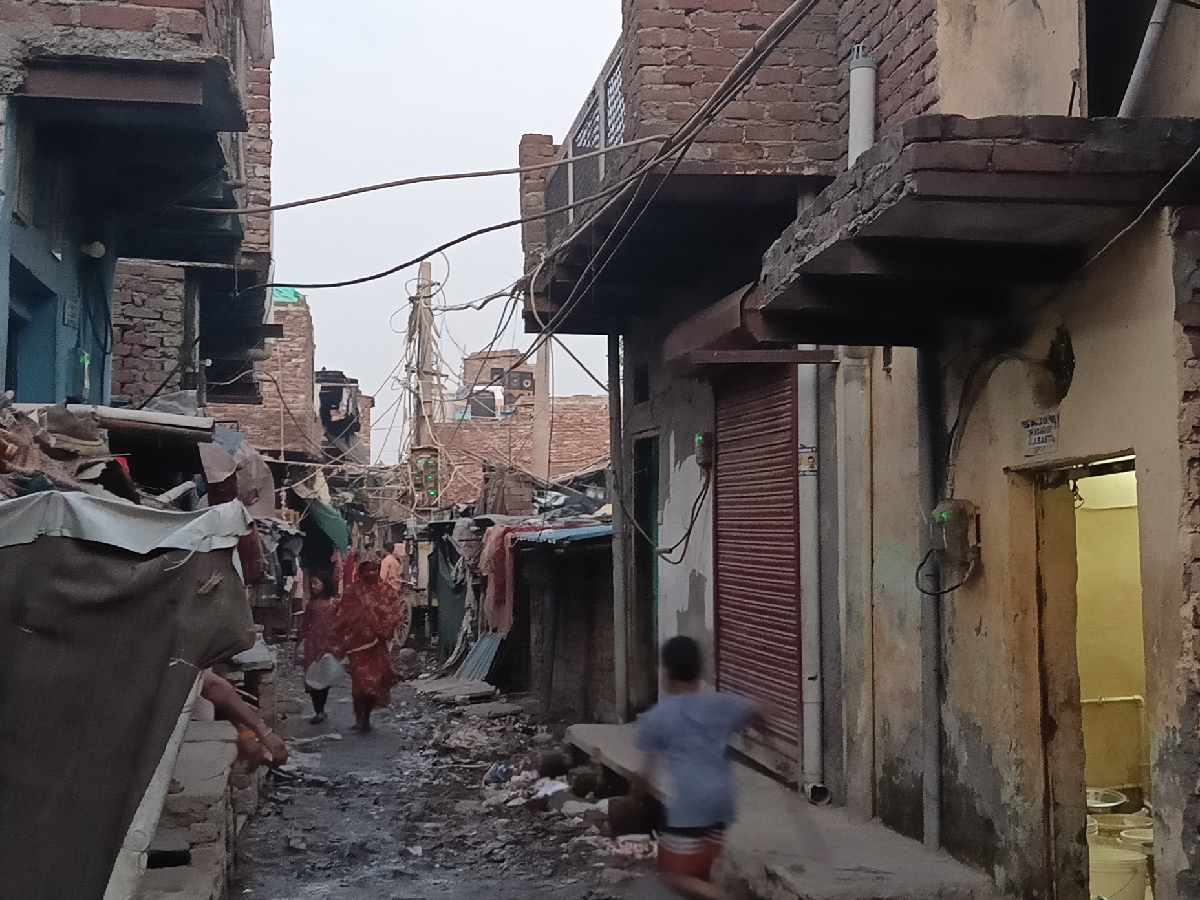
The 2025 monsoons compounded the issue, leaving streets in Mullah Colony and surrounding areas battered and impassable. Delhi Jal Board (DJB) tankers, unable to navigate the narrow, damaged lanes, now require residents to collect water from main roads.
“The tankers tell us to come to the main road because they can’t enter. So, we carry drums, buckets, and bottles. It’s exhausting, especially for the elderly,” said Mantosh Singh, 29.
This logistical nightmare has spawned a costly workaround. Private water plants and local shops sell water drums at inflated prices. Sanjay, who runs a private water plant with a submersible pump, said, “We sell each drum for about Rs 20. Shops buy from us and resell at a higher price.”
Even those with access to pumps face challenges. Adil, another resident, noted that their pump water is often dirty, similar to DJB’s supply, though private filtration systems offer some relief.
The incessant rainfall also pushes sludge into the sewage system in East Delhi, worsening sanitation concerns.
Slow progress
For Harijan Basti and nearby Kondli residents, life is defined by their proximity to the landfill and the constant struggle for clean water. Private suppliers offer some relief, but the financial burden weighs heavily on families already stretched thin.
The area’s systemic neglect stands in stark contrast to political promises. Biomining efforts at Ghazipur processed only 6.86 lakh metric tonnes of waste between July 2022 and April 2023, hampered by contractor issues and monsoon disruptions. Meanwhile, the landfill continues to grow, with diverted waste overwhelming other sites like Okhla.
Methane emissions from the landfill, flagged as “super emitters” in 124 instances since 2020, further degrade air quality. Leachate contaminates groundwater and the Yamuna River, raising fears of cholera and other diseases.
Not just Ghazipur, but also Okhla and Bhalswa’s landfills face similar crises. Heavy rains flood streets with toxic leachate, spread noxious fumes, and deepen health and environmental risks. Despite promises to flatten landfills by 2026 and regulate waste-to-energy (WTE) emissions, progress remains sluggish.
Despite clearance, Okhla suffers
Near the Okhla landfill in southeast Delhi, residents face a grim reality similar to Ghazipur’s Harijan Basti. The site, holding 2.8 million metric tonnes of waste, has been reduced from 60 metres to 20 metres through biomining, yet continues to receive diverted waste from Ghazipur.
Monsoon rains worsened the situation, with leachate pooling beyond the landfill’s boundaries and flooding Haji Colony and Sukhdev Vihar. The Tughlakabad landfill, still in use despite official closure claims, has drawn repeated complaints.
“They promised the landfill would be gone by December 2023, but nothing’s changed. Everyone just points fingers,” said Reshma Tomar, a local resident. Her son suffers from acute asthma triggered by landfill pollution, relying on an inhaler every five minutes.
Residents report that the monsoons amplify dangers, causing unstable waste slopes and toxic slurry to flow into streets. While Okhla’s smaller size limits the scale of fires compared to Ghazipur, the health impacts are severe. Waste pickers like Rakhi Kumari remain dependent on the landfill for livelihood, despite the hazards. “I dump rubbish here. The WTE plant is too far, and if the landfill is levelled, I’ll lose my income,” she said.
Instability of Bhalswa landfill
In northwest Delhi, the Bhalswa landfill stands at 61 metres beside the Delhi-Haryana border, looming over Bhalswa Dairy. Holding 4.2 million metric tonnes of waste, the site has officially stopped accepting new rubbish, but its legacy pile remains a menace.
The 2025 monsoons brought chaos when heavy rains caused wet garbage to slide downstream, flooding homes. “The clouds burst last month, and the rubbish mixed with our water supply. The pipelines now carry brackish, foul-smelling water, and children are falling ill,” said Reema, a resident.
Tests in 2025 confirmed groundwater contamination near Bhalswa Lake, with high levels of heavy metals and pathogens. The landfill’s instability, worsened by rain-soaked waste, mirrors a January 2025 slip that damaged homes.
Sukhdev Vihar’s struggle with WTE plant
Delhi’s WTE plants, intended to process municipal solid waste into electricity, have sparked controversy rather than relief. At Okhla’s Sukhdev Vihar plant, rubbish is incinerated in high-temperature furnaces to generate steam for turbines. Yet the process releases harmful pollutants, including dioxins and furans.
A 2025 Central Pollution Control Board (CPCB) inspection found emissions 800–900% above permissible limits. Fly ash and soot from the plant blanket nearby homes. “The toxic fumes make breathing impossible. My son and I both have asthma now, and his is far worse,” said Mohsin Khan, a resident.
The plant’s location violates CPCB guidelines that prohibit waste facilities near residential areas, water bodies, or cultural sites. Irshad Ali, a local, said, “The drains leak, the water’s awful, and we’re stuck with this massive facility in our backyard.” Others complain of an overpowering stench. “We have air purifiers not for pollution but for the smell. Guests never return,” said Rahi Khan.
Also Read: Markets from Chandni Chowk to Nehru Place reeling under 50% US tariffs
Unfulfilled promises and public anger
The 2025 monsoons underscored the fragility of Delhi’s waste management. At Okhla, rain-soaked waste flooded streets. Bhalswa’s garbage slides contaminated water supplies. Ghazipur’s diverted waste overwhelmed Okhla. Political promises, like the 2023 pledge to clear landfills, have been pushed back, with deadlines now stretched to 2028.
Chief Minister Rekha Gupta’s 2026 target appears ambitious given the pace of biomining — only 6.86 lakh metric tonnes processed at Ghazipur between 2022 and 2023 — and ongoing contractor disputes.
Social media posts from July 2025 highlight public frustration, with irregular rubbish collection leaving streets piled high. CPCB guidelines, mandating that landfill sites be planned for 20–25 years and located away from habitation, are routinely flouted. Plants like Okhla and Bawana stand amid residential clusters.
Experts call for urgent reforms: source segregation, integration of 150,000 waste pickers, and expanded composting to divert 70% of waste. Without such measures, Delhi’s residents face yet another monsoon season of toxic floods, polluted air, and broken promises.