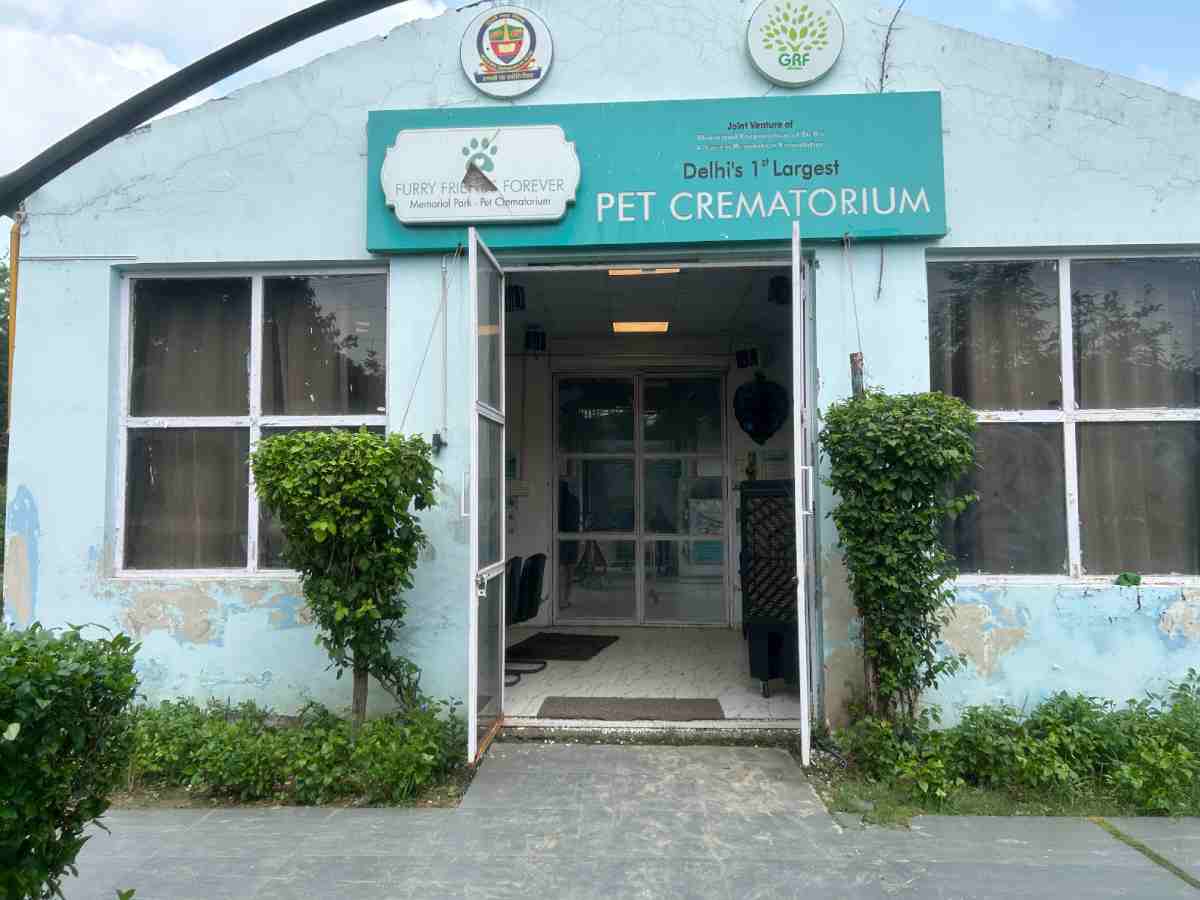
Delhi: The premises of Furry Friends Forever in Dwarka generally remain quiet, with only a few families present at a time. Some wait outside the cremation chambers carrying collars, leashes or photographs. Others sit on nearby benches until their pets’ ashes are handed to them.
Opened in December 2023, Furry Friends Forever is the city’s first pet crematorium run by the Municipal Corporation of Delhi (MCD). The CNG-powered facility operates from the MCD Dog Sterilisation Centre in Sector 29, Dwarka, in partnership with the Green Revolution Foundation.
A five-member team manages registrations, ambulances, municipal records, cleaning and cremations. Its members also find themselves supporting families grieving the loss of animals that had often lived with them for years.
A public facility for animals
Before the Dwarka crematorium opened, pet owners in Delhi had few options. Private cremation services were available but were often expensive. Stray animals, meanwhile, were generally disposed of by municipal authorities without any provision for a formal farewell.
Spread across nearly 700 square metres, the facility has two CNG furnaces, a small memorial area and a waiting space where owners can collect their pets’ ashes.
For the workers operating the crematorium, the job involves more than managing the furnaces. They answer telephone calls, maintain municipal records, coordinate ambulances and assist grieving families.
Chetan Goswami, 25, who has worked at the crematorium since July 2024, said many residents were initially unaware of the facility.
“When this crematorium started, many people didn’t even know that Delhi had a government facility where pets could be cremated with dignity,” he said.
The facility now receives calls from pet owners, the MCD and organisations such as the Green Revolution Foundation.
“The service runs throughout the day because you cannot predict when someone will lose their pet,” Goswami said. “People come here in grief, so apart from doing our work properly, we also try to support them emotionally during that difficult time.”
According to Goswami, using CNG instead of wood makes the cremation process faster and reduces the carbon footprint on the neighbourhood.
Cremations for pets and strays
The crematorium operates throughout the week and remains available for emergencies at any hour. Calls come from pet owners, MCD officials and animal welfare organisations coordinating cremations for stray animals.
Strays brought to the facility through municipal channels are cremated free of cost. For privately owned animals, the crematorium charges Rs 2,000 for those weighing less than 30 kg and Rs 3,000 for those weighing more than 30 kg.
Dogs and cats account for most of the animals brought to the facility, although rabbits and other small companion animals are also accepted. Monkeys are occasionally brought in by civic authorities.
According to Goswami, more pet owners are now choosing organised cremation instead of searching for informal burial spaces.
The facility handles between 120 and 180 cremations a month, which consists of privately owned pets and stray dogs brought through municipal channels, Goswami said.
“Our responsibility is to ensure that every animal receives a respectful final farewell, irrespective of whether it belonged to a family or lived on the streets,” he added.
The cremation process
Once the registration is completed, the animal is prepared and placed inside one of the CNG-operated cremation chambers. The process generally takes about half an hour, after which the ashes are handed over to the family if they wish to collect them.
“The entire process is fairly simple for pet owners,” Goswami said. “Once they complete the registration, we prepare the body and place it inside the CNG cremation chamber.”
The cremation usually takes between 25 and 30 minutes. Families may remain at the facility during the process and collect the ashes afterwards.
“Many people prefer to wait because they want to perform the last rites personally before taking the ashes home,” he said.
Workers said people responded to loss in different ways and often required emotional support in addition to assistance with the cremation.
Five workers serving the city
Despite receiving animals from across Delhi, the crematorium has only five employees. Each worker handles several responsibilities during the day.
“We have only five staff members managing everything here,” Goswami said. “Registration, maintaining MCD records, handling ambulances, cleaning the premises, operating the cremation unit and assisting families: All these responsibilities are divided among us.”
The arrival of stray animals sent by the MCD adds to their daily responsibilities.
“Even with limited manpower, we try to ensure that no family has to wait unnecessarily,” he said.
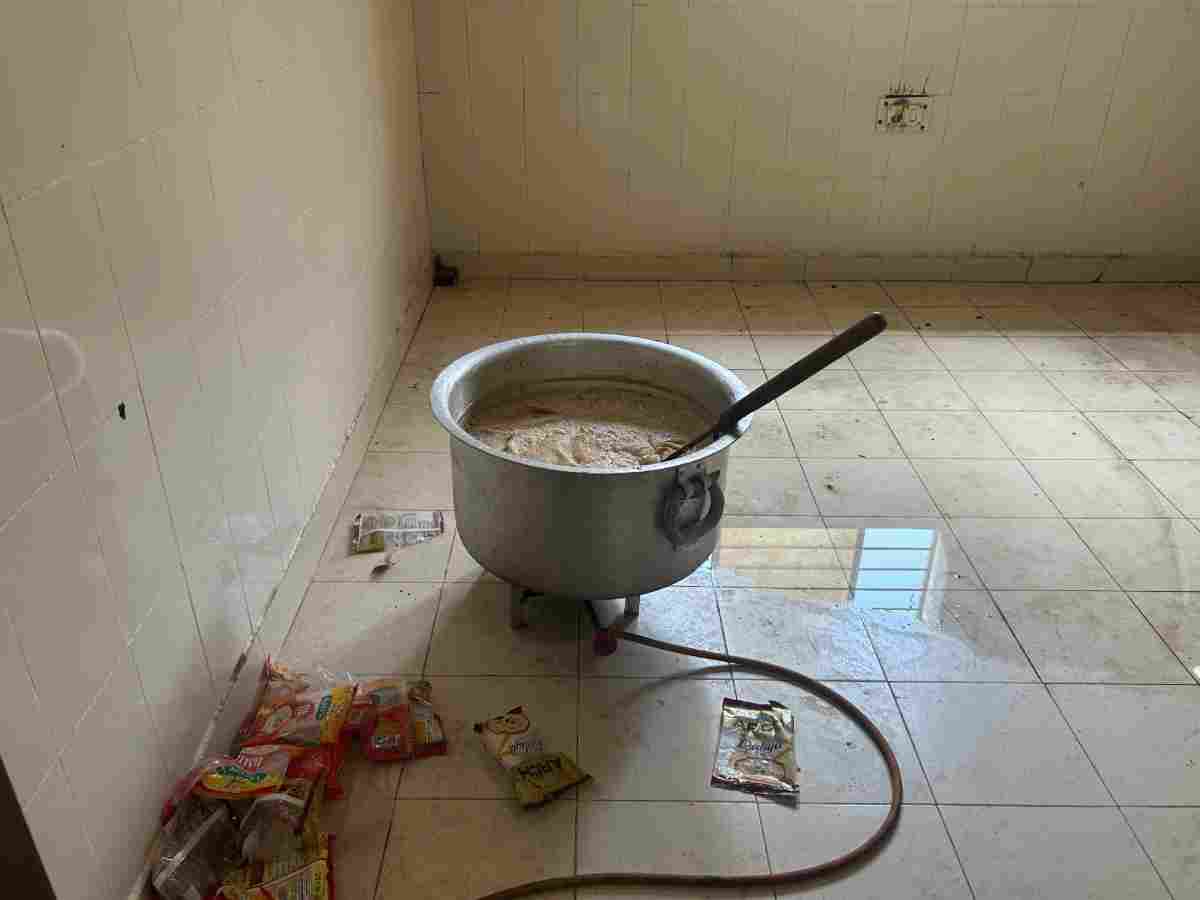
at the facility
Workers also help families cope with the emotional distress of losing a pet. Goswami has seen people struggle with the deaths of animals that had lived with them for more than a decade. Some arrive composed but break down shortly before the cremation, while others find it difficult to accept that the process is over.
“Some owners become very emotional after losing their pets,” he said. “There have been instances where people felt their pet’s cremation wasn’t completed properly and requested us to repeat the process.”
The staff understand that such reactions arise from grief rather than anger, he added.
“For us, this isn’t just another municipal service; every family that walks in is dealing with a personal loss, and we try to treat them with patience and respect.”
Sterilisation and care on the same campus
The crematorium shares its campus with the MCD’s animal sterilisation centre, where veterinarians treat and sterilise stray dogs.
Dr Ashok Kumar Meel, 26, of the College of Veterinary and Animal Science in Udaipur, affiliated with Rajasthan University of Veterinary and Animal Sciences, said the work of the two facilities was closely connected.
“Animal welfare doesn’t end with treatment; it also includes ensuring dignity after death,” Meel said.
The sterilisation centre conducts surgeries on around 30 to 40 stray dogs every day. After being anaesthetised and sterilised, the animals remain under observation for four days before being released at the locations from where they were picked up.
“The crematorium complements this work because it ensures that animals that cannot survive or are brought dead are also handled respectfully,” he said.
Together, the two facilities address different aspects of animal welfare. One provides sterilisation and medical care to stray animals, while the other provides cremation services for pets and strays that have died.
A place to remember
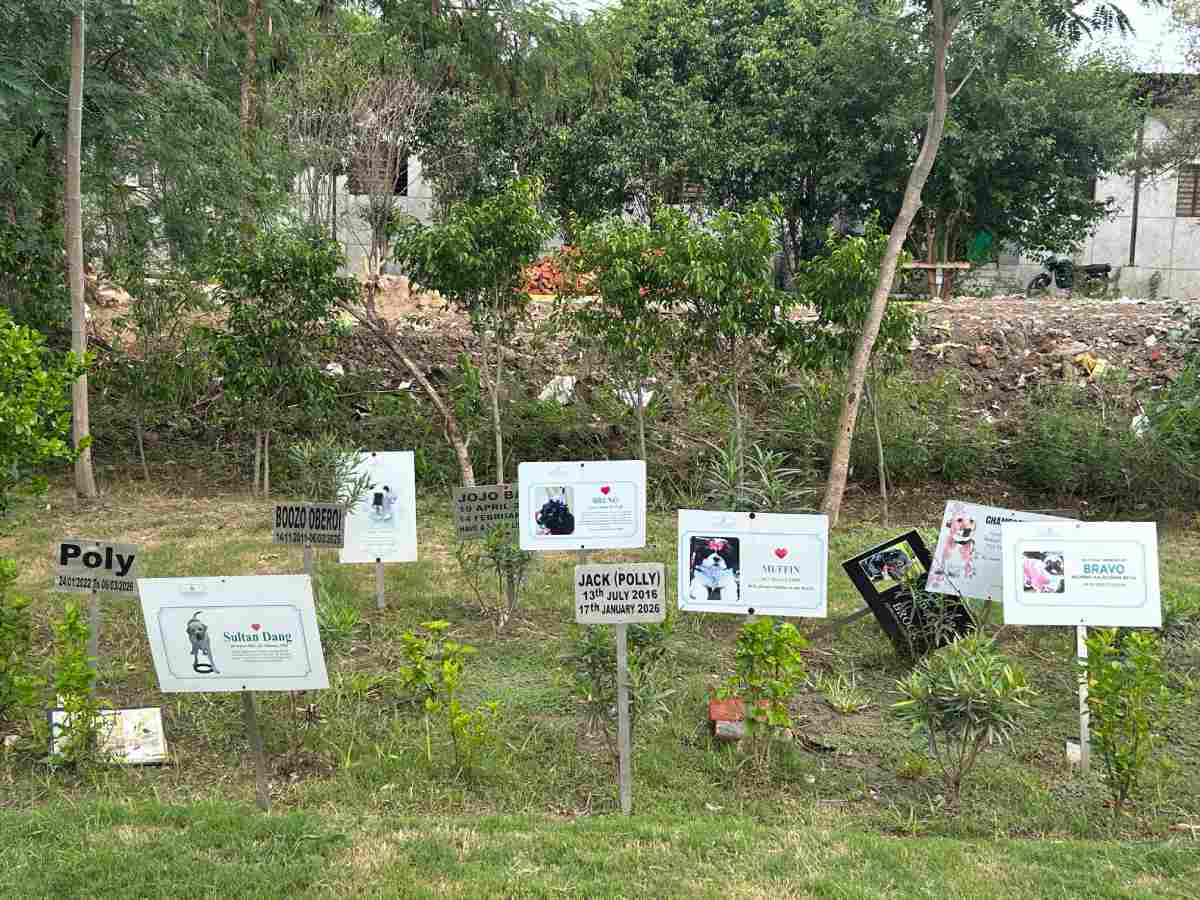
Beside the crematorium is a small green space where families may mix their pets’ ashes with the soil and grow plants in their memory. A memorial wall nearby bears the names of animals cremated at the facility.
The memorial gives families a dedicated place where they can remember their pets, something otherwise difficult to find in a city where open space is limited.
Some of the animals brought to the crematorium spent years with families, while others lived on the streets. At the Dwarka facility, those distinctions do not determine how they are treated after death.