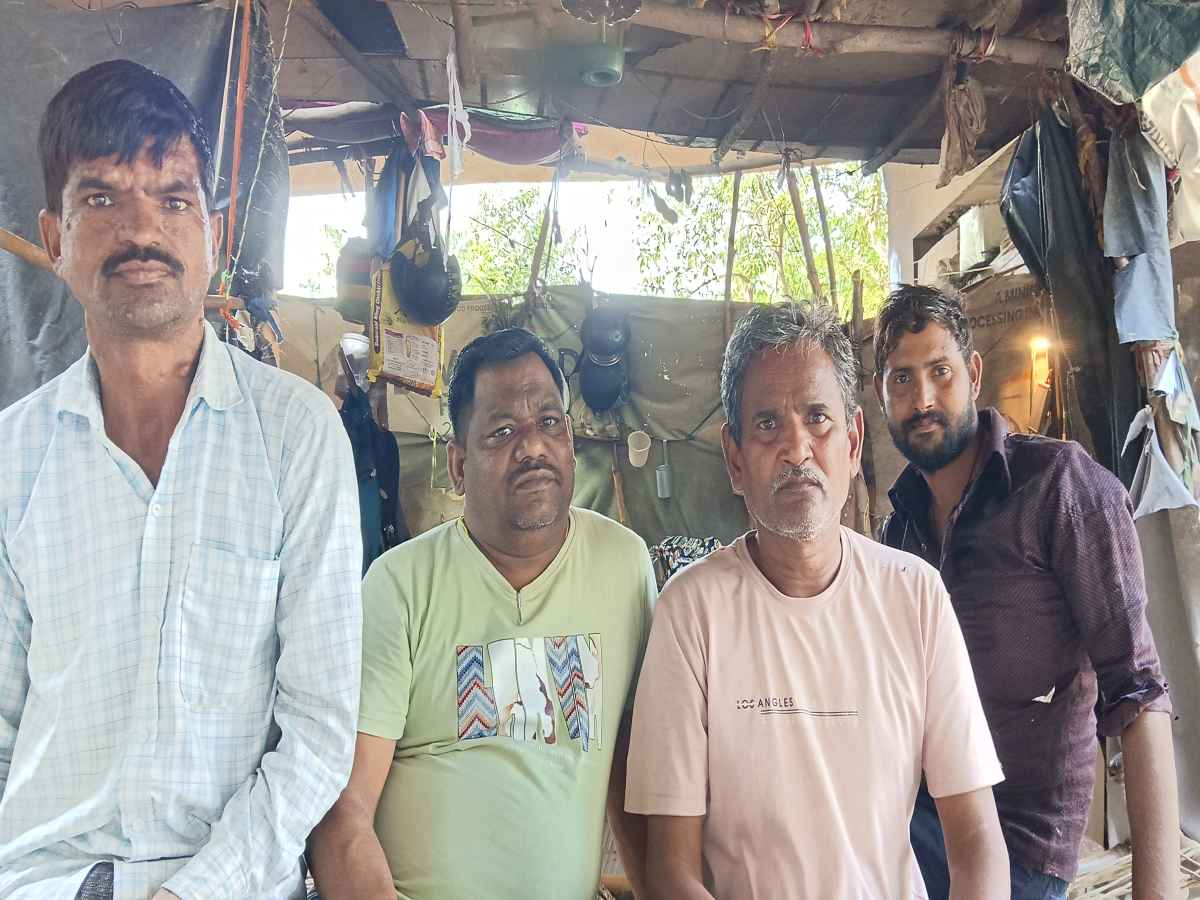
Hundreds of residents of settlements along the Yamuna floodplains and around Race Course Road have been left out of Delhi’s draft electoral roll following the Special Intensive Revision (SIR), with many marked absent or permanently shifted.
Among the starkest cases is Race Course Road, where almost 50% of its voters have been excluded from the draft roll. Residents in another part of the estate have also found their names missing, even as some say they submitted their enumeration forms during the revision exercise.
“We have already filed a notice with the District Magistrate, but it seems that our pleas have fallen on deaf ears. We actually do not have anywhere to go,” said.
Race Course Road settlements
A large number of residents of three settlements around Race Course Road — Bhai Ram Camp, Masjid Camp and DID Camp — were removed after demolition notices were issued to them.
The three settlements are divided between Parts 45 and 46. Before the SIR exercise, the two parts had a cumulative 2,283 voters. Following the revision, 998 voters were deleted.
Most of those deleted have been marked as permanently shifted, according to residents.
Earlier this year, residents of the settlements were offered tenements at Savda Ghevra on the outskirts of Delhi, but only around 200 flats were provided.
“The ones who stayed back are mostly those who have not been provided with anything,” said resident representative Rakesh Bansal.
Bansal said several residents had not moved to the Delhi Urban Shelter Improvement Board (DUSIB) tenements.
“We had pleaded with them that it was our right to vote and, since the SIR was underway, they could not take it away from us.”
Bansal’s name was also missing from the draft roll.
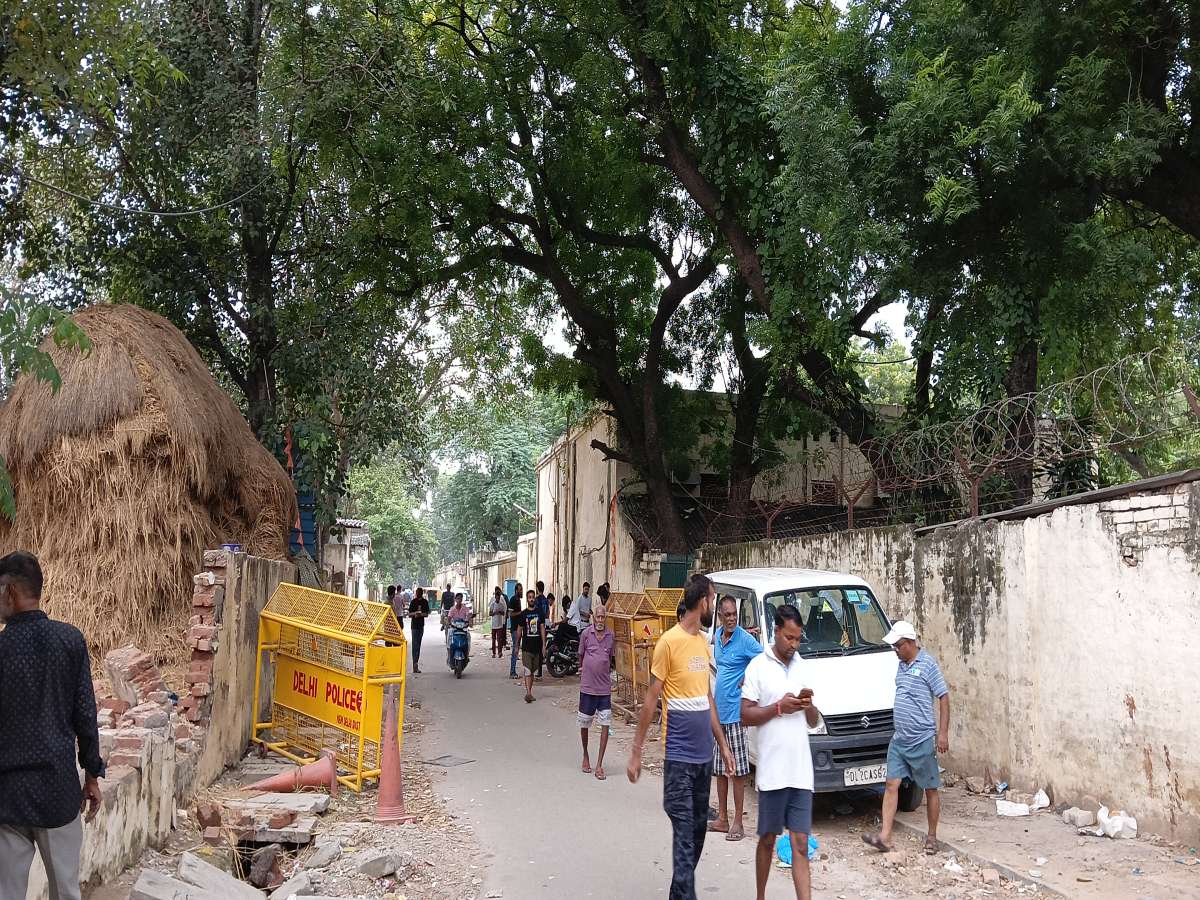
Booth Level Officer Mohan Singh said those removed from the roll had been marked as having shifted from the area.
“Since they have shifted to Savda Ghevra, they have been marked as such. The area also belongs to the government,” he said.
Resident Pritam Prakash, however, said some people continued to live and work in the area.
“The government thinks that they can get us out of here by shutting the race course down, but there are other forms of industry available in New Delhi,” he said.
Bela Estate
Nearly 20 years ago, much of Bela Estate had paddy and vegetable fields where residents grew crops such as okra and brinjal. Today, large parts of the agricultural land have disappeared, with waterlogged patches remaining in parts of the area.
The estate comprises Bela Gaon, Moolchand Basti, Kanchan Puri, Malla Gaon and China Colony. The construction of the Geeta Colony Bridge in 2009 geographically divided the settlements. Malla Gaon and China Colony fall under the Chandni Chowk Assembly constituency, while Bela Gaon, Moolchand Basti and Kanchan Puri fall under Jangpura.
The entire Bela Estate also falls within the first phase of the Yamuna Riverfront Development Project, under which the Delhi Development Authority (DDA) plans to develop a biodiversity park and a lake across 189 acres.
The settlements have faced several demolitions over the years. In the months preceding the SIR, residential settlements along the Yamuna floodplains in different parts of Delhi also witnessed demolition drives by the DDA as part of anti-encroachment action in areas falling under Zone O.
According to minutes uploaded by the Electoral Registration Officer (ERO), Part No. 7 of the Jangpura constituency, covering Rajghat, had 612 voters before the SIR. Following the revision, the number fell to 263. The records mark 110 voters as absent, 222 as shifted and 16 as dead.
“I had submitted the SIR form, but then the BLO (Booth Level Officer) returned it to me. He did not tell me the reason, and after that I got to know that I had been struck off the list. I have been voting from here ever since I got my voter card, and yet the authorities are not willing to believe that I am a registered voter here,” said Chetram Kumar, a resident of Moolchand Basti, one of the settlements that make up Bela Estate.
Kumar is among those marked absent.
“When they returned the SIR form to me, I was very curious as to why that happened. I asked him (the BLO), and he said that it was normal. But in a few days’ time, I got to know that I had not been included in the list, and I was not told the reason,” he said.
“When I informed him, he told me that I should fill up Form 6 and submit it.”
Form 6 is used to register as a new voter.
The situation is even more acute at Bela Gaon, which falls under Part No 38 of the Chandni Chowk Assembly constituency, covering the Lal Quila-Yamuna Bridge area.
A total of 729 enumeration forms were recorded from the part during the SIR exercise. The Absent-Shifted-Dead-Duplicate (ASDD) list shows that 728 of the 729 voters were excluded from the draft roll — a deletion rate of 99.8%. Of those excluded, 42 were recorded as dead, while 632 were marked “permanently shifted”.
Sharat Singh, a resident of Daryaganj, earlier lived in Bela Gaon but moved after repeated demolition drives by the DDA. He said he faced problems during the revision because of the change in his address.
“They said that there is a mismatch in my address. I told them that I had shifted to my new residence recently, yet they would not accept it. They told me to fill up Form 6 and submit it,” Singh said.
“They did not reject my form, but they did not tell me why my name was cut either.”
Like Kumar, Singh was marked untraceable or absent. Their wives, however, were included in the draft electoral roll.
Booth Level Officer Mohammed Zubair said he had submitted all the forms he received.
“I had digitised all of the forms. They were probably rejected. The ones which have been marked untraceable must have been a glitch in the system. The forms that were received were all digitised,” he said.
Chilla Village
Residents of Chilla Village are facing a somewhat different problem.
Only around 40 families now remain in the village. Residents said neither the BLO nor any other official approached them with enumeration forms or informed them about the SIR exercise.
“Barely anyone stays here anymore, so it is understandable that nobody came or we were not informed either. But we have been voting for quite some time. We voted last year too,” said resident Ram Avtar.
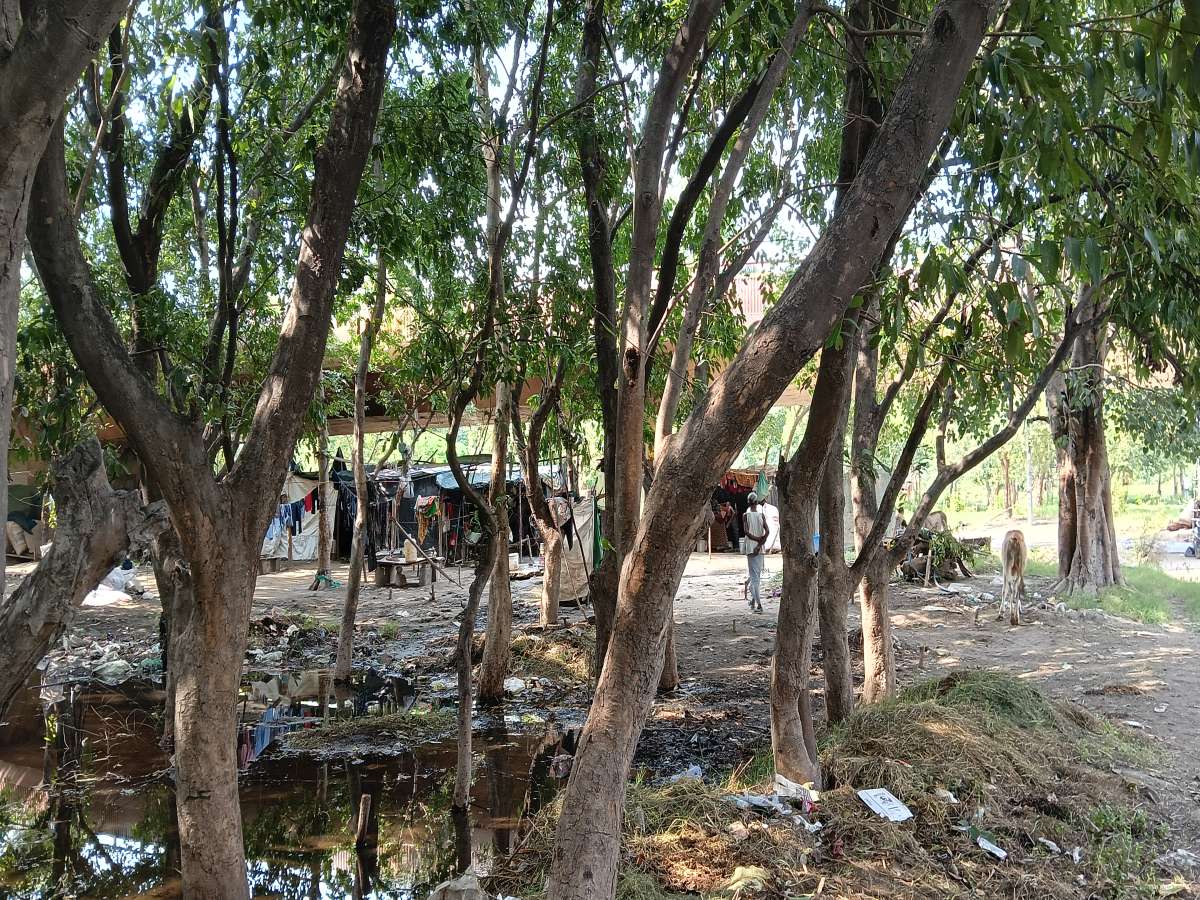
Like residents of Bela Estate, families in Chilla Village were once engaged in farming, cultivating enough for their own consumption while selling part of their produce in local markets.
Residents said farming in the area has since been affected by National Green Tribunal directions and the DDA’s demarcation of the area under Zone O.
“There is nothing left here anymore. We will not be able to vote from here either, now that we have to probably file Form 6 as well,” said resident Savitri Devi.
The families are now considering filing Form 6 in the hope of being included in the final electoral roll.
According to the Election Commission of India, Delhi’s final electoral roll is scheduled for publication on November 4.