Following the suicide of 31-year-old MSc Physics student Rishikesh Kumar at the Indian Institute of Technology Delhi (IIT Delhi), intense agitation and escalating institutional friction have taken hold of the campus.
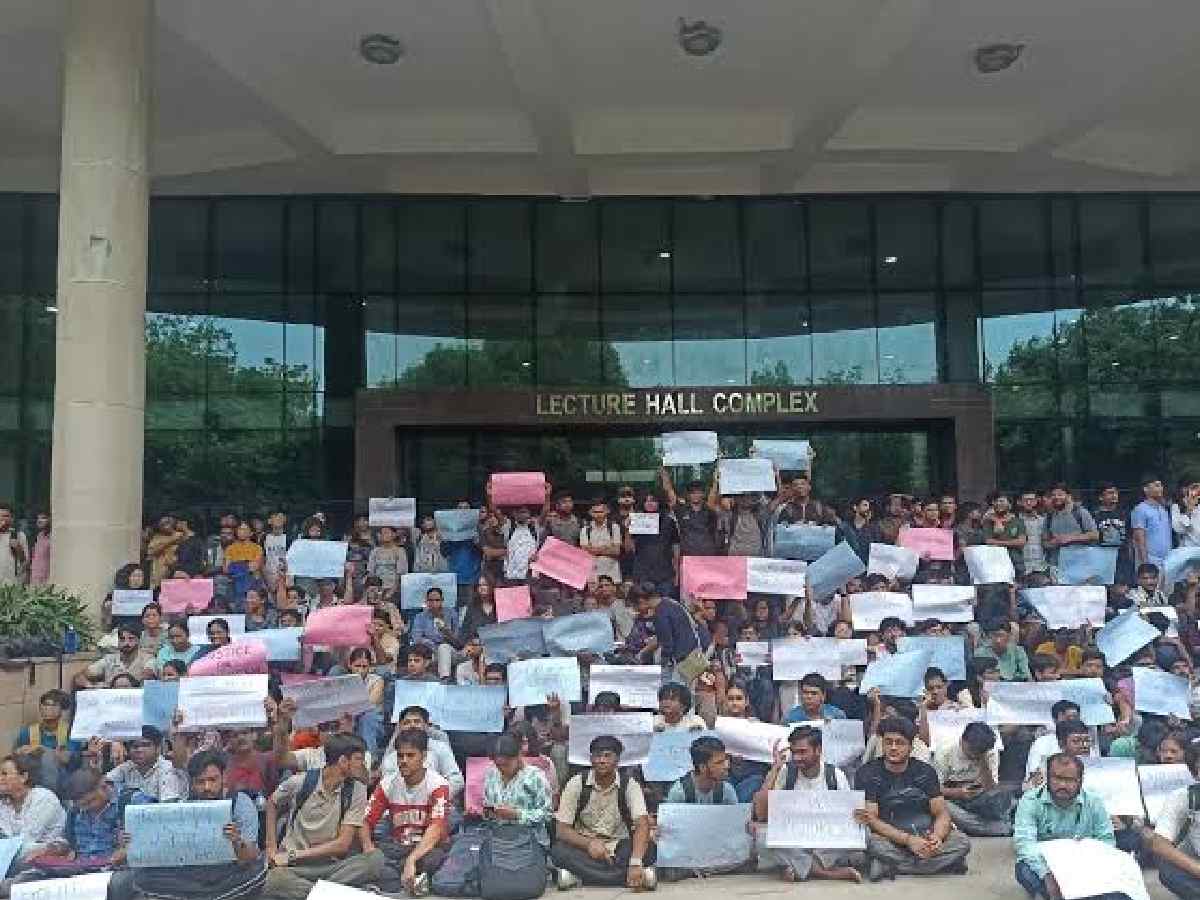
On the morning of August 22, Rishikesh entered the campus and went straight to the Lecture Hall Complex before taking the extreme step. Emergency services and campus security rushed him to the on-campus hospital, where doctors declared him dead on arrival. No suicide note was recovered, though his locked mobile phone was seized by forensic teams for investigation.
His family later disclosed that Rishikesh had spoken to his mother the evening prior, expressing profound distress and crying out, “Mummy, I am hurting a lot.”
His brother, Abhishek, recounted their final conversations: “He kept saying, ‘Mummy, let us go to Patna quickly. Let us go home.’ We spoke to him at length that night and tried to convince him not to do anything drastic… He was deeply hurt by not getting a hostel room and felt that he could not study properly while living outside.”
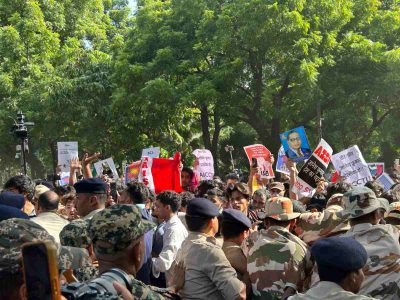
Following the incident, hundreds of students launched continuous protests, demanding systemic accountability. Strains between the student body and the administration reached a flashpoint when Director Rangan Banerjee accused protesters of trespassing into the faculty residential areas.
Director’s warning
In an official email to all students, Director Banerjee stated that “unfortunately, the situation escalated significantly on the night of August 27. On that night, from 10.30 pm to 12.30 am, a group of protesters extended their agitation into the campus residential zones, staging demonstrations directly in front of faculty housing and resorting to unsavoury, humiliating and threatening language in their slogans”.
The protesting students swiftly rejected the allegations, insisting their march paused only briefly at the gate before proceeding to the main entrance while keeping emergency and hostel routes clear.
A student representative said, “The march was organised with sensitivity to safety and security, particularly around the faculty residences. The decision to avoid marching into the vicinity of Kailash and Himadri hostels was deliberate.”
Another student said the slogans were “strictly about institutional accountability, transparency and community solidarity”, adding that those were meant as “an invitation to the faculty fraternity, made on the basis of the trust and relationship students share with their professors”.
The protesters have alleged that the administration responded with excessive police deployment and intrusive audio-visual surveillance despite the peaceful nature of their demonstration.
The August 22 tragedy is not an isolated case. The institute has witnessed at least eight such deaths over the past nearly three years.
‘Toxic competition, discrimination’
In 2025, it was reported that a committee set up by IIT Delhi in 2024 to study institutional processes following student suicides had flagged several critical triggers. These included post-coaching burnout, a grading system that fosters “toxic competitiveness”, “relentless academic pressures”, and a culture marred by “caste and gender-based discrimination”.
Although the committee submitted its report in August that year, no immediate action was taken. The institute stated at the time that the findings would be presented to its Board of Governors alongside proposed implementation measures. Presently, the institute has formed multiple units under the Office of Diversity —such as the Office of Accessible Education, the Initiative for Gender Equity and Sensitisation and Indradhanu — to help students tackle mental health issues. The institute also has a student-led body, the Board of Student Welfare, focussed on mental health.
IIT Delhi has a full-time psychiatrist at its hospital and two part-time psychiatrists from AIIMS and VIMHANS on campus. Moreover, according to the authorities, the institution currently has a total of 15 counsellors on campus available daily at all times. “Hostel counsellors, including night counsellors, are also made available for the students, which has given students a choice to avail of counselling services within the hostels and at night as well,” an official said.
A third-party firm, YourDost, has been engaged to provide online counselling services to students.
“Students who feel uncomfortable in availing counselling services on campus are given appointments through our centre to listed hospitals for accessing psychiatric and psychological help and support, with the first session being reimbursed for the students. Tie-up is done with private hospitals such as Max, Fortis and VIMHANS to facilitate and assist students,” the official added.
‘Lack of privacy’
Despite these safeguards, there remains a considerable divide between students and counsellors. Multiple students in a conversation with Patriot alleged that some counselling sessions have resulted in their complaints and issues being disclosed to authorities. “There is no confidentiality when it comes to counselling sessions. There have been multiple incidents where PhD students, who sought to avail the counselling services, have said that their issues have been divulged to their academic guides,” a student said, on the condition of anonymity.
They added that if a patient complained about their mentors or teachers, there was a higher chance that the details would be leaked. “Following that, they (professors) use the very thing to try to quell the students’ complaints,” the student added.
In 2024, the IIT Delhi administration introduced ‘open house’ discussion sessions where students could air their complaints regarding the institution, including measures to better the situation there. However, even this stopgap measure has allegedly turned into another formality. “Open house sessions still take place, but they are without any teeth. No student actually says anything of note, especially PhD students, because the faculty themselves start eyeing the students in a manner that quells any form of dissent,” a master’s student said.
Measures after agitation
In response to sustained student pressure, the administration agreed to reconstitute its external inquiry panel after its initial head, former Uttarakhand DGP Ashok Kumar, stepped down amid student objections regarding past remarks.
The newly formed probe committee is headed by Justice Mukta Gupta, a retired judge of the Delhi High Court. The panel also includes Dr Pratap Sharan (Head of Psychiatry at AIIMS New Delhi), two student representatives (Saket Kumar and Vikas Choudhary), and the IIT Delhi Registrar as the Convener. The panel has been tasked with submitting a comprehensive report within two weeks.
In an official statement, IIT Delhi affirmed that “the Institute is committed to treating students as active stakeholders and to taking proactive, sustained and measurable steps to safeguard their academic welfare and mental health”. The institute added that it “will continue to strengthen its systems and take all necessary measures to ensure that students receive the support and care they need throughout their academic journey”.
Alongside financial relief from the institute’s Benevolent Fund and a voluntary contribution drive among faculty and alumni, the administration announced plans to appoint an external Ombudsperson, establish Academic Unit Wellness Committees, and reinforce round-the-clock psychiatric access and reimbursement for external mental health care services. Nevertheless, protesting students maintain their demand for the resignation of the Dean of Students’ Welfare, full assurance against disciplinary action, and Rs 1 crore in formal compensation for Rishikesh’s family.
Earlier tragedies
Anil Kumar died in September 2023. Originally from Banda in Uttar Pradesh and hailing from a Scheduled Caste community, he enrolled at IIT Delhi in 2019 to pursue a BTech in Mathematics and Computing. At the time of his death, he was a 21-year-old final-year student on an academic extension after failing to clear several examinations.
Ayush Ashna died in July 2023 at the age of 20. Raised in Bareilly, Uttar Pradesh, he was a final-year BTech student at the institute when he passed away.
Pranav Jain died in November 2023 at the age of 23. Raised in East Delhi, where he lived with his family, he was a fourth-year BTech student at the time of his death.
Varad Sanjay Nerkar died in February 2024 at the age of 23. Originally from Nashik, Maharashtra, he was a high-performing final-year MTech student in Polymer Science who had secured a high CGPA and a job placement before his passing.
Kumar Yash died in October 2024. Originally from the Deogarh area in Jharkhand, he was in his second year pursuing an MSc degree at IIT Delhi.
Ayush Singhal died in June 2025 at the age of 25. He completed his Bachelor of Dental Surgery at the National Dental College in Dera Bassi before continuing his studies at IIT Ropar, eventually starting a PhD in Biomedical Engineering at IIT Delhi in January 2024.