Once the lingua franca of Delhi, Urdu has witnessed a steady decline due to socio-political shifts, changes in education policies, and a growing preference for English and Hindi.
With fewer institutions offering Urdu as a primary subject and a declining number of young learners familiar with the script, concerns over the language’s fading presence have become increasingly palpable. However, recent years have seen a resurgence of interest, thanks to numerous programmes and events aimed at preserving and promoting Urdu.
Reviving Urdu through education
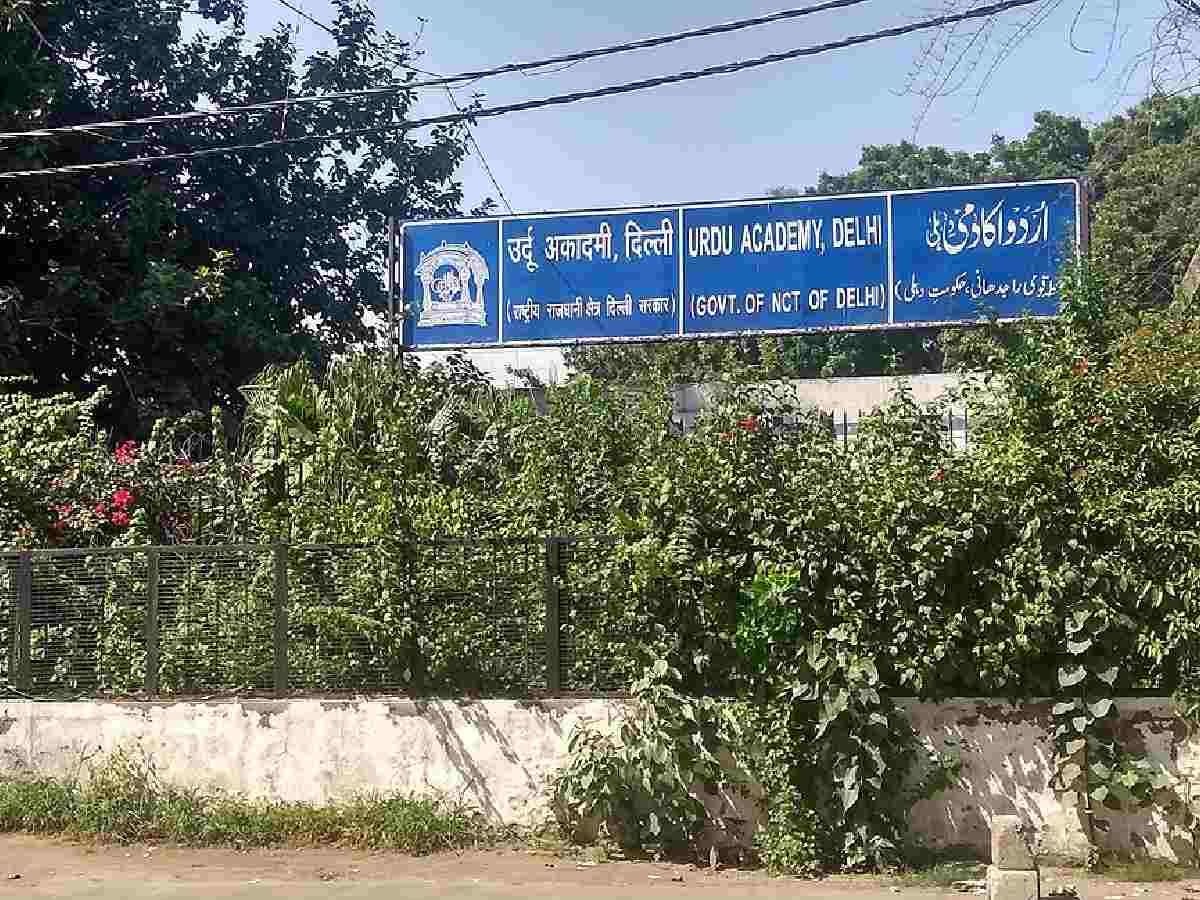
The Urdu Academy Delhi has been actively working to foster the growth of Urdu language and literature by introducing various courses.
Mohammad Haroon, an official at the Urdu Academy Delhi, told Patriot that the department is making significant efforts to make Urdu more accessible. “The new concept we are introducing soon is Urdu calligraphy. This is completely new, and we are confident that people will love it and enrol in large numbers,” he said.
Currently, the academy offers a one-year Urdu certificate course.
“We are seeing a good number of students who are passionate about Urdu and poetry and want to learn the language. Those enrolling come from different walks of life,” Haroon said, adding, “They are serious about learning Urdu.”
He further mentioned that a separate Urdu literary course has been introduced. “We have set up one centre where around 35 students are currently studying Urdu. We teach the language from the basics,” he explained.
The official also revealed plans to launch online Urdu classes soon.
“We want Urdu to reach every nook and corner of Delhi. With online classes, people will be able to learn Urdu from the comfort of their homes,” he added.
Also read: Leaving out someone like Shreyas Iyer shows India’s squad depth: Ross Taylor
Universities step in
In addition to these initiatives, various universities have also started offering Urdu courses. Last year, Jamia Millia Islamia’s Centre for Distance and Online Education (CDOE) began accepting applications for its one-year Urdu language programme.
Delhi University (DU) has also incorporated couplets by mystic poet and saint Kabir Das into its Master’s degree curriculum in Urdu. As part of syllabus revisions recommended by the Faculty of Arts, students are now being taught a selection of 40 couplets from Kabir Bani in the first semester.
Speaking to Patriot, Arjumand Ara, an Urdu professor at the University of Delhi, suggested that Urdu needs to be linked to employment opportunities to attract more learners. “Nowadays, there are hardly any jobs that require Urdu as a qualification. Unless it is connected to employment, I don’t think it will draw more students,” she said.
She noted that while the number of students enrolling in Urdu courses at the university is satisfactory, more needs to be done. “I believe short-term and specialised Urdu courses should be introduced so that students from other disciplines can also study the language,” Ara suggested.
“Urdu should be taught in more universities and colleges in Delhi. A limited number of institutions offering Urdu will hinder its growth,” she added.
Urdu’s cultural presence
An assistant professor from the Department of Urdu at Jamia Millia Islamia, who wished to remain anonymous, argued that Urdu does not need to be “preserved” in the conventional sense. “There are two types of Urdu audiences—one consists of literature enthusiasts who actively engage with the language, and the other comprises people who enjoy poetry and storytelling. Both groups are keeping Urdu alive,” he explained.
“We are hopeful that under the National Education Policy (NEP), more Urdu courses will be introduced at universities,” he added.
Dr Rizwan Khan, a Delhi-based Urdu writer and poet, believes that the younger generation can play a pivotal role in promoting the language.
“I think popular literature in Urdu should be taught instead of focusing solely on poetry and ghazals. Literature will ensure the survival of the language,” he said.
He suggested that Urdu should be introduced at the school level to encourage students to take up the language in the future. “The government can also promote Urdu by including it in public signage at hotels, airports, railway stations, and markets. This would increase visibility and engagement with the language,” he said. “Additionally, vacant positions for Urdu teachers in schools and colleges must be filled.”
Festivals and the declining Urdu Bazar
Beyond formal education, Urdu continues to thrive in literature festivals, art exhibitions, and cultural events. The Jashn-e-Rekhta festival, an annual celebration of Urdu, has played a crucial role in bringing together artists, poets, and language enthusiasts. Other festivals, such as the Urdu Heritage Festival, Jashn-e-Urdu, and Jashn-e-Adab, are also dedicated to popularising the language.
However, Delhi’s historic Urdu Bazar is witnessing a steady decline. Once a vibrant marketplace selling thousands of books each month, it now has only a handful of bookstores, overshadowed by biryani joints and travel agencies. What was once a hub of Urdu literature has become just another khana bazaar (food market) in Delhi.
Also Read: Mohammed Siraj lights up The Oval as India script thrilling 2–2 series draw
Delhi’s historic connection with Urdu
Historically, Delhi has played a pivotal role in shaping Urdu’s literary and poetic traditions. The city nurtured some of the most iconic poets and scholars who left an indelible mark on Urdu literature. The 18th and 19th centuries—often referred to as the golden era of Urdu poetry—saw the rise of legendary poets like Mir Taqi Mir, Mirza Ghalib, Zauq, and Bahadur Shah Zafar, the last Mughal emperor. Their verses, laden with themes of love, longing, and existential reflection, immortalised the spirit of Delhi in the annals of Urdu poetry.