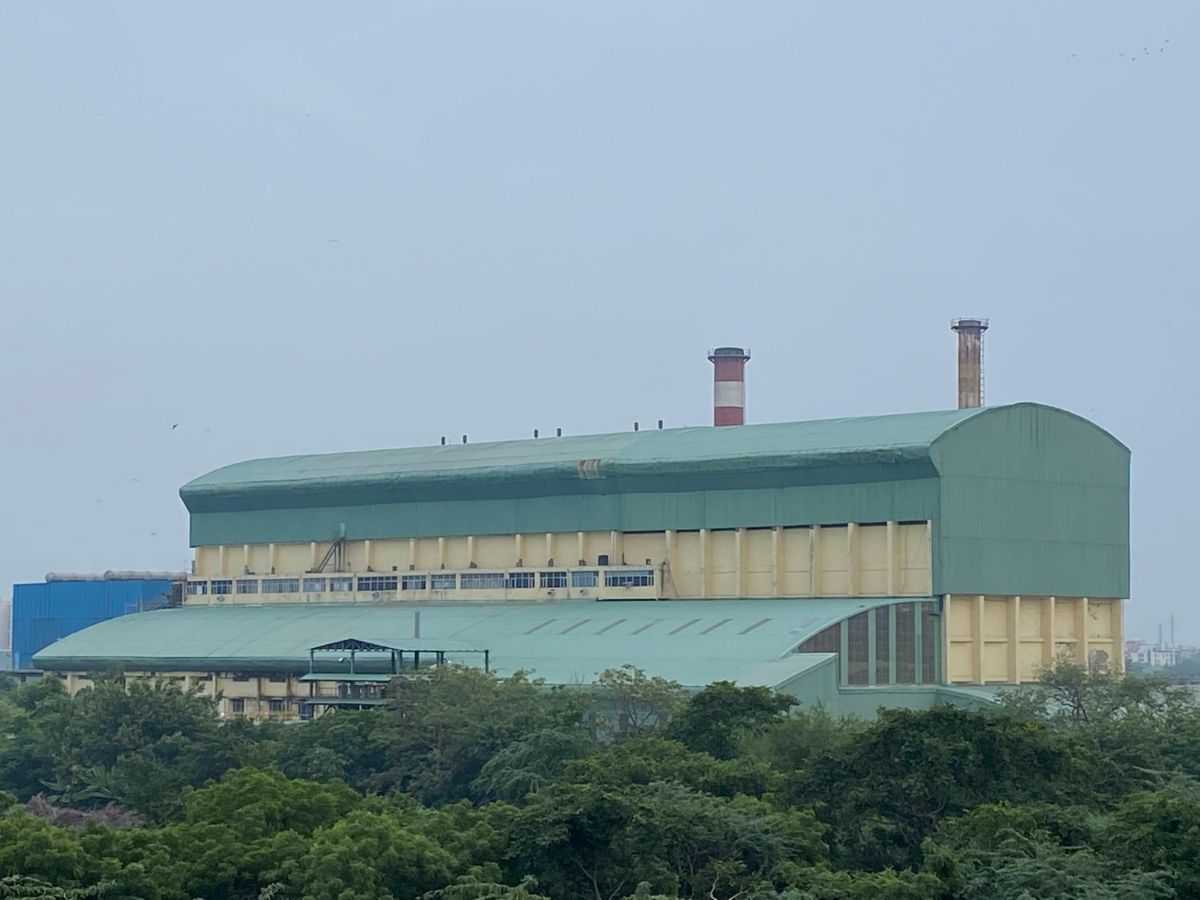
For families living around Delhi’s waste-to-energy (WtE) plants, pollution is not a winter problem—it is a daily reality. From Okhla to Narela-Bawana and Ghazipur to Tehkhand, residents say the air never smells clean, their throats rarely feel normal, and children wake up coughing through the year.
Each winter, the Delhi Government triggers the Graded Response Action Plan (GRAP), shutting coal power plants, halting construction and curbing industry. But WtE plants continue uninterrupted. These facilities burn about 8,000 metric tonnes of mixed, poorly segregated waste daily, releasing smoke, gases and fine particles in the heart of densely populated neighbourhoods.
GRAP includes no provision to regulate or pause WtE emissions. Residents say this silence feels like abandonment.
“In every third house here, someone is struggling to breathe,” said fifty-eight-year-old Sunita Devi of Tughlakabad Extension, near the Tehkhand plant. She said many residents suffer from asthma, chronic bronchitis or a constant burning sensation in the chest. “The doctors tell us we are living in a gas chamber. But where do we go?”
A daily cycle of smoke and sickness
Across neighbourhoods near the four WtE plants—Okhla, Ghazipur, Tehkhand and Narela-Bawana—residents describe the same routine: black smoke rising from chimneys, chemical odours stinging their eyes, and morning air so acrid that even stepping out feels unsafe.
“People think pollution becomes bad only in October and November,” said Rajpal Saini of Sanoth village, near the Narela-Bawana plant. “But for us, it’s twelve months of suffocation.”
He said the smell was so overpowering that even staying indoors felt like “inhaling poison”. “Our children wake up coughing in the middle of the night. Tell me, how long can a person live like this?”
Saini said residents feel completely helpless. GRAP advises staying indoors on bad-air days, he said, “but in our locality, it is suffocating indoors as well”. According to him, if officials from the Commission for Air Quality Management (CAQM) or Delhi Pollution Control Committee (DPCC) visited the area for even one evening, “they would understand… every family has someone who is on inhalers or medication”.
He said all they ask is that WtE plants be included under GRAP. “We beg them: either regulate these plants or install an AQI monitor here so the truth comes out. They monitor everything else but not this monster in our backyard.”
Okhla: A decade of frustration
In Sukhdev Vihar, located metres from the Okhla WtE plant, residents say they have spent more than a decade fighting a system that refuses to acknowledge their concerns.
“Every winter, GRAP imposes restrictions on power plants within three hundred kilometres of Delhi, but not on a polluting plant right in the middle of our neighbourhood,” said Manoj Tiwari of Sukhdev Vihar. “The irony is painful.”
He pointed out that Apollo, Fortis Escorts and Holy Family hospitals stand next to the plant. “If this isn’t urgent for public health, what is?”
Tiwari said residents of Jasola, Sarita Vihar, New Friends Colony and Haji Colony experience the same impacts. The smell becomes “unbearable” when wind blows their way. “When the wind blows away, some other colony suffers. But the plant never stops.”
He said even CPCB and DPCC have recorded toxic pollutants here. “And still, GRAP pretends this source of pollution doesn’t exist.”
In neighbouring Haji Colony, resident Farzana Ahmed said her family’s health has deteriorated sharply over the years. Her husband, who never had asthma, now uses an inhaler daily. “My youngest daughter’s nose bleeds whenever the smoke gets thick,” she said. “I fear for my children, because they have never breathed clean air.”
She said repeated complaints have brought no relief. “If the plant was next to a minister’s house, would it operate like this? Why are our lives worth less?”
Ghazipur: Living between a landfill and a chimney
At Ghazipur, the towering landfill has long symbolised the collapse of urban waste management. Now, residents say the WtE plant beside it has made life even harder.
“In summer, the smell from the landfill suffocates us. In winter, the smoke from the plant chokes us,” said Mohammad Rashid, a shopkeeper who has lived in Ghazipur Village for twenty-two years. “Between the mountain of garbage and the chimney, we are trapped.”
His ten-year-old son already has severe asthma. “Tell me, what future does he have here?”
Residents say every third house in the area has someone with respiratory problems.
“Some days, it feels like someone is burning plastic right next to your face,” said Rekha of New Ashok Nagar. “When the plant releases smoke, the entire locality smells of chemicals. We know what is happening to our lungs—we can feel it.”
Tehkhand: “Modern technology” that brought old problems
The Tehkhand WtE plant is among the newest facilities and was marketed as a modern, cleaner model. Residents say reality has been very different.
“When they were building it, officials said this would be modern technology, no pollution, no smell,” said Vikas Kumar of Tughlaqabad Extension. “But the reality is the same as everywhere else—smoke, stench, and sickness.”
He said the plant emits thick plumes early in the morning. “People step out at five or six a.m. for a walk. Instead of fresh air, we inhale smoke.”
His seventy-two-year-old father struggles to breathe during active hours. “We have to shut the windows, but even then, the smell comes into our home.”
Sharmila, a domestic worker in the area, said residents feel betrayed by the promises made earlier. “They say this plant generates electricity. But what about the cost we are paying with our health?”
She said her neighbour’s son suffered a severe asthma attack last month. “Who is responsible for this?”
GRAP was introduced to tackle Delhi’s toxic winter air. It regulates almost every major pollution source—construction, diesel generator sets, brick kilns and coal-based industry across NCR. Yet the four WtE plants inside Delhi, despite burning thousands of tonnes of waste daily, remain outside its scope.
Poor segregation, weak oversight
Delhi generates more than 11,000 tonnes of municipal waste daily. Over 7,000 tonnes go directly to WtE plants. Most of it is unsegregated, leading to the combustion of plastics, rubber, biomedical waste and other materials that emit carcinogenic pollutants.
On paper, WtE plants reduce landfill load and generate electricity. For people living next to them, the trade-off feels unfair.
“We understand that the city produces waste,” said Saini. “But why should our villages and colonies be the dumping ground? Why must our lungs clean the city’s garbage?”
Residents across all four sites want WtE plants brought under GRAP to allow restrictions during peak pollution periods. They are also demanding continuous air-quality monitoring stations at each plant for real-time emission data, and strict waste segregation to reduce toxic releases.
“Delhi cannot solve its waste problem by sacrificing the health of entire neighbourhoods,” said Kumar. “We are not against technology. We are against being poisoned.”
Families say the fear is not only about today’s smog but the long-term health consequences that may surface years later.
“Our children’s lungs are being damaged. Our elders cannot breathe. We are breathing death every day,” said Rekha. “If this is not an emergency, what is?”
As winter sets in and Delhi enters crisis mode, residents living near WtE plants say they are fighting a battle that remains invisible to the system.
“GRAP protects everyone except us,” said Sunita Devi. “We are invisible, until someone counts the dead.”