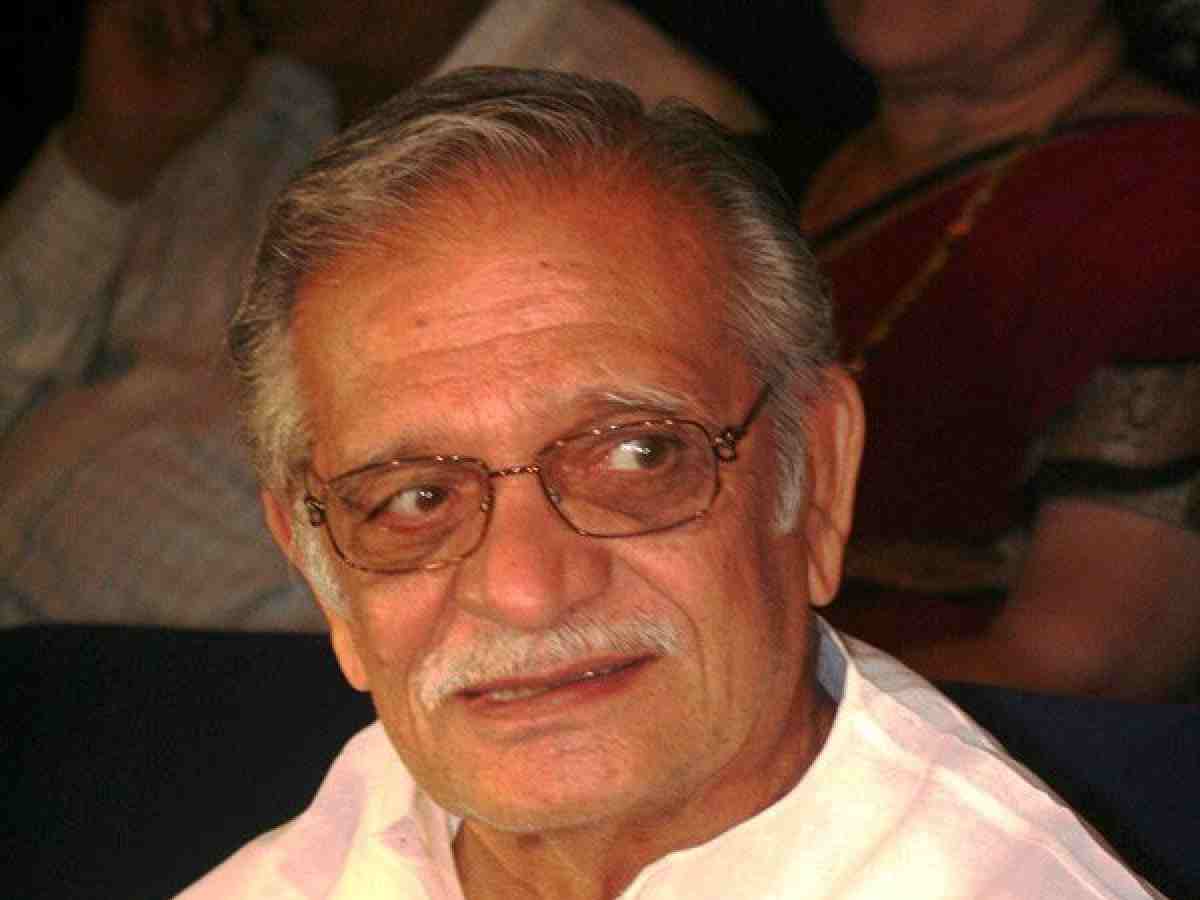
Gulzar
Veteran poet-lyricist and filmmaker Gulzar says he never really envisioned a career in cinema as his first love was always literature.
Speaking at the inaugural session of ‘Celebrate Cinema 2025’, held at filmmaker Subhash Ghai’s film institute Whistling Woods on Wednesday evening, the 91-year-old icon said he was deeply drawn to books, both as a reader and as someone who dreamed of being a writer.
“I never wanted to come to the cinema and I didn’t want to write for cinema, and I would refuse it (work offers). I was fascinated with books; I was in love with the books. I would read a lot of books, literature.
“I would rather put my name on the books of Vipassana short stories, and see how my name looks on a book? I would watch films but I didn’t have that love for cinema that wanted to become a director, it started (love) when I joined cinema,” said Gulzar, who has written books like Raavi Paar, Triveni, Bosky’s Panchtantra, Actually… I Met Them: A Memoir.
Born as Sampooran Singh Kalra in pre-Independence Punjab (now in Pakistan), Gulzar is celebrated as one of Indian cinema’s most poetic storytellers.
He began his career in 1956 and made his debut as a lyricist with Bimal Roy’s “Bandini” (1963), penning the song “Mora Gora Ang Lai Le”, which became an instant classic.
Gulzar recalled meeting Roy after he was coaxed by his friend Debu Sen, an assistant of the late legendary filmmaker, and the noted lyricist Shailendra.
“A film was being made named ‘Bandini’, Sachin da (SD Burman) was apparently upset with Shailendra, and I remember meeting Shailendra at sahitya sabha, he was senior to me.
“He once told me, ‘What do you think…those working in the film industry are illiterate people? Why don’t you go and work with Bimal Roy, people crave to work with Bimal Roy’. He took me to meet Bimal Roy,” he said.
According to Gulzar, filmmaker Bimal Roy initially in two minds whether he could write a song for “Bandini”, as Roy was looking for someone well-versed in Vaishnava poetry, a devotional form centered on love for God.
“He (Roy) asked Debu, ‘His name is Gulzar, how would he know and understand and write Vaishnava poetry?’ Debu replied saying, ‘He understands Bengali and can speak as well’.
“Bimal da’s face was red. He told me in Hindi, Tum likhega? He was such a towering personality that I could only say, ‘I’ll write it’. Then Sachin da gave the tune, and that’s how the song, ‘Mora Gora Ang Lai Le Mohe Shaam Rang Dai De’ came about,” Gulzar, who later helmed critically acclaimed films like Parichay, Koshish, Aandhi, Maachis, and Hu Tu Tu, said.
He got to write one of the songs of “Bandini” because there was a dispute between Burman and Shailendra, who had penned lyrics for most of the tracks of the movie.
Roy was then in a fix and decided to rope in the then budding writer Gulzar, who was recommended by Shailendra himself to the filmmaker.
The veteran writer-poet was accompanied by filmmaker Subhash Ghai, lyricist Kausar Munir and Salim Arif, who has worked with Gulzar as a costume designer on his movies like Maachis, and Hu Tu Tu, for the session on Poetry and Music.
“Music and poetry are important, we’ve that in cinema because it is part of our culture. It got passed through generations. Both the mediums are remembered even today,” Gulzar said.
He credited music maestro AR Rahman for popularising Indian music globally.
Also Read: Changing lives through music is my goal: Ricky Kej
“Initially, when we would export films to international markets, songs were removed from films. But today Indian music has reached a peak and there is a demand to add songs, and the credit goes to AR Rahman for it.
“He made a market for it by orchestrating their sounds, and it’s all relevant,” Gulzar, who worked with Rahman on iconic songs like Jai Ho, Chaiyya Chaiyya and Tere Bina and others, said.
After the session, when asked about his enduring legacy, Gulzar said he has learned to “walk with time.”
“I represent what I learnt from my guru and I’m not demonstrating anything to anybody, I’m only exposing myself, if anybody can learn anything it’s up to them. I’m learning from the younger generation. I don’t think I’ve achieved what I can pass on to the next generation, I’m trying to walk along with them and I’m learning from this generation,” Gulzar said.
Ghai also introduced a new course of poetry and literature at his institute Whistling Woods Academy, which was inaugurated by Gulzar, Munir and Arif.
Elected to the Delhi Golf Club general committee, Mansher Singh says he wants to build…
A $780 million market built on pavements, where the pleasure of reading meets the price…
Supreme Court advocate Abhishek Pawar alleges women were denied washroom access for seven to eight…
Each day of closure costs shops in Khan Market and Connaught Place between Rs 60,000…
Delhi generates nearly 15,000 tonnes of waste daily, prompting the government to deploy 1,000 mechanical…
Delhi Police has issued an NOC for the Congress rally at Ramlila Maidan on November…
