A freshly reorganised domestic cricket season is set to unfold, featuring 1,787 matches across 22 men’s and women’s tournaments. These fixtures will stretch over 219 days, from August 28 until April 3.
The Board of Control for Cricket in India (BCCI) has carried out a sweeping overhaul, adding a Plate, or lower, group to all tournaments that previously lacked one. This new structure complements the existing Elite group and is aimed at creating fairer competition between teams of similar calibre.
The season will begin with the Duleep Trophy (August 28–September 15), with all five matches to be staged at the state-of-the-art Centre of Excellence in Bangalore. Significantly, the tournament returns to its traditional inter-zonal, knock-out format. Last year’s event followed a round-robin structure with four composite teams — A, B, C, and D — selected by the national selectors. This time, however, the zonal selection panels have named six zonal sides, reviving the traditional format.
Also read: Leaving out someone like Shreyas Iyer shows India’s squad depth: Ross Taylor
91st Ranji Trophy
The Ranji Trophy, India’s premier first-class tournament which began in 1934-35, enters its 91st edition this year. It will once again follow a two-phase format, just as it did last season.
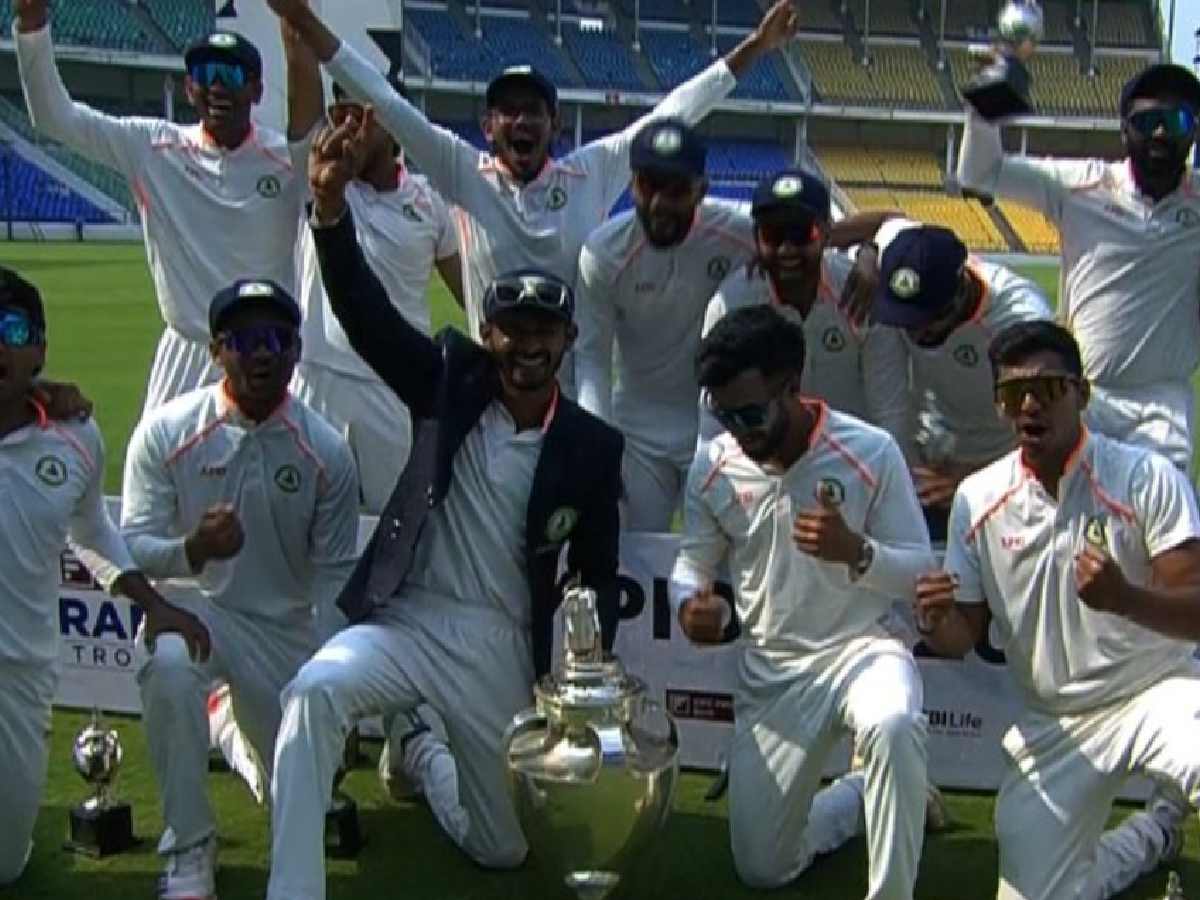
A total of 38 teams, split into Elite and Plate divisions, will contest the championship. The first phase will run from October 15 to November 20, followed by a break before the second phase begins on January 22. The final will take place from February 24–28.
Thirty-two teams, including defending champions Vidarbha and last year’s runners-up Kerala, have been placed across four Elite pools. The remaining six teams have been grouped in the Plate division. These placements are based on the points table of the 2024-25 season, giving continuity to the structure.
Promotion and relegation rules will apply across both multi-day and limited-overs formats. A consolidated Elite list will be prepared at the end of the season to determine groupings for the 2026-27 cycle. The two bottom teams in the Elite group will be relegated to Plate, while winners of the Plate division will earn promotion to Elite. This ensures that performances are consistently rewarded or penalised, keeping the contests meaningful.
Why weaker teams are separated
The men’s Plate pools has traditionally featured the weaker sides. It largely comprises north-eastern states — Arunachal Pradesh, Manipur, Meghalaya, Mizoram, Nagaland, Sikkim, and Tripura. Bihar and Pondicherry are also included in some competitions.
These teams were added to India’s domestic competitions after the Supreme Court-approved Lodha Committee reforms. Bihar was re-inducted in 2018-19, along with new entrants Pondicherry and Uttarakhand while Chandigarh was added in 2019-20.
Their arrival triggered debates within Indian cricket. Many argued that placing such teams alongside established powerhouses like Mumbai, Karnataka, and Delhi might be discouraging, as defeats could be one-sided. Others believed exposure to stronger opponents would raise standards of the weaker teams. The BCCI’s latest move suggests it prefers gradual integration, with weaker sides building confidence within the Plate structure before challenging top-tier teams.
For now, though, this remains an experiment, and observers will be keen to see whether the BCCI continues with this arrangement beyond the 2025-26 season.
Coaches weigh in
Usman Ghani, head coach of last year’s Ranji Trophy-winning Vidarbha team, sees both advantages and drawbacks. Reflecting on the old format, he told Patriot: “When the weaker teams used to play the stronger ones, they would lose games but also identify the areas they needed to improve.”
He acknowledged, however, that dominant sides often set statistical records against weaker opposition, records which held little value. Ghani believes the new model levels the playing field. With promotion and relegation now in effect, Plate sides must push themselves harder to rise into the Elite bracket, while Elite teams must remain vigilant to avoid slipping down. “So, in the end, it sort of balances it out,” he said, noting the competitive edge the system introduces.
The numbers game
Interestingly, despite the creation of Plate groups, the total number of matches has barely increased. In 2024-25, there were 1,774 matches. This season, there will be 1,787 — just 13 more.
The tally has been balanced through both removals and additions. Four women’s tournaments have been scrapped, along with the men’s under-23 CK Nayudu Trophy fixture against Rest of India, cutting 36 games. On the other hand, Plate divisions have been added to multiple tournaments, and two new women’s events — the Senior Inter-Zonal One-Day Trophy and Senior Inter-Zonal Multi-Day Trophy — have been introduced.
Trouble at DDCA
While most states are in advance stage of their preparations for the new season, the Delhi and District Cricket Association (DDCA) continues to lag. The association remains absorbed in the much-delayed Delhi Premier League (DPL) T20, whose final is scheduled for August 31
Thanks to this preoccupation, DDCA skipped the Buchi Babu Memorial Tournament and the Siechem Trophy in Pondicherry or were not invited by the organisers. It now looks unlikely to field a team in the All-India JP Atray Memorial Tournament (September 10–20).
The delays extend to staffing as well. The association has yet to confirm coaches, support staff, or even selection committees. A DDCA functionary admitted: “More than 300 applications were received for around 100 positions and some people are still to be interviewed. The final list is unlikely to come before September, or before the end of the DPL.”
Also Read: Mohammed Siraj lights up The Oval as India script thrilling 2–2 series draw
Consequences for players
These organisational lapses have direct repercussions on cricketers. Yash Dhull, Ayush Badoni, and Harshit Rana — all selected in the north zone squad for the Duleep Trophy — will have to make an abrupt switch from white-ball cricket in the DPL to red-ball cricket. Should they fail to adapt in time, the fault will lie with the administrators, not the players.
The disruption also affects franchises. Central Delhi Kings will lose Dhull, South Delhi Superstarz will lose Badoni, and North Delhi Strikers will lose Rana at the business end of the DPL. Such losses weaken the teams at a crucial stage, but accountability remains missing. With misplaced priorities and a lack of effective opposition within DDCA, the sport itself is pushed aside, leaving players and fans frustrated.