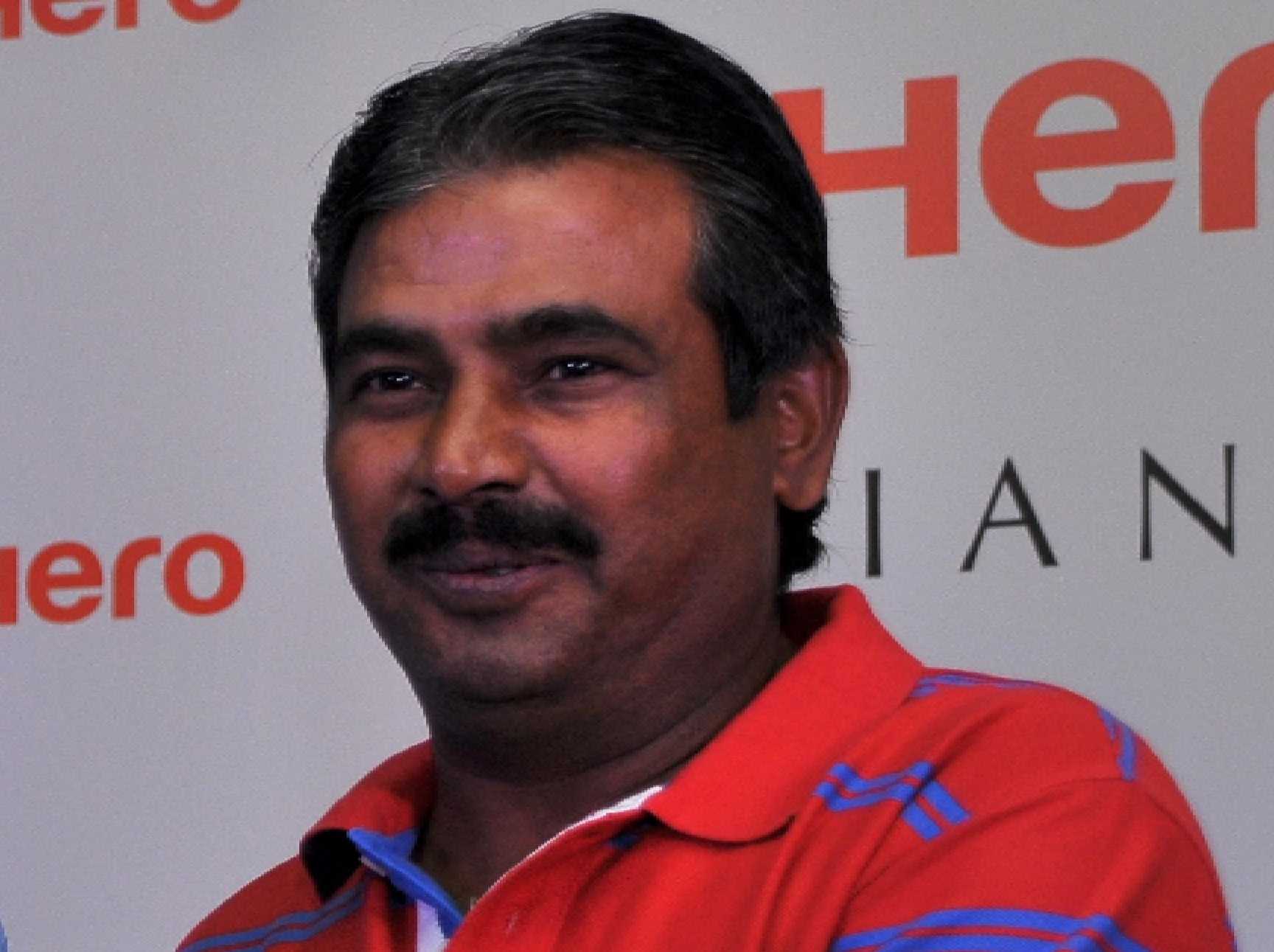
The man who will think too much about winning the title will be “stupid”, while the one who keeps “more focus” on his game will top the field, says legendary Indian golfer Ali Sher about the DP World India Championship, the richest golf event ever held in India, with a $4 million prize fund.
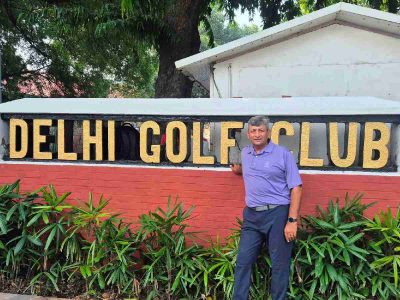
The October 16-19 competition will be played at the Delhi Golf Club (DGC), the home turf of Sher, the caddie-turned-professional, who spent almost his entire life there, first as a caddie and then a pro. Few know the tricky DGC course better than him.
“Thinking only about winning the title is stupid. It is a player’s confidence that helps him win titles. Such a player is concerned only with his own game and doesn’t bother about who he is playing with or how the others are playing,” Sher told Patriot in an exclusive interview.
And where does this confidence come from? “They all have confidence as they are all experienced. The person with greater focus will come out on top,” said Sher in his typically candid manner.
Sher, who lives in Nizamuddin, next to the DGC, became the first Indian professional in 1991 to win the Indian Open, and repeated his sensational feat in 1993 to become the first Indian to be crowned twice.
‘Suits Indian players’
Sher feels that the Indian players stand a fair chance of coming out on top. “The DGC suits Indians. The Indians have a good chance of winning, if they play with their hearts. But since the foreign players are also strong, the Indians will get competition from them,” says the 65-year-old Arjuna Award winner.
“The Indians should focus on the game and play with a free mind — not think of the huge prize money on offer. At least they will putt well on two of the four days, which should cover the bad days. If an Indian wins, golf will get a big boost in the country,” he averred.
As of October 13, 26 Indians have made it to the 138-strong field that is headlined by world No.2 Rory McIlroy of Northern Ireland and No.5 Tommy Fleetwood of England. Among the Indians in fray are Shubhankar Sharma, Chiragh Kumar, Anirban Lahiri, Shiv Kapur, Veer Ahlawat, Om Prakash Chouhan, Manu Gandas, Udayan Mane, and Angad Cheema.
Also Read: After Ahmedabad win, India expected to clean sweep Windies in Delhi
‘Foreigners are prepared’
Sher says that the foreigners, especially those who would be playing at the DGC for the first time, would be well prepared for the competition.
“In our time, things like yoga were not so common. When I won the titles in 1991 and 1993, I was neither fat nor slim — I had a normal physique. The present generation of players are all very fit. They are confidence players,” he underlined.
Not having played at the DGC would not make much of a difference to the first-timers, feels Sher.
“In golf, you don’t have to run. So, if your hands and legs are fit, you can play well,” he says. “The foreign players’ team members are aware of things like the course design, and they pass on this information to their players. For example, when Tiger Woods came to the DGC in February 2014, he didn’t have any practice notes, but he still played nine-under par in the exhibition match.”
About McIlroy in particular, Sher says: “He will not surrender just like that. But the Indians in the fray need not fear his presence. After all, Indians have won big titles at this course — and elsewhere.”
‘One of the tightest courses’
The original DGC course was redesigned by Peter Thomson in 1976–77. Then, in 2019, the Gary Player Design firm further improved it to keep up with the times. A unique feature of the par-72 DGC course that has posed a tough challenge over the decades is its thick bushes, resident wildlife and narrow fairways — obstacles that have troubled foreign players more than Indians.
“One of the tightest courses I’ve ever played is the Delhi Golf Course. Gotta hit it straight. Driver stays in the car here,” tweeted former South African all-rounder Jacques Kallis after playing at the DGC in April 2018.
“If some people don’t get scared at the sight of the bushes, what’s the fun? It’s like cricket — a batsman needs space to hit a six, and if you play the wrong shot, you’re out caught. Likewise, in golf, this is the best layout. They’re lucky to confront bushes; overseas courses mostly have water bodies and deep bunkers, while jungles are a rarity. Closer to Delhi, the DLF course in Gurgaon has no jungles, only water bodies and bunkers,” points out Sher.
The ace golfer-turned-coach assures that no one needs to be afraid of the wildlife at the DGC. “No, there’s no challenge like that. Snakes haven’t bitten anyone — they live in the jungles. Nilgais may appear on the course, but they are harmless. The grass-cutting machines trim the fairways so fine that you can see everything clearly,” he emphasises.
Also Read: In a first, DDCA appoints male masseur to Delhi’s senior women’s team
The 1991 magic
Sher himself tamed the course sensationally while winning the Indian Open in 1991. On the 18th hole, he used the “risky” driver that helped him become the first Indian pro to win the Indian Open.
“Using the driver on the fairway is a big risk. I knew my 3-wood shot wouldn’t reach the green, so I practised with the driver. I had decided beforehand to use it, and it worked by the grace of the Almighty,” he recalled.
His title-winning one-under 71 on the final day gave him a grand total of five-under 288 — one stroke less than the American Todd Hamilton — enough to win the first prize of around $24,990.
Were the clubs with which Sher won the title his own? “Yes, they were my own. I had already won eight to ten tournaments, including the DCM Open, before the Indian Open,” he recalls. “The person who backed me big time was Ravi Talwar, a car dealer. He gave me a monthly assistance of Rs 850, which was enough for me at the time. It encouraged me a lot.”
Cricketers boost golf
Sher says the DP World India Championship will propel the sport to another level in India. “Right now, Indians follow cricket, but in the next decade, golf will make giant strides. The new generation will take up golf in a big way. And golf will gain from the presence of cricketers like Kapil Dev, president of the Professional Golf Tour of India,” he predicts.
“Kapil has brought in new events. He is promoting golf and lifting it to newer heights. Unfortunately, golf in India doesn’t get the same respect as it gets overseas, but the prize money in golf is greater than in cricket. In terms of prize money, globally, the number one sport is golf, followed by tennis and football.”