
With the use of background removers such as a transparent background maker, solo entrepreneurs are now creating professional-quality images from the comfort of their bedrooms, kitchens, or home offices. The playing field has now tilted towards easily creating professional images of products through platforms such as Pippit.
If you’re selling online, trust me. This isn’t design improvement. This is a competitive advantage.
The actual cost of “professional” product photographs
Traditional product photography shoots not only involve costs; they also involve costs that result in the loss of momentum. This is due to creativity and scheduling constraints that may hinder the whole process.
For the smaller brands, the friction might include:
– Fewer product variants tested
– Obsolete images on listings
– Inconsistent Branding
– Lost seasonal chances
The waiting time is eliminated by DIY photography. The mess is eliminated with the transparent background. Together, they produce speed.
Why clean visuals are more important than fancy visuals
Customers do not require film-style lighting to trust their product. They need clarity. Clean edges. Focus. Visual confidence.
Having a clear background removes distractions by default. Instead, the product is in the spotlight, not where the product photo was taken. This is very effective for e-commerce platforms where clutter is hard to notice in feeds.
When consumers are able to see what you are selling, the chances of hesitation decrease.
How to remove image backgrounds using Pippit (without design skills)
The process of creating images of your product for transparency sounds rather technical—but with Pippit, it’s surprisingly straightforward.
Step 1: Upload the picture
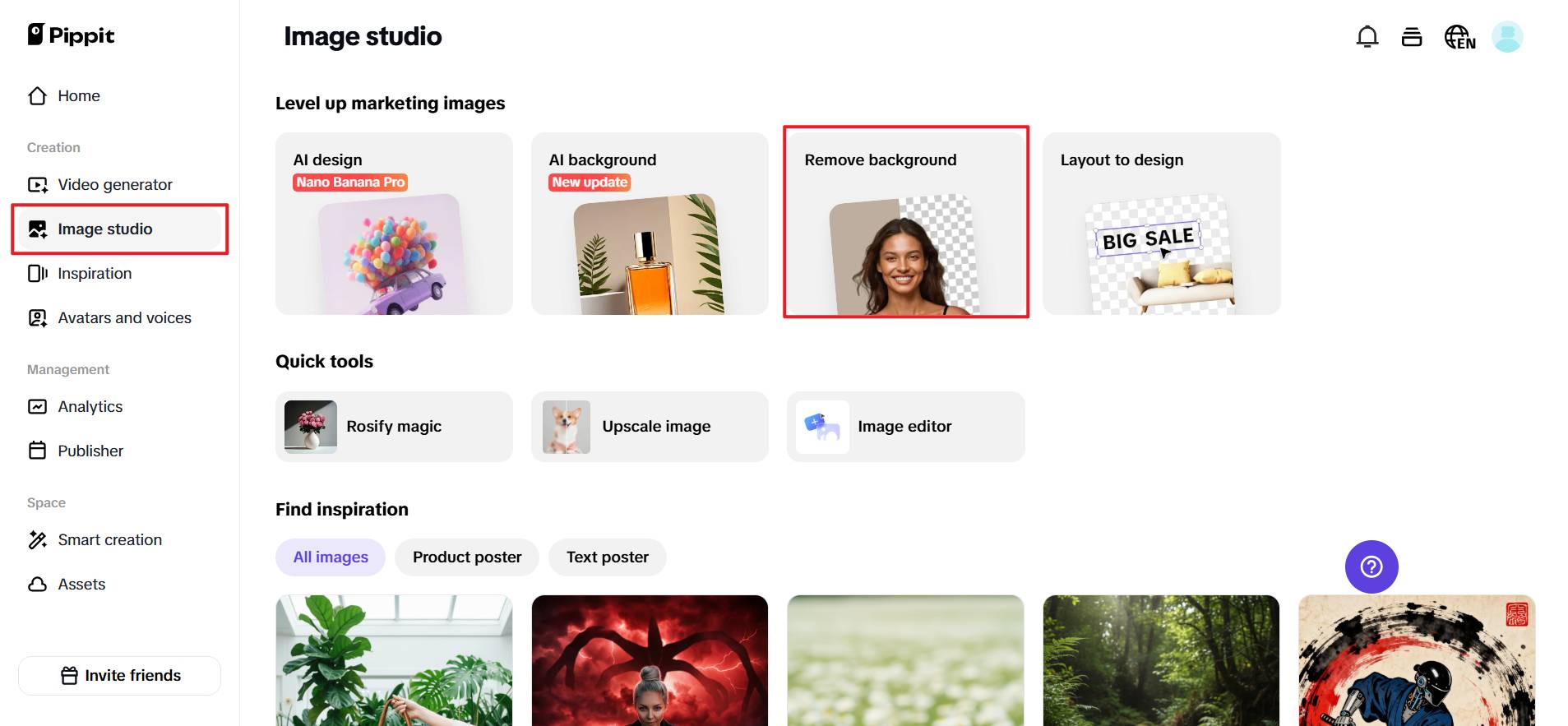
Go to Pippit by clicking Sign up to register for free. Once you are in your account, click on Image Studio from the left side panel. Under Quick Tools, click Remove Background and choose from which category you would like to upload from: Assets, Products, or Device.
Step 2: Clean background removal using AI
In Pippit’s AI technology, your product will be instantly identified and extracted from the background. You can additionally tell Pippit’s AI to further clean the background through a specific text prompt. This is how you keep the viewer’s attention fixed right where it matters: your product!
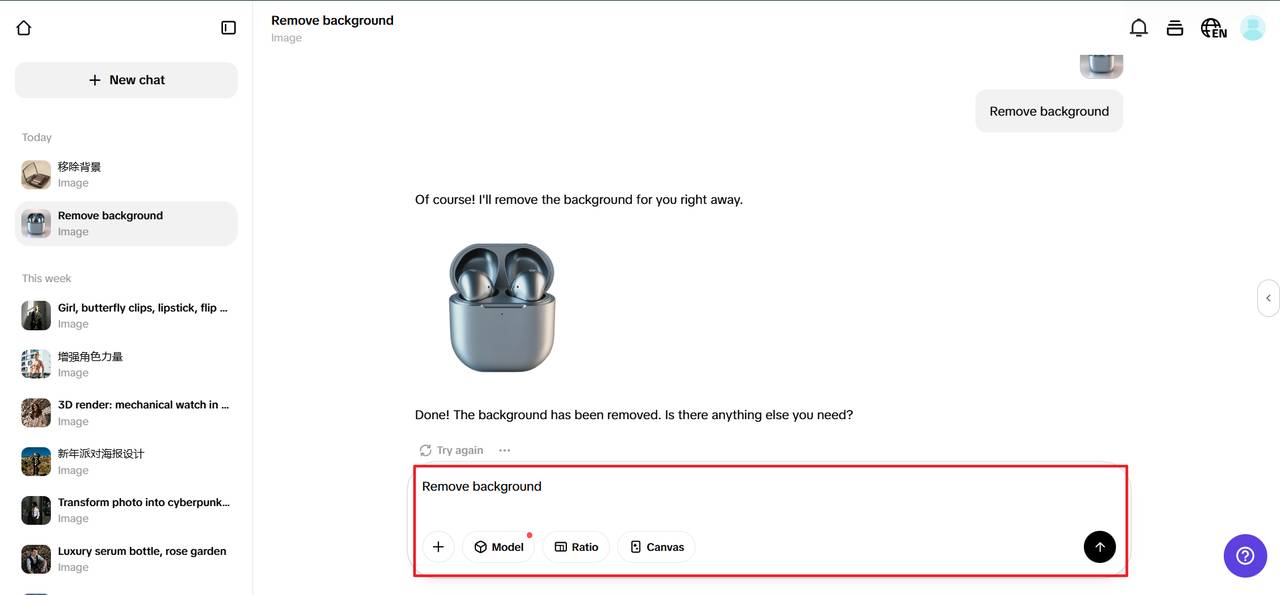
You can choose to include text overlays for product features and pricing, or look at the AI features tab, such as Upscale and Inpaint, for the ability to create promotional images using a simple prompt.
Step 3: Export picture with transparent background
If your image is proportioned properly, click Download in the top right corner. Select PNG as your image format so that it is transparent. If you want a smooth export, ensure No Watermark is checked before saving.
From kitchen counter to catalog-ready
A typical DIY seller would have everything they need: a smartphone camera and natural light. What they lack is a color-neutral setting that appears homogeneous for all items.
The difficulty presented in transparent backgrounds is immediately resolved. Instead of shooting each item under perfect conditions, the sellers are using:
– Photo products everywhere
– Remove the background digitally
– Product placing against clean and brand-standardized backgrounds
– Use the same image in stores, ads, and social
– Use the same image for stores
The end effect seems deliberate, even if the image itself was taken casually.
Consistency builds trusts (and conversions)
When customers walk around in your store, they unknowingly evaluate it for professionalism.
The transparent images make it easier to ensure consistency because everything has the same visual guidelines to follow.
– The same spacing.
– The same scale.
– The same background style.
This visual discipline will be a part of your brand identity over time without having to retain a designer.
DIY doesn’t mean low effort; DIY means smart effort. DIY stands for doing
One myth is that Homemade visuals are tacky. The truth is, they only appear this way if the process is confusing.
 Smart DIY marketers think like systems:
– Record once
– Clean assets
– Repurpose everywhere
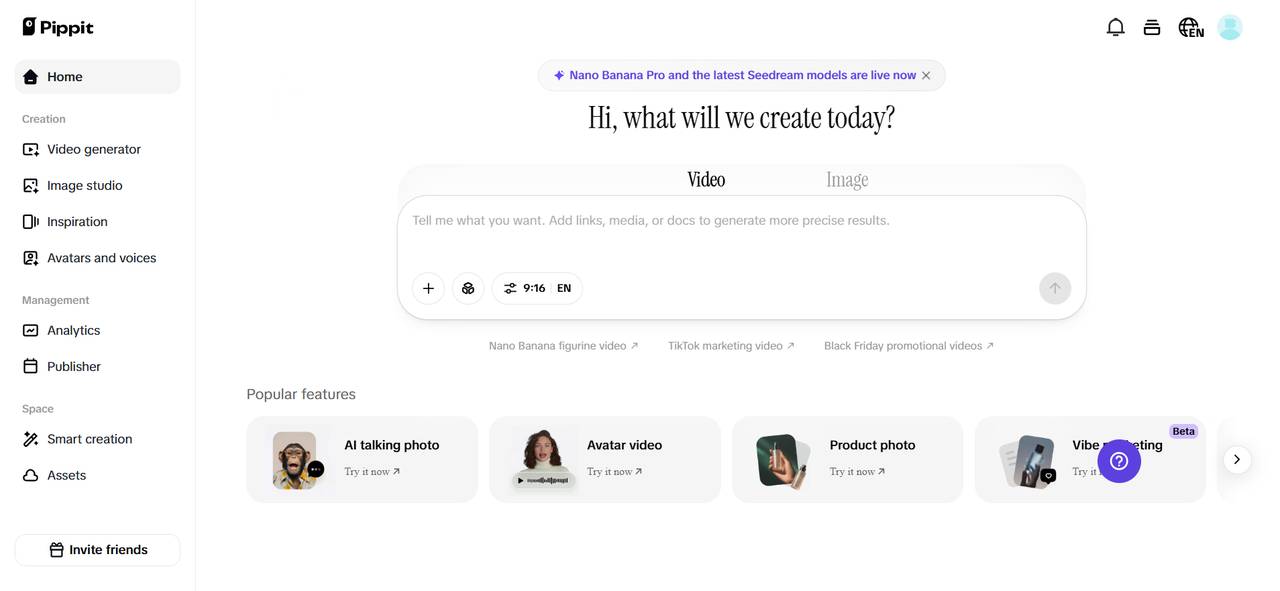
Some of them even conceptualize an entire collection of products before the launch, which includes the layout plans. This is where the use of the AI storyboard generator comes in, which assists the sellers in planning the product layout before anything goes live on the site.
Why background removal is ideal for small catalogs
Big brands can easily arrange custom photo shoots for SKUs. Small sellers require flexibility.
Transparent backgrounds allow you to:
– Deploy quicker
– Refine visuals without reshooting
– Testing different styles and placements
– Instant adaptation to platform trends
Since your visual assets are not anchored to a particular background, they grow with you.
Cleaning visuals isn’t just for photographs
As the sellers in the video domain increases, the aspect of clarity in visuals becomes all the more essential. Brands are known to simplify the video frame before editing. At times, you can remove text from video clips for better adaptability.
The same applies to the image, where first comes clarity and then decoration.
How this workflow will scale as they grow
Transparent backgrounds aren’t for beginners only. They can grow with your business. In this way, as the number of catalogs increases, the following benefits become possible:
– Create brand identity
– Update Visuals Seasonally
– Localizing resources for various platforms
– Assist in creating bundles and variations easily
Rather than beginning every time from the beginning, you are working from a visual basis.
Artistic liberty, rather than artistic overwhelm
The Do-It-Yourself sellers have to handle product inventory, marketing, shipping, and handling. Visual creation should not add to the stress.
With the background problem taken out of the equation, creators can focus entirely on telling a story, placing their product, and its value, without concern for what’s being presented behind their product.
This internal space is important.
No studio was ever the real limitation
Never equipment, the biggest hindrance to good product photography has been accessibility.
Transparency background tools have equalized the playing field, making small brands look sharp, consistent, and conversion-ready from the comfort of home.
Ready to take the images of your product to the next level without having to take the next level of your budget with you? Use Pippit!