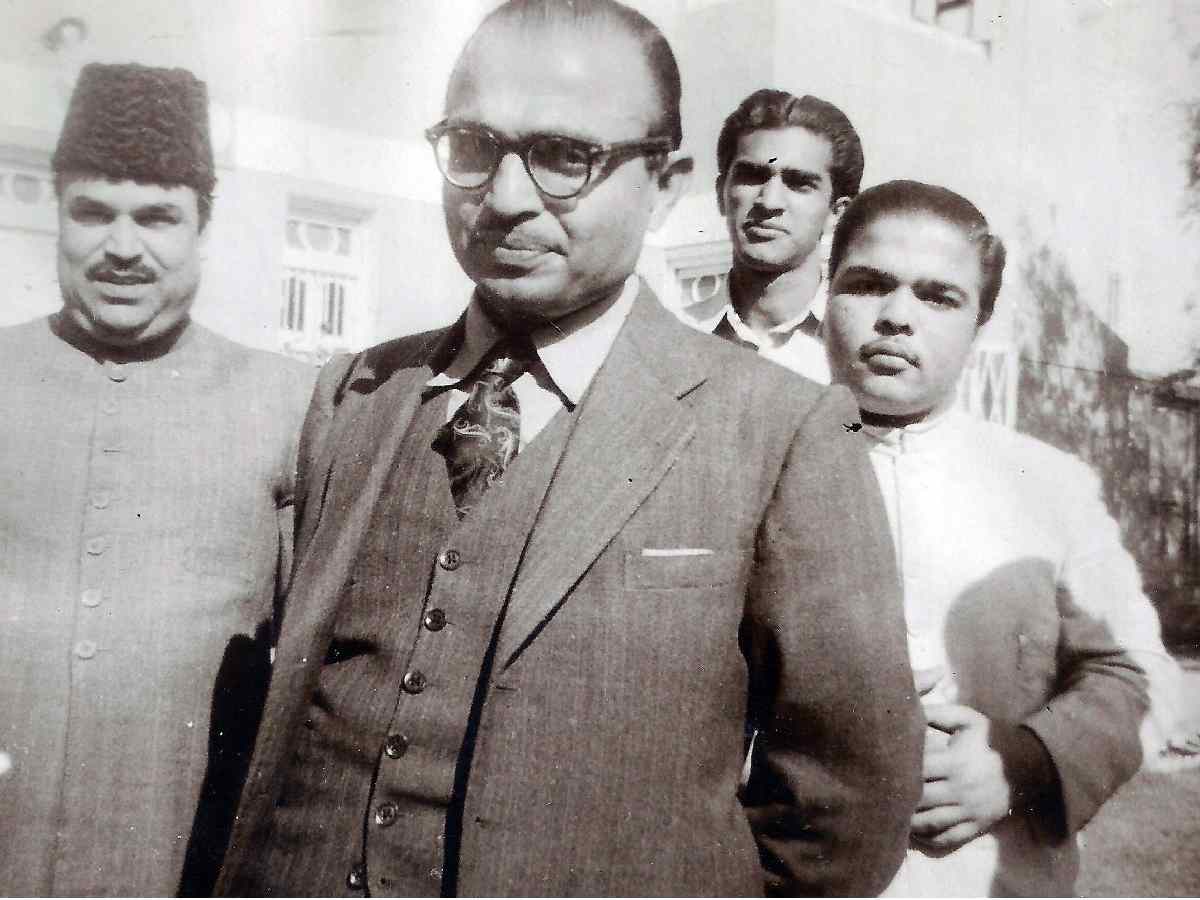
Rooh Afza: Even while managing Hamdard Dawakhana, Jamia Hamdard University, Ghalib Academy, and other institutions he had built, the diminutive Hakim Abdul Hameed remained a gracious host—both at his spacious 25 Kautilya Marg residence as well as at his Jamia Hamdard University home. He was a very good listener and a reticent man who used to avoid talking about how Rooh Afza became such a huge brand.
The reticent man behind the brand
As Rooh Afza currently rules the roost on social media, this is an opportunity for us to remember the person who was certainly the first big-time industrialist of Delhi. While many refugees did carve a niche for themselves in the business world after Partition, Hakim Abdul Hameed stood out as Delhi’s first big-time industrialist
After a couple of polite prods, Hakim Sahab once told this writer that Rooh Afza was created by his father, Hakim Hafiz Abdul Majeed. “As the taste of Rooh Afza was so good, it became a big brand across India.” Of course, he was a very humble person and not one to take credit for making Rooh Afza such a formidable and household brand in India, particularly after the partition of India in 1947.
Also read: No toilets, water or rest: A day in the life of Delhi’s bus drivers
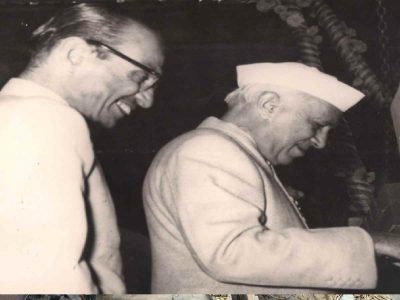
A divided homeland, a continued legacy
The Partition of India divided the family of Hakim Abdul Hameed too. His younger brother, Hakim Mohammed Saeed, left for Pakistan and established the Hamdard brand there. In India, Hakim Abdul Hamid took charge of Hamdard and began a new chapter of resilience and innovation.
Despite his silence on the matter, those close to him recognised the strategic thinking behind Rooh Afza’s rise. “Of course, Hakim Abdul Hameed had planned a strategy to establish Rooh Afza in the market. While the core product and its distinctive look existed, he put a lot of effort in advertising campaigns that consistently highlighted Rooh Afza as the perfect thirst quencher for India’s hot summers, linking it to traditional Unani wisdom and natural ingredients,” once Hakim Sahab’s trusted man Prof Ausaf Ahmed told this writer. Along with Hakim Sahab, Prof Ausaf was at the forefront in building the Jamia Hamdard University.
Rooh Afza was cleverly positioned not just as a drink, but as part of Indian culture—essential during Ramzan for Iftar, a welcoming drink for guests, a festive beverage, and a versatile ingredient in desserts (like falooda) and milkshakes.
A masterclass in brand building
Says Sudhir Bisht, who teaches marketing in several business schools, “Rooh Afza is an iconic brand in the Indian subcontinent. It is not only one of the most enduring brands, it remains a market leader. Just like every great brand, Rooh Afza shows consistency. Every sip of the drink tastes the same at a particular temperature. An exactly same mixture would taste the same. In that sense, its consistency is way ahead of other soft beverage mixes like Kissan or Rasna. This kind of superb positioning has been achieved only by Horlicks among beverage concentrates.”
Its red-coloured bottle and its inscription in Urdu give it a distinctive packaging. After all, which other significantly popular brand uses Urdu in its packaging? “Rooh Afza’s relationship with kirana stores is also remarkable in the sense that its product portfolio is not as big as HUL’s or Nestle’s portfolios and yet Rooh Afza reaches around 25 lakh kirana stores,” says Bisht.
Distribution, trust, and personal outreach
Hakim Abdul Hamid also focused on establishing a widespread distribution network across India, ensuring Rooh Afza was available not just in big cities but also in smaller towns and villages. This accessibility was crucial to its mass popularity.
Rajesh Sharma, an owner of a big departmental store in Gandhi Market in Central Delhi, says Hakim Sahab used to invite his father and other shopkeepers to get their feedback on Rooh Afza. “Under his leadership, Hamdard maintained a reputation for quality based on its Unani heritage. This trust extended to Rooh Afza. Consumers believed they were buying a wholesome, reliable product. Consistency in taste and quality over decades solidified this trust.”
Although Hakim Abdul Hamid didn’t invent Rooh Afza, he transformed it from a popular Unani formulation into an enduring Indian beverage icon.
Holi–Eid Milan: a gathering of hearts
Now, only the memories of that Holi Milan remain. Who calls you in Delhi anymore, inviting you to join a Holi/Eid Milan? Who could ignore an invitation from Hakim Abdul Hamid? Such was his personality. Delhi respected him.
In 1955, Hakim Sahab moved from Delhi-6 to Kautilya Marg in Chanakyapuri. Soon after moving into his new home, he started the tradition of hosting Holi and Eid Milan gatherings.
Everyone attended his Holi/Eid Milan, from the common man to the elite. He would sit near the main gate to welcome the guests. Joining Hakim Sahab would often be his younger brother, Hakim Saeed. He would come especially from Pakistan to participate in the Holi Milan. He was assassinated while serving as the Governor of Sindh province in Pakistan.
Just as the Holi/Eid Milan started getting into full swing, his neighbour, Marshal of the Indian Air Force Arjan Singh, Indira Gandhi’s long-time advisor PN Haksar, and the Urdu poet Gulzar Dehlvi would also arrive.
Meanwhile, delicious gujiya from Ghantewala, barfi, various kinds of kebabs, cold drinks, and more would start being served. The entire atmosphere was joyous, filled with laughter echoing all around.
The legacy of a builder and believer
Hakim Sahab used to say that Holi and Eid were very dear to him. He wanted all his loved ones to be with him on both these occasions. He had witnessed the building of New Delhi with his own eyes.
When Hakim Sahab passed away in 1999 at the age of 94, his Holi and Eid Milan gatherings continued for a few more years before eventually stopping. After Hakim Sahab’s passing, the gatherings began to lack their former warmth. Guest attendance also started to decline rapidly.
Well, you could call him the great son of Delhi and India, if you wish. He built Jamia Hamdard University virtually with his own hands.
The writer is a Delhi-based senior journalist and author of two books ‘Gandhi’s Delhi: April 12, 1915-January 30, 1948 and Beyond’ and ‘Dilli Ka Pehla Pyar – Connaught Place’