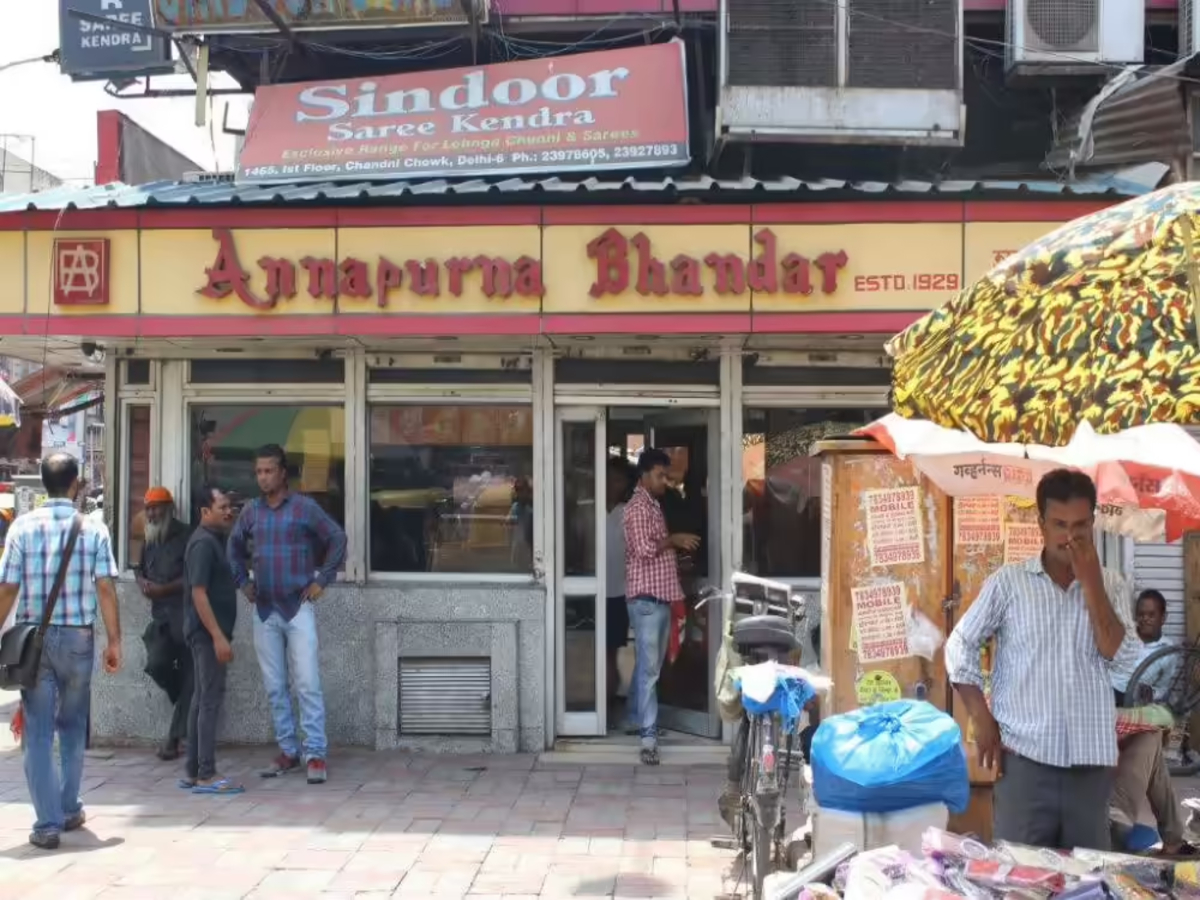
This familiar story echoes the fate of Madras Hotel in Connaught Place, which vacated its leased space in 2005 after decades of delighting patrons with South Indian fare. Both cases highlight a poignant truth: while visionary owners can build an unforgettable brand through quality and tradition, operating from rented premises leaves even legendary establishments vulnerable to disputes and external forces beyond their control.
The railway link
Founded in 1929 by Mohinimohan Mukherjee, a former railway employee, Annapurna Bhandar emerged in response to a timely opportunity. After the British shifted India’s capital from Calcutta to Delhi in 1911, a large number of Bengalis moved to Delhi. Most of them worked for the Government of India. During his days in Lahore as a Railway employee, Mukherjee recognised that a quality, authentic Bengali sweet shop in Delhi would make its presence felt without any difficulty. Thus, he left his job and moved to Delhi to open a shop. What began as a modest venture soon became synonymous with the finest rasgullas, sandesh, cham cham, mishti doi, and dil bahar. The interiors of Mukherjee’s shop once evoked the elegance of a first-class railway compartment.

It goes without saying that Annapurna Bhandar transcended its humble counter to become a cultural landmark. It attracted not just everyday Delhiites but also towering figures such as former Prime Ministers Indira Gandhi and Rajiv Gandhi and West Bengal’s former Chief Minister Jyoti Basu.
Perhaps its most celebrated moment came in 1983, when Indira Gandhi ordered sandesh and the signature pink rasgullas to celebrate India’s historic Cricket World Cup victory. These treats were served to Kapil Dev’s triumphant team during the official reception.
Generations of families made Annapurna Bhandar an essential stop for festivals like Diwali and Durga Puja, birthdays, weddings, and everyday indulgences.

Noted author and journalist Rehan Fazal says he has purchased mithais from Annapurna several times. The quality has never disappointed him. “Of course, I will dearly miss it when I visit Chandni Chowk,” Mr Fazal said.
The shop’s reputation extended far beyond Old Delhi, drawing heritage food enthusiasts and featuring on culinary trails that celebrate the city’s layered gastronomic history. The Mukherjee family, led in recent decades by Mihir Mukherjee, who has managed it for over 60 years, preserved this tradition with unwavering dedication. Mr Mukherjee was in tears while explaining the circumstances that forced them to shut their shop.
While cousins operate other outlets under the same name elsewhere in Delhi, the original Chandni Chowk location remained the “real” one—the heart of the brand. Employing artisans and helpers from Uttar Pradesh, Bihar, and West Bengal, the shop was more than a business; it was a livelihood for many families.
The closure evoked deep sorrow among the old Bengali families of the capital. Says Manju Majumdar, the former Principal of Union Academy school, Raja Bazar: “The Bengali community of the capital considered Annapurna Bhandar as their own. We buy mithais from them. It is so sad that it is shutting down.”
Many customers describe it as the loss of a “legacy,” a living piece of Old Delhi’s soul. Employees face uncertainty, with some contemplating a return to their villages if new opportunities don’t emerge. In a rapidly modernising city where global trends often overshadow traditional flavours, Annapurna Bhandar stood as a quiet reminder of slower times, when sweets were crafted with precision and shared with joy.
Yet the legacy endures beyond the physical space. Annapurna Bhandar—named after the goddess of nourishment—embodied sustenance for both body and spirit. It represented the imprint of Bengali migration on Delhi. Even as shutters fall on December 31, the memories of pink rasgullas, warm sandesh, and triumphant celebrations will linger in the minds of those who savoured them.