In 2018, the Ministry of Home Affairs (MHA) launched a plan to make India’s metro cities safer and more liveable. This vision gave rise to the Safe City initiative—an effort to plug gaps in urban safety systems, especially those affecting women.
According to the MHA, the Safe City Project is a pilot initiative under the Nirbhaya Fund. It is aimed at strengthening critical gaps in urban systems to make metro cities safer and more secure for women.
“The projects involve identification of hotspots for crime against women,” the ministry stated, “and deployment of various components including infrastructure, technology adoption, and capacity building in the community through awareness programmes which will enable safety for women.”
The project aimed to improve civil infrastructure tailored to women’s safety—such as well-lit public spaces and dedicated support services—and to integrate advanced technology in “high-risk areas”. This included real-time offender tracking, rapid-response systems for sexual assault cases, and wide-scale deployment of CCTV cameras equipped with artificial intelligence (AI).
Delhi’s surveillance, or the lack of it
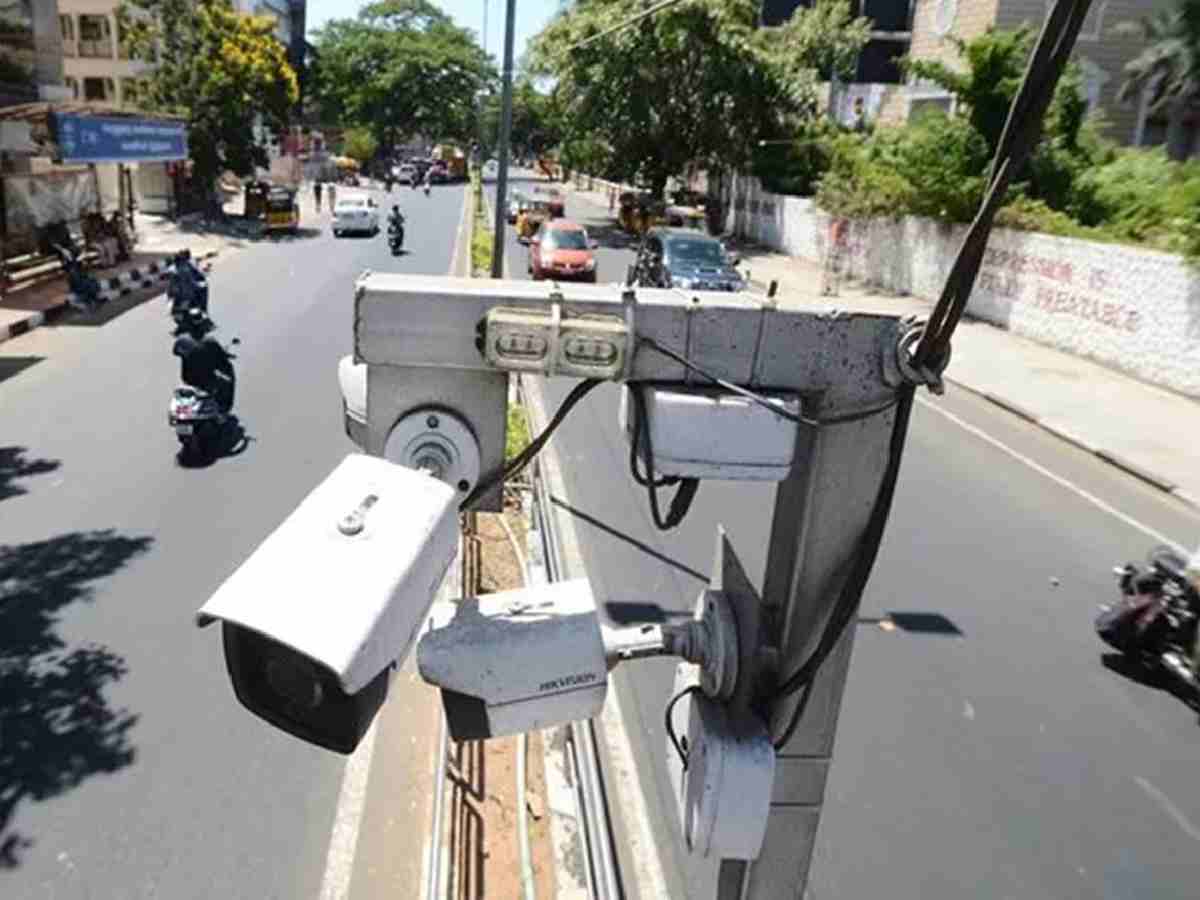
In response to a Right to Information (RTI) application filed by Patriot, the Delhi police said that there are currently 19,431 CCTV cameras installed across the national capital. Of these, 10,000 were installed under the Safe City project. However, many of the cameras, especially those installed under the ambitious project, remain non-functional, leaving residents exposed and raising concerns about an already strained policing system.
Camera installations vary across districts, the RTI revealed. As of May 20, 2025, the Outer North District had 736 CCTV cameras, 695 of which were operational. The South East District had 971 installed, with 941 working. Rohini District had 1,904 cameras, 1,828 of which were functional. In New Delhi District, 2,872 cameras were present, with 2,802 operational. Dwarka had 1,730 cameras, of which 1,631 were working. In the Outer District, all 539 cameras were functional, and in North-West District, 645 of 652 cameras were working.
Some districts provided further breakdowns. The North District reported camera counts per police station, including Kotwali (297), Lahori Gate (26), Kashmere Gate (96), Sadar Bazar (24), Subzi Mandi (129), Bara Hindu Rao (20), Timarpur (22), Wazirabad (17), Burari (109), Civil Lines (25), Roop Nagar (81), Maurice Nagar (11), Sarai Rohilla (24), and Gulabi Bagh (20).
Shahdara District, however, had 1,558 cameras installed in 2025—but only 32 were functional during that period. The South District had 1,829 cameras, with faulty ones reportedly repaired by the concerned AMC firm on request; installations were handled by the P&L Unit.
Dedicated police units also shared their surveillance figures. The Metro Unit reported 240 fully operational cameras in police stations as of May 2025. The Railway Unit had 109 working cameras. The South-West District had 1,097 cameras, all operational. The West District reported 1,356 cameras, maintained by the P&L Unit. The Indira Gandhi International (IGI) Airport Unit, covering PS-IGI Airport and PS-Domestic Airport, reported a total of 15 cameras.
Other districts, including North East, East, and Central, together had 2,922 cameras installed.
Who maintains the cameras
Surveillance infrastructure in Delhi is maintained by several private agencies. According to the Delhi Police, the Central District’s surveillance is managed by Innovatiview, a private firm offering security and monitoring services to the government. The broader surveillance data is managed by the Centre for Development of Advanced Computing (C-DAC).
A senior police official, speaking on condition of anonymity, acknowledged the issue: “We have still not started operating the CCTVs under the Safe City project since we need to give our police officers proper training. Since that still remains to be done, almost none of the CCTV cameras under the Safe City project are working.”
Falling crime, rising doubts
Despite these lapses in infrastructure, Delhi has seen a decline in major crimes in the first quarter of 2025, according to data released by the Delhi Police on April 13.
“A comparative analysis of crime statistics from January 1 to March 31 over the last three years reveals both encouraging trends and areas requiring continued focus,” a senior officer stated.
Murder cases rose slightly from 105 in 2024 to 107 in 2025, but this still marked a 6.95% drop from 115 in 2023. Attempted murder cases had increased from 158 in 2023 to 203 in 2024 but fell to 168 in 2025—an overall 6.32% increase from 2023, yet a significant 17.24% decrease from 2024.
Also Read: Delhi Police make big gains in fight against drug trafficking
Robbery, a persistent concern, rose from 375 in 2023 to 424 in 2024, then dropped to 315 in 2025—a 16% decline from 2023 and a 25.7% fall from 2024. Snatching incidents showed a marked decline, dropping from 1,812 in 2023 and 1,925 in 2024 to just 1,199 in 2025. This amounts to a 33.82% drop from 2023 and a 37.69% reduction from 2024.
Crimes against women also declined. Reported rape cases fell from 422 in 2023 to 370 in 2025—a 12.3% drop. Molestation cases decreased from 547 to 370 during the same period, showing a 32.36% decline. Eve-teasing cases dropped from 98 to 63—a 35.7% reduction. Abduction cases remained fairly consistent: 1,385 in 2023, 1,393 in 2024, and a slight drop to 1,360 in 2025—a 1.8% fall over three years.
“The drop in crimes such as robbery, snatching and crimes against women is a result of our intensified patrolling, enhanced night surveillance, and a stricter law and order environment across the city,” a senior Delhi Police officer said. He added that although attempted murders spiked briefly last year, the overall trend pointed towards improved public safety.
How Delhi’s cops use CCTV to fight crime
Despite some cameras remaining unused, Delhi Police have had notable successes using CCTV in recent cases.
On June 22, serial burglar Raja Das was arrested by the Anti-Burglary Cell after police examined footage from over 50 CCTV cameras in Hauz Khas Enclave following the theft of a water motor.
Just two days earlier, on June 20, Joynila Tongsin Anal—a woman burglar known for using multiple keys to break into homes—was arrested by the South-West District’s Anti-Burglary Cell. Officers had combed through footage from more than 250 cameras to identify and track her.
On June 25, a cab driver named Kapil Kumar was apprehended in connection with the dumping of a dead body in Preet Vihar. Investigators traced his vehicle using over 150 CCTV camera feeds.
In another high-profile case, Head Constable Khurshid was arrested on May 29 for allegedly stealing Rs 51 lakh in cash and jewellery from the Delhi Police Special Cell’s maalkhana at Lodhi Road. CCTV footage confirmed his identity.
While such breakthroughs illustrate the potential of surveillance systems, the continued malfunctioning of thousands of cameras, particularly those under the Safe City project, reveals critical gaps in the capital’s security infrastructure.