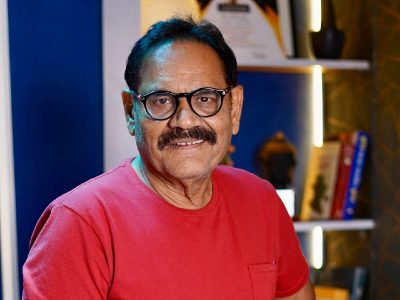
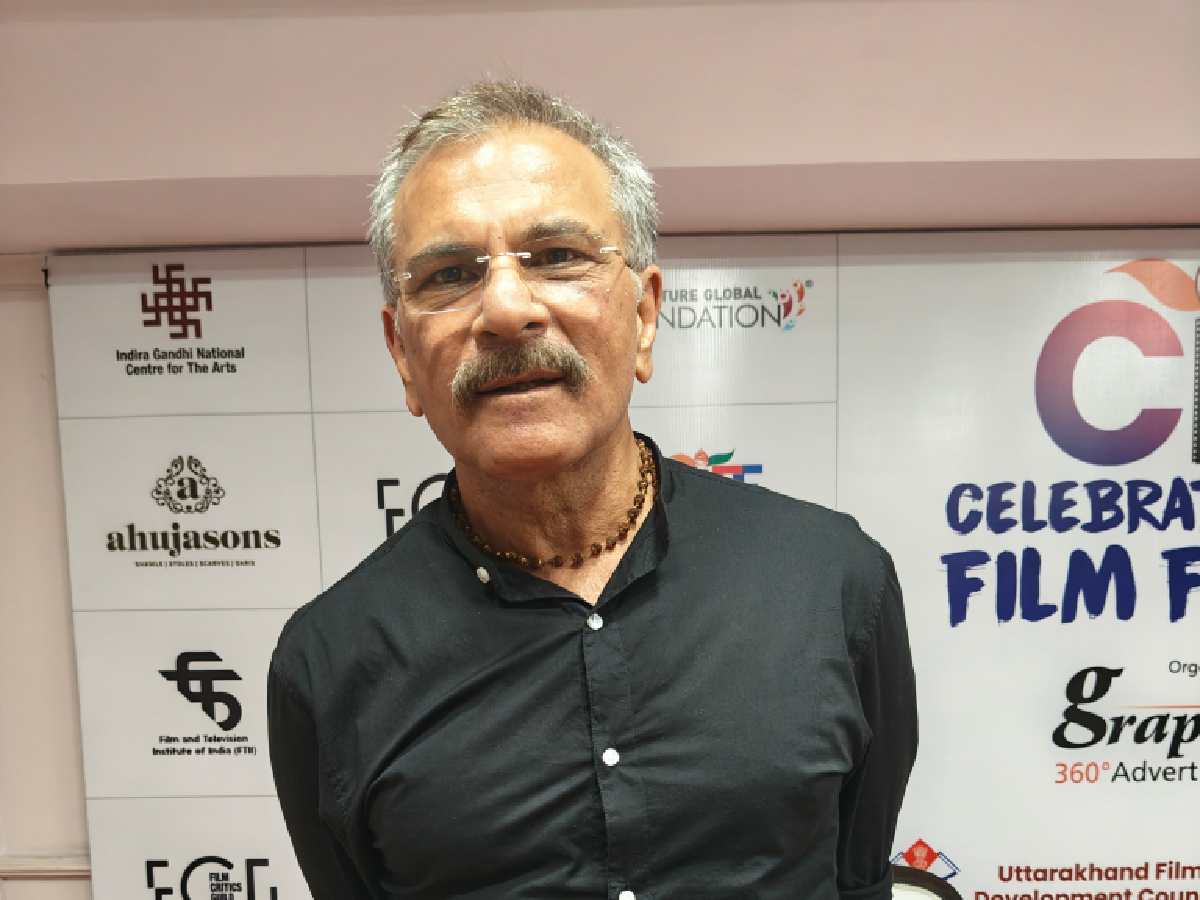
On screen, Pavan Malhotra has been many men — a small-time hustler in Salim Langde Pe Mat Ro, a cold-blooded don in Aithe, the feared Tiger Memon in Black Friday, a compassionate coach in Bhaag Milkha Bhaag, and most recently, a conflicted father in Tabbar. Off-screen, however, the veteran actor remains firmly rooted in the values he carried from his Delhi childhood.
That is the paradox of Malhotra’s career: his face is instantly recognisable, his performances unforgettable, yet he carries none of the trappings of stardom. “Contentment is essential,” he says quietly. “You may sit in a BMW, have everything, but if you are not happy, it means nothing. Happiness is in acceptance.”
Delhi beginnings
Born in Delhi in 1958, Malhotra grew up in a household shaped by the resilience of Partition. His father had migrated from Lahore, and like many Punjabi families rebuilding their lives, the household placed importance on community, food, and education. Malhotra attended Hansraj College at Delhi University, where he studied arts.
“Delhi is my home,” he says simply. “I was brought up here, went to college here, and even today, no matter where work takes me, my connection with Delhi will never break.”
His entry into films came not through acting but backstage. He worked as a costume assistant in Richard Attenborough’s Gandhi (1982), and later assisted on Jaane Bhi Do Yaaro and Khamosh. “Those experiences taught me humility,” he recalls. “You understand the hard work that goes behind one shot.”
Also read: Some films without nuance or craft taking advantage of hyper political environment: John Abraham
Nukkad and the breakthrough
The turning point came in 1986 with Nukkad, Saeed Akhtar Mirza’s television series about working-class lives. Malhotra’s portrayal of Hari, the bicycle repairman, won him recognition across the country.
“Television was a different world then,” he says. “People still talk to me about Hari, even today. That character had truth in it.”
This visibility soon translated into opportunities in cinema. Buddhadeb Dasgupta cast him in Bagh Bahadur (1989), while Mirza entrusted him with the titular role in Salim Langde Pe Mat Ro the same year. The raw portrayal of a small-time criminal in Bombay’s underbelly remains a landmark in Indian parallel cinema. Malhotra’s Salim became a reflection of a community struggling with identity and marginalisation.
The shape-shifter
Over the years, Malhotra built a career defined by versatility, refusing to be confined by labels of “art house” or “mainstream.” His chilling performance as Irfan Khan in the Telugu thriller Aithe (2003) made him an unlikely star in southern cinema. “That film gave me immense recognition in Andhra Pradesh,” he says.
Then came Black Friday (2004), Anurag Kashyap’s searing account of the 1993 Bombay blasts, in which Malhotra played Tiger Memon with unnerving intensity. “It was not about making him larger than life,” he explains. “It was about showing a human being capable of terrifying choices.”
International filmmakers, too, sought his authenticity. He worked in Roland Joffé’s City of Joy (1992) and Deepa Mehta’s Earth (1998), taking his Delhi sensibility to global frames. Later, films like Don, Jab We Met, and Bhaag Milkha Bhaagintroduced him to a younger mainstream audience.
When asked if he has favourites among his roles, he smiles. “Every role I accept is close to my heart. The fact that I said yes means I connected with it. My work keeps leading me to more work.”
Return to the stage — Tabbar and beyond
In recent years, Malhotra’s resurgence on OTT has brought him renewed acclaim. His portrayal of Omkar Singh, a retired policeman caught in a spiral of crime in SonyLIV’s Tabbar (2021), was hailed as one of the finest performances of the streaming era. The role won him a Filmfare OTT Award and introduced him to a new generation of viewers.
“The digital space has opened possibilities for actors,” he says. “You can explore complex stories that don’t have to fit into a three-hour box.”
In 2023, his performance in the Haryanvi film Fouja won him the National Film Award for Best Supporting Actor — a recognition he accepts with quiet pride.
Delhi, Mumbai, and food memories
Despite a career rooted in Mumbai, Malhotra’s love for Delhi runs deep. He often compares the two cities with affectionate candour. “Delhi has wide roads, greenery, and that old-fashioned brotherhood where neighbours still look out for each other,” he says. “Mumbai, on the other hand, has incredible safety and transport. A girl can take an auto at 2 am and reach home safely. That’s a big strength of Mumbai.”
But if there’s one thing Mumbai cannot match, it is Delhi’s food. “I grew up on Punjabi food. At that time we didn’t realise how pampered we were. Today when I look back, I think — my parents fed me very well.”
On choices and lines he won’t cross
For Malhotra, acting is not just about opportunity but conscience. “I must connect with the story or the character. And one thing is clear — I will never do anything against my country, my culture, or the Indian Army. No matter how much money is offered,” he says firmly.
He often speaks with reverence about soldiers and teachers. “In this society, teachers, doctors, and soldiers deserve the highest respect. They shape our lives, save our lives, and protect our lives.”
Cinema, crisis, and charisma
Having witnessed the industry’s transformations, Malhotra rejects the idea that Bollywood is in decline. “Audiences are very much there,” he says. “Look at the success of Pathaan, Jawan, Animal, OMG 2. Families still go to theatres in their best clothes. That big screen experience — sitting with hundreds of people in a dark hall — its charisma is something else. Cinema will not die.”
What worries him more are ecological concerns. “One day, the fight will be for water,” he warns. “We are all part of this greed. We must correct our thinking before nature forces us to.”
Also read: Difficult but anything possible if one works hard: Actor Huma Qureshi on Bollywood
The man behind the actor
Through it all, Malhotra has remained grounded. He admits to being imperfect, like anyone else, but he values balance. “Everyone wants money, comfort, happiness. I do too. But you must know where to stop. Otherwise, how much will you pull the elastic?”
As he prepares for his upcoming SonyLIV series Court Kacheri and the re-release of Bhaag Milkha Bhaag, Malhotra reflects on his journey with humility. “That film inspired so many young people when it first came out. I hope the new generation watches it too.”
What defines him most, perhaps, is a line he once heard in an old play: “Happiness is in accepting.”