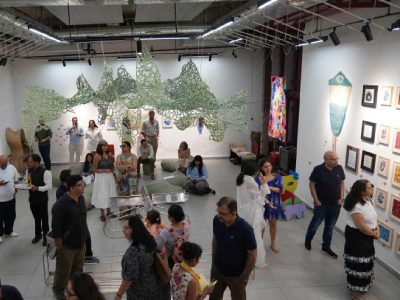
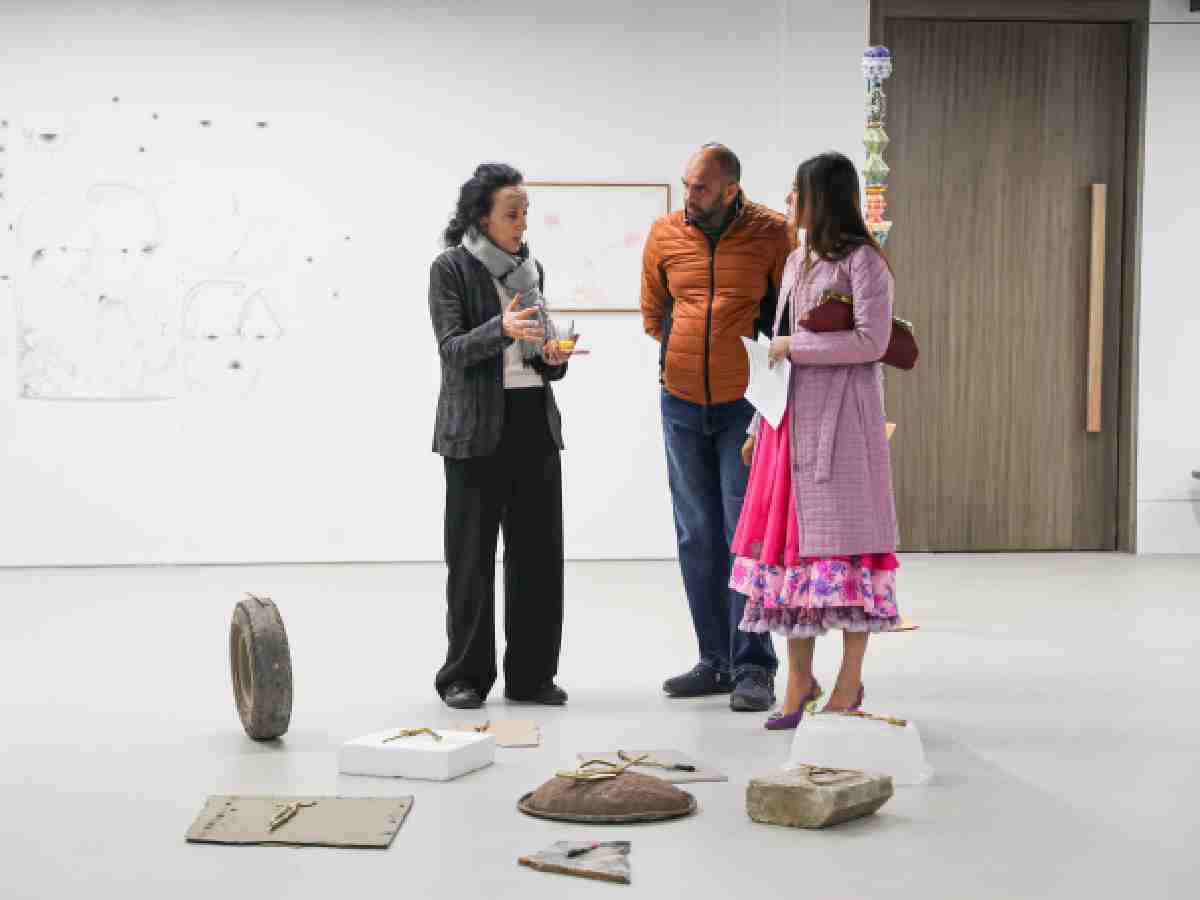
As visitors step into Thapar Contemporary in Kapashera, New Delhi, they are immediately confronted with a space where disorder is not only present but celebrated. The Engineering of Rubble, a group exhibition featuring 18 works by 11 contemporary European artists, challenges the very idea that art must be neat, resolved, or complete.
Curated by Jasone Miranda-Bilbao and Vaibhav Raj Shah, the exhibition explores fragmentation, imperfection, and endurance, offering a meditation on how meaning emerges from what is broken, provisional, or unresolved.
Embracing incompleteness
“The Engineering of Rubble brings together contemporary practices emerging from Europe that resist certainty and closure,” Ashish Thapar Founder of Thapar Contemporary told Patriot. “By creating a context for these artists in India, the exhibition reflects an interest in attentiveness—allowing ideas and materials to remain open, and meaning to emerge gradually through process, material, and time rather than through resolution.”
At the gallery, works by Ali Glover, Ana Genovés, Charo Garaigorta, Damien Meade, Ian Dawson, Ian Gouldstone, Katrin Hanusch, Mike Marshall, Oona Grimes, Robin Megannity, and Sarah Staton unfold across the space in a dialogue of materials, gestures, and pauses. Each piece moves through fractures, repetitions, and reconsiderations, reminding viewers that form is always in the process of becoming rather than arriving at a final destination.
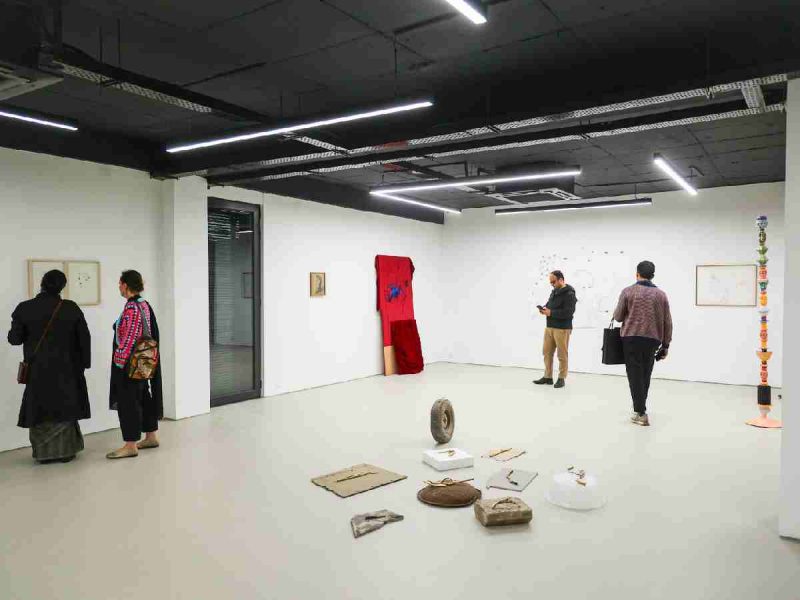
“The exhibition explores the idea that what we call ‘chaos’ holds immense creative potential,” Thapar explained. “Disorder does not need to be forced into resolution to be meaningful. The works linger with what is broken, finding presence within loss. In a time marked by instability and continual restructuring, this approach feels both honest and necessary.”
A curatorial lens on fragility
For curator Jasone Miranda-Bilbao, the exhibition emerged from her ongoing inquiry into how we situate ourselves within a world marked by change, uncertainty, and rupture. “The show brings together practices that work with fracture, pause, and repetition as ways of thinking,” she said. “It is not concerned with resolving what is broken but with staying with it—allowing form and meaning to unfold through time, attention, and material presence.”
Rather than relying on walls, plinths, or frames, the exhibition proposes an architecture built of attention. The fractured and incomplete speak to matter’s quiet will to endure even after its original purpose has dissolved.
“These works resist spectacle, favouring patience, reconsideration, and sustained looking,” Miranda-Bilbao added. “The aim is to create a space where the audience can encounter the subtle persistence of materials and ideas over time.”
Conversations between material and viewer
Visitors are invited to slow down, to trace gestures, notice textures, and engage with pauses in the works. “We neither prescribe a specific outcome nor direct interpretation,” the curator said. “Ideally, visitors leave not with answers, but with a heightened awareness of material, of fragility, and of endurance.”
For Indian audiences, these themes strike a particular chord. “In a society defined by constant transformation, the idea that what is fractured still carries a will to endure feels powerful and familiar,” Thapar said. “The works propose an architecture not of walls or plinths but of patient space. They invite viewers to linger and reflect on presence, process, and the subtle persistence of meaning.”
Artists responding to fracture
Each of the 11 European artists interprets fragmentation and incompleteness in their own way. Some respond directly to the exhibition’s title and concept, while others use it as a point of departure. Ian Gouldstone’s sculptural arrangements, for instance, allow raw materials to assert themselves, their rough edges remaining visible rather than concealed. Ana Genovés’s works evoke human presence through ephemeral gestures, while Oona Grimes engages with repetition and layering to highlight the tension between order and chaos.
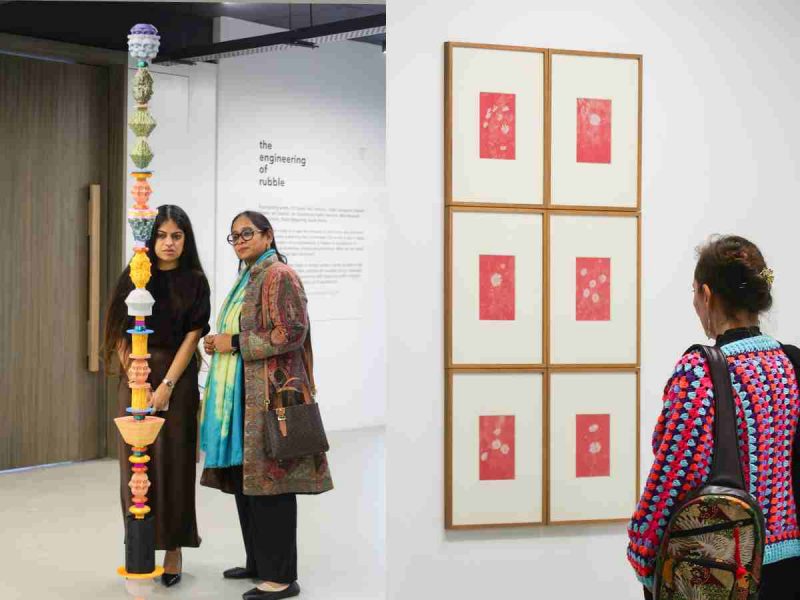
“The exhibition allows divergence rather than uniformity, acknowledging that fragmentation itself resists a single interpretation,” Miranda-Bilbao said. “By staying with the broken, these works open up questions rather than offer answers.”
Patience as a guiding principle
The Engineering of Rubble is not about instant gratification. It asks viewers to pause, reconsider, and see beyond surface-level spectacle. In doing so, it resonates with the gallery’s ethos.
“Thapar Contemporary privileges process over spectacle,” Thapar explained. “This exhibition embodies our commitment to sustained inquiry, to international exchange, and to giving space for critical, experimental, and nuanced practices.”
Experiencing the exhibition
Walking through the gallery, one notices the accumulation of gestures, the careful attention to material, and the deliberate use of space that allows works to breathe. Visitors are encouraged to slow their pace, letting the unfinished edges, subtle repetitions, and quiet ruptures become points of reflection.
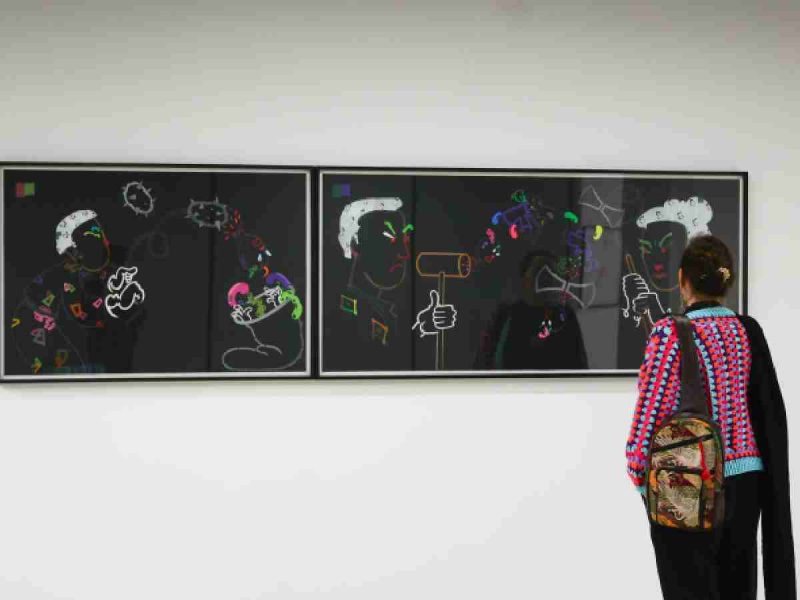
“We hope visitors will experience something particular and irreducible—an encounter that exists only within this shared space,” Miranda-Bilbao said.
A meditation on resilience
Ultimately, The Engineering of Rubble speaks to endurance. It reminds viewers that beauty, meaning, and presence can emerge from incompleteness, that fragility is not weakness, and that what remains after rupture still holds significance.
“In a world constantly reshaped by change, these works suggest that patience, attentiveness, and openness can reveal the hidden life of materials and ideas,” Thapar concluded.
The exhibition is open for viewing until April 4, 2026, at Thapar Contemporary, Kapashera, New Delhi.