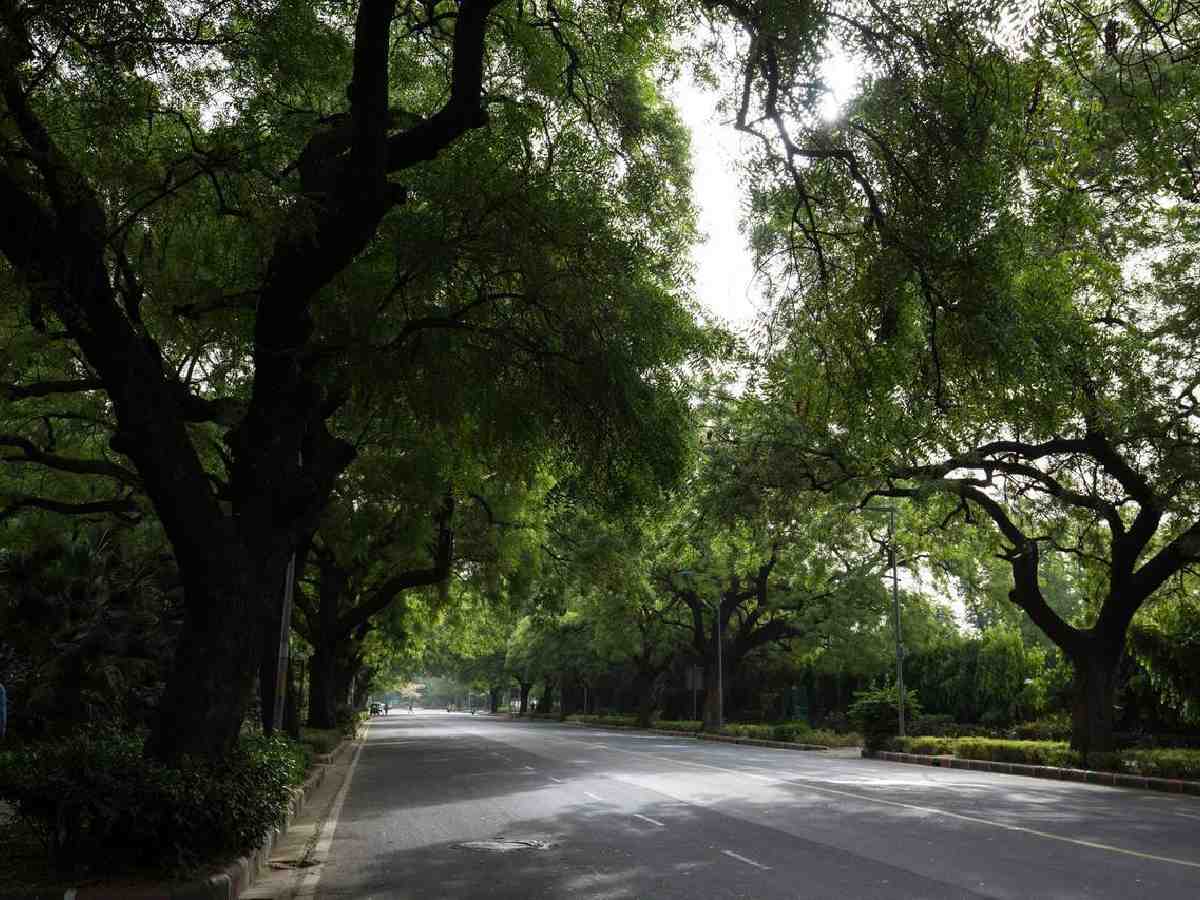
The New Delhi Municipal Council (NDMC) has identified 33 heritage trees in the Lutyens’ Delhi area that are approximately a century old and plans to install quick response (QR) plaques to help visitors access information about these trees.
According to officials, the QR code plaques will allow visitors to scan the tag using a smartphone and learn about longitude, latitude, estimated age, lifespan, botanical and common names of these century-old trees. Details about their blooming season, canopy size, girth and other botanical characteristics may also be available through the digital tag.
According to the horticulture survey conducted by NDMC, of the 33, 11 Bargad trees (Ficus Benghalensis) are in the Lutyens area, which are approximately 100 years old or more.
“The Bargad tree located at Talkatora Indoor stadium has a girth of 16 metres, which is the thickest amongst all of the recorded heritage trees,” an official said.
Further, the survey revealed that there are three Arjun (Terminalia Arjuna), three Chilkhan (Ficus Retusa), two Semal (Bombax Ceiba) and two Pilkhan trees (Ficus Infectoria) in the Lutyens area, which have made it to the heritage tree list.
Interestingly, three Ullu trees (Ailanthus Excelsa), out of which one is situated in the Nehru Park and is popular amongst the visitors, have made it to the list, according to the survey.
“The Maharukh tree, also known as the Ullu tree, which is located in Nehru Park, is in the list. The exact age of the tree is yet to be determined but it is one of the heritage trees,” an official said.
The survey also found out that there are three Jadi (Ficus Tsiela) and four Peepal (Ficus Religiosa) heritage trees and one Kakkad tree (Garuga Pinnata) in the list. One Buddha’s coconut tree (Pterygota Alata) at Lodi Garden near Mohd Shah Saiyad Tomb has also made it to the list, according to the heritage tree survey.
The initiative builds on NDMC’s earlier experiments with QR-coded trees in the capital. Several trees in Lodhi Garden were tagged with QR codes in previous phases, allowing visitors to access information about different species through their phones.
NDMC Vice Chairman Kuljeet Chahal said the exercise is aimed at raising public awareness about Delhi’s older trees and encouraging people to learn about their ecological and heritage value.
“Many of the trees in the NDMC area, particularly along avenues and parks in Lutyens’ Delhi, are decades old and form a key part of the capital’s green landscape. By adding QR-enabled plaques, we are trying to raise awareness about the importance of these heritage trees,” Chahal said.
He added that the council is planning to launch an online portal soon to help visitors access the information.
Lodhi Garden, maintained by NDMC and spread over around 90 acres, has earlier served as a pilot site for such initiatives, where selected trees were digitally tagged so that visitors could identify species and learn about their characteristics, officials said.
The civic body said the new QR code plaques for the heritage trees will help create a publicly accessible digital record while also making it easier for visitors, researchers and students to learn about the capital’s older tree cover.