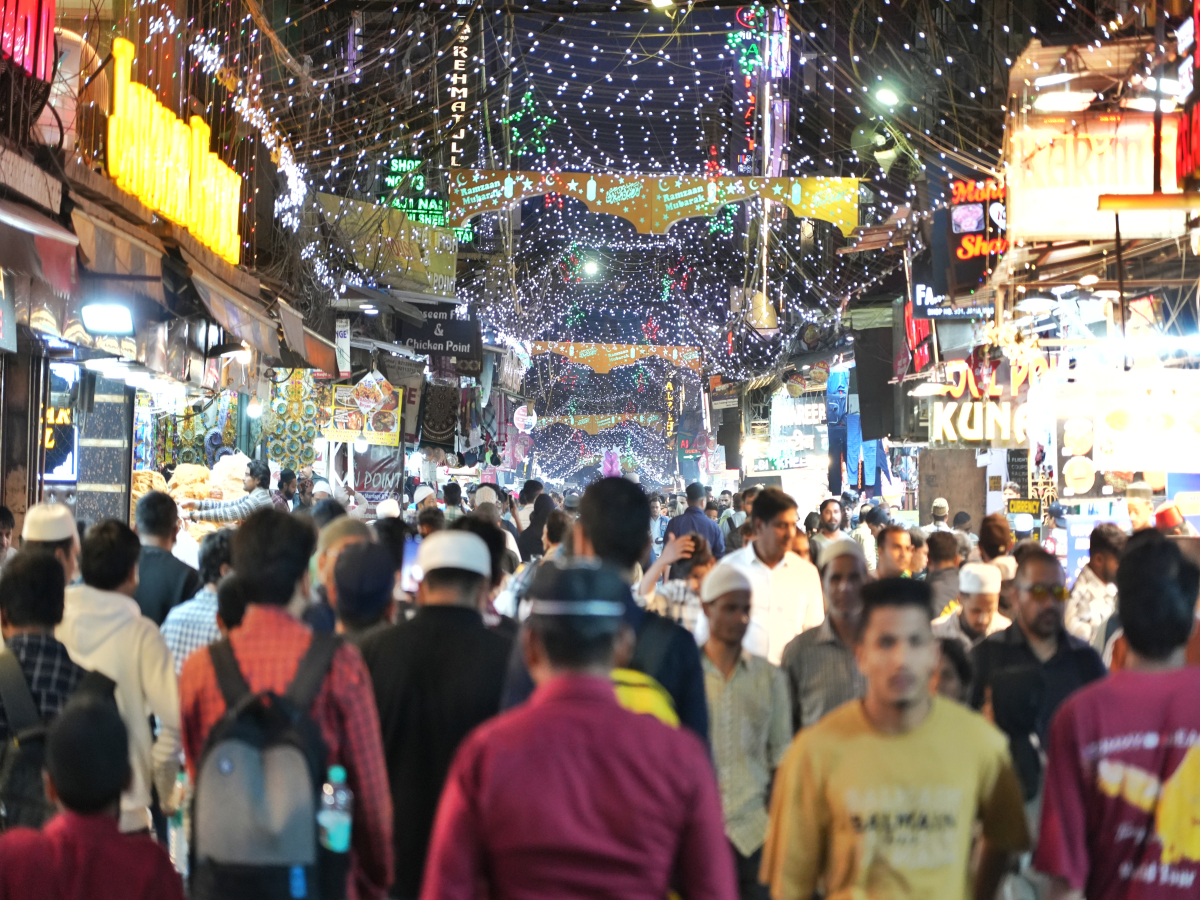
The mood and energy are the same from Delhi’s Jama Masjid area to Mohammad Ali Road in Mumbai. After all, this is Ramzan. Wandering through these two places, separated by more than a thousand kilometres, you are bound to feel that everyone is on a buying spree. If you hear only Hindustani in Delhi, the crowd in Mumbai is far more inclusive. Buyers and customers there speak Marathi, Konkani, Gujarati, Hindustani and other languages. In Mumbai, women also appear to be more visible on the streets than in Delhi.
Both places come alive after the Maghrib prayer during Ramzan evenings. After the prayer, it is time to break the fast. This is also when the crowds start swelling — from the glittering Mohammad Ali Road to the shoulder-rubbing chaos of Jama Masjid.
As darkness descends, these two iconic locations transform into glowing corridors of faith, food and fellowship.
At Minara Masjid on Mohammad Ali Road, iftar is held daily. Just on the opposite side, young chartered accountant-turned-hotelier Abdul Rahman runs a bustling restaurant called Mashaallah Cuisines.
While dealing with his endless stream of customers, he says, “Mohammad Ali Road is not all about non-vegetarian delicacies. One can also buy the best mithai here. People from across India visit to soak in the mood of this breathtaking place and enjoy the food and mithai.”
We cannot dispute his claim.
Vendors line both sides of the road, their stalls overflowing with delicacies: malpuas soaked in syrup, phirni served in earthen bowls, creamy rabdi, and mountains of golden fried chicken. Massive skewers of kebabs rotate over open flames, sending sparks into the night. Huge cauldrons of haleem bubble slowly, their aroma irresistible to passersby.
For many years, noted writer and author of Aashiyana MacRobert Ganj, Raman Hitkari, has visited the streets close to Jama Masjid with his friends during Ramzan. It has become his article of faith to be part of the Ramzan festivities.
Centuries of prayers
“As twilight approaches, the red sandstone steps of Jama Masjid begin to fill with people from every walk of life. The illuminated grand mosque looks majestic. Its towering minarets and wide courtyard seem to hold centuries of prayers within their walls,” says Hitkari.
From Delhi to Mumbai, the atmosphere before iftar is one of gentle anticipation. Families spread out small sheets on the mosque steps, unpacking dates, fruit chaat, pakoras and bottles of rose sherbet.

Street vendors weave through the crowd selling sliced watermelon, boiled chana and crispy samosas. The aroma of kebabs and other mouth-watering delights drifts through the air, mixing with the scent of ittar and incense.
After prayers, the lanes surrounding Jama Masjid burst into vibrant life. The narrow bylanes of Old Delhi glow under strings of lights.
Food stalls sizzle with seekh kebabs, shami kebabs and fragrant biryani cooked in massive deghs. From famous restaurants to countless smaller eateries, rich nihari, butter chicken and tandoori rotis fresh from clay ovens are served.
Ramzan evenings at Jama Masjid are not only about food — they are about connection. Friends meet after long days of fasting, travellers from different states share meals, and people of other faiths join to experience the warmth.
Also Read: Timeless tunes that link Punjabi weddings in Delhi and Lahore
Peace amid chaos
The mosque courtyard, illuminated at night, feels almost celestial — a peaceful heart amid the chaotic beauty of Old Delhi.
As the sun sets over Mumbai’s skyline, Mohammad Ali Road transforms into a dazzling carnival of lights and flavours. Neon signs flicker on, and decorative lights crisscross the street. The scent here is richer, heavier — thick with slow-cooked meat, frying oil, spices and charcoal smoke.
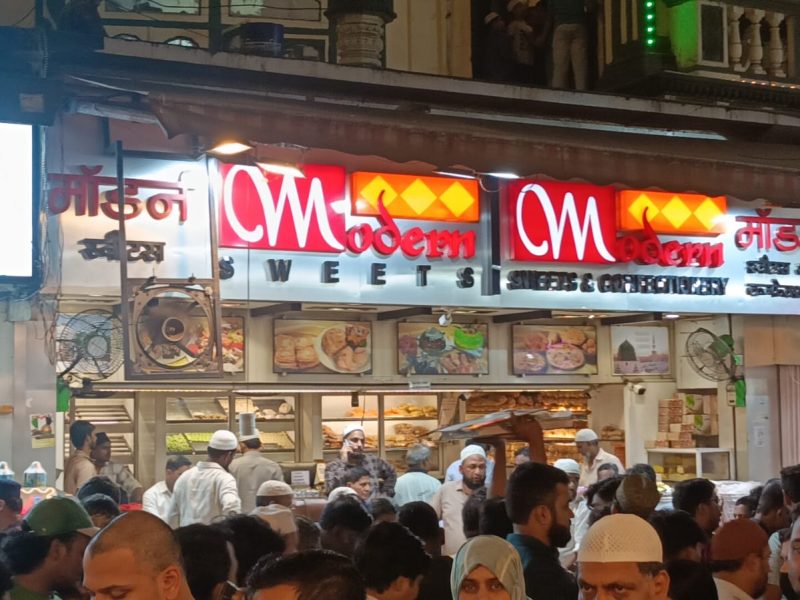
Unlike the expansive courtyard of Delhi’s Jama Masjid, Mohammad Ali Road is intimate and bustling. People stand, sit on makeshift stools, or gather around shared tables.
Says Vimal Mishra, an author and former Metro Editor of Nav Bharat Times, Mumbai, “Mohammad Ali Road is thronged by Bollywood actors, college students, families and food enthusiasts. They wait all year for this month. Nothing beats Mohammad Ali Road at this time of the year. Apart from food, people also visit here to buy new clothes for Eid.”
Despite the rush, there is an undercurrent of warmth. Strangers recommend dishes to each other. Stall owners greet regular customers by name. Laughter rings out between bites of kebabs and spoonfuls of dessert. It feels like Mumbai itself — diverse and fast-paced.
A shared spirit
Though Delhi and Mumbai differ in pace and personality, the Ramzan evenings at Jama Masjid and Mohammad Ali Road share a common soul. Both places embody the essence of the holy month: devotion, generosity and togetherness.
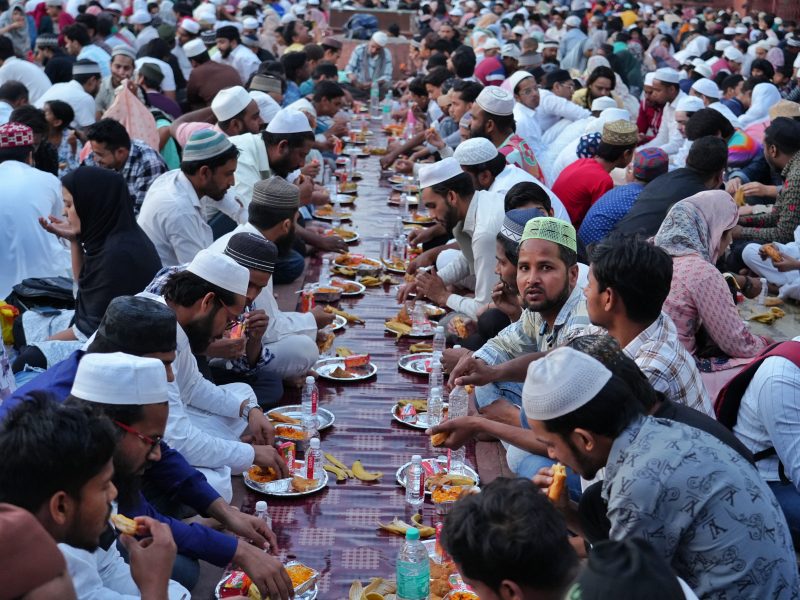
At Jama Masjid, the grandeur of Mughal architecture frames a serene and spiritual gathering. In Mumbai, Mohammad Ali Road offers a feast that celebrates community through food and festivity. One feels like stepping into history; the other feels like diving into a vibrant present.
The heart of Ramzan beats strongest at sunset — in the moment when fasting ends, gratitude begins, and people come together.
Under glowing lights and starlit skies, amid prayer and plates of fragrant food, faith turns into celebration.
“These evenings are not just about what is eaten or seen. They are about shared humanity — about how, for a few luminous hours each night, entire neighbourhoods become families,” concludes M Zaid Khan, a prominent social worker from Mumbai who is looking forward to seeing the Ramzan festivities in Delhi too.