LPG Shortage: Waiting with bated breath, Shyam Yadav, owner of a tea stall on a busy thoroughfare in Mayur Vihar, serves one cup after another in quick succession. An entire cauldron of tea sits beside him, and the metal pot has rarely held as much liquid as it does now. However, such is the situation.
“Jitna kum gas lagey utna accha (Lesser gas used the better it is),” Yadav says while handing another cup to a customer, who peers over his shoulder to see if it is their turn.
The mood among customers has become noticeably subdued ever since news of an LPG shortage began circulating widely. Yadav himself is still trying to navigate the situation, but he admits it is becoming increasingly difficult to manage.
“What can we do? The situation is awful,” he said. He explained that he had been trying to understand the problem since it began but found little room for manoeuvre. “Last week, when the shortage became known, the gas agency told us there was a long queue of people and it would be processed much later. I had to go to the black market.”
Black market pressures
Purchasing cylinders through the black market has sharply inflated prices due to the risks involved. Vendors say that depending on the cylinder capacity, prices can reach up to Rs 1,500, drawing both buyers and sellers into a precarious arrangement.
Factory owners and food vendors across Delhi have voiced concern about being forced to pay inflated prices for LPG cylinders as a direct result of the conflict in the Middle East. While the government has attempted to reassure the public that there are no genuine supply constraints, the situation on the ground suggests otherwise.
A sense of anxiety and growing panic has begun to take hold, particularly among small business owners. Tea stalls and roadside cafés across the city, which rely heavily on LPG for their daily operations, are struggling to cope with rising costs and uncertain availability.
Yadav has already been forced to increase the price of a paper cup of tea to Rs 15 from Rs 10 — a 50% increase.
“I am barely making a profit even with that,” he said. “The usual 14.2 kg domestic cylinder is being sold to us for Rs 2,500. Even then there is no guarantee of getting it, because if the delivery person gets caught by the police the cylinder will be seized. It will never reach me.”
Under normal circumstances, a 14.2 kg domestic cylinder at the unsubsidised rate costs around Rs 913. However, black market rates have surged dramatically, representing an increase of roughly 174%.
Even the cost of delivery can fall on the vendor in some cases. “Especially when he has to take a longer route,” Yadav added.
Shift to smaller cylinders
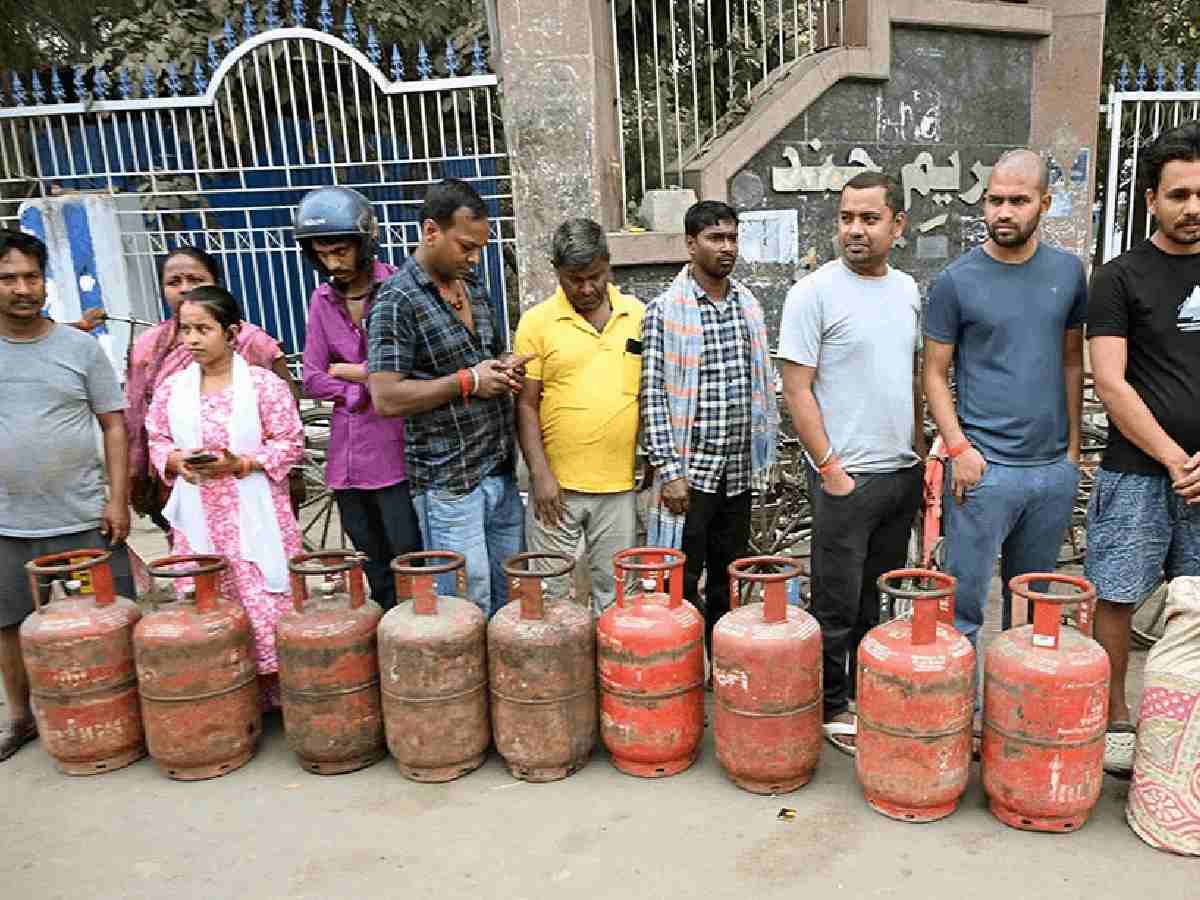
A walk through street food hubs and smaller eateries across the city reveals a visible change. Many vendors who previously used the larger 14.2 kg domestic cylinders have switched to smaller 5 kg LPG cylinders, which are meant primarily for household use.
Entire markets now appear lined with the smaller cylinders because they are comparatively cheaper and easier to obtain.
“As it is, the gas agency told me I would have to wait around a month to get the cylinder,” said Priya, a paratha vendor in Mayur Vihar. “I have booked that, but I also need to keep my thela running.”
However, even these smaller cylinders have become extremely expensive in the black market.
“We are getting these five kilo cylinders for almost Rs 1,500 at maximum. The usual price is around Rs 320,” said Ram Kishan, a paratha seller near Ahlcon Public School.
Government introduces priority-based distribution
Amid growing concerns, the Delhi Government has introduced a priority-based policy for the distribution of commercial LPG cylinders to manage the shortage in the capital.
Issued on March 14 by the Department of Food, Supplies and Consumer Affairs, the policy follows directives from the Union Ministry of Petroleum and Natural Gas.
The new mandate ensures that 20% of Delhi’s average daily commercial LPG consumption — roughly 1,800 cylinders — will be regulated through three state-owned Oil Marketing Companies (OMCs). The measure aims to stabilise the market amid growing concerns over supply.
Under the framework, eight sectors have been categorised by priority.
Educational institutions, hospitals, railways and airports have been granted Priority 1 status. They are entitled to their full daily requirement, though this is capped at 11% of the total allocation, or approximately 200 cylinders.
Government and public sector departments, along with their onsite canteens, fall under Priority 2 with a 13% cap. Restaurants and cafés — which represent the largest portion of the market — are placed at Priority 3 and have been granted the largest sectoral share at 42%, or about 762 cylinders.
Hotels and guest houses are placed at Priority 4 with 4%. Dairies, bakeries and sweet shops fall under Priority 5 with 11%, while caterers and function halls are assigned Priority 6 with an allocation of 9%.
Dry cleaners and pharmaceutical units are placed at Priority 7 with 1%, while sports facilities and stadiums fall under Priority 8 with 8% of the daily supply.
The daily quota will be divided among the three OMCs according to their market share. Indian Oil Corporation will handle 58%, Bharat Petroleum 27%, and Hindustan Petroleum 15%.
Supply will primarily consist of standard 19 kg cylinders, as 5 kg cylinders are not being provided through these commercial channels.
Distribution will follow booking requests and be fulfilled on a “first-in, first-out” basis. To prevent hoarding, individual supply will be limited according to a consumer’s average consumption over the previous three months, as recorded in official OMC systems.
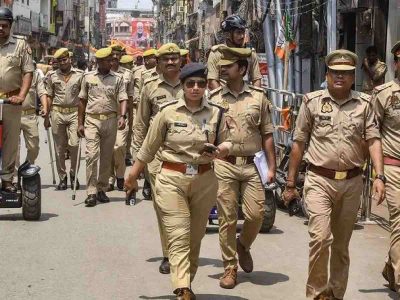
Joint enforcement teams involving the police and consumer affairs departments will carry out inspections to curb illegal storage, black marketing and diversion of stocks.
Violators may face prosecution under the Essential Commodities Act and the Bharatiya Nyaya Sanhita.
To ease pressure on LPG supplies, the government has encouraged businesses to temporarily switch to induction cooking or piped natural gas wherever possible.
Daily bulletins will also be issued to provide updates on availability and prevent misinformation. The OMCs have been instructed to run public awareness campaigns advising consumers against panic buying.
Shortage affects institutions
The impact of the shortage has reached institutions as well. Even the Delhi High Court Lawyers’ Canteen has been affected by the fuel shortage.
In a notice issued on March 11, the canteen management informed visitors that main course food would not be served due to the “lack of availability of LPG cylinders”.