From vehicle mounted air filters to highly efficient air purification systems capable of filtering finer pollutants, at least eight devices identified under the Delhi government’s “Innovation Challenge” have been installed across the city to undergo trials, an official from the Delhi Pollution Control Committee (DPCC) said on Thursday.
A total of 22 entries had been identified for the next phase of the innovation challenge for on-ground trial runs across the city to tackle air pollution.
“A few more devices are being installed as well. Out of the total 22, around six of the innovations were exclusively focused on tackling vehicular pollution, which will be tested in the International Centre for Automotive Technology (ICAT) labs in the next few weeks to determine their efficacy,” the official said.
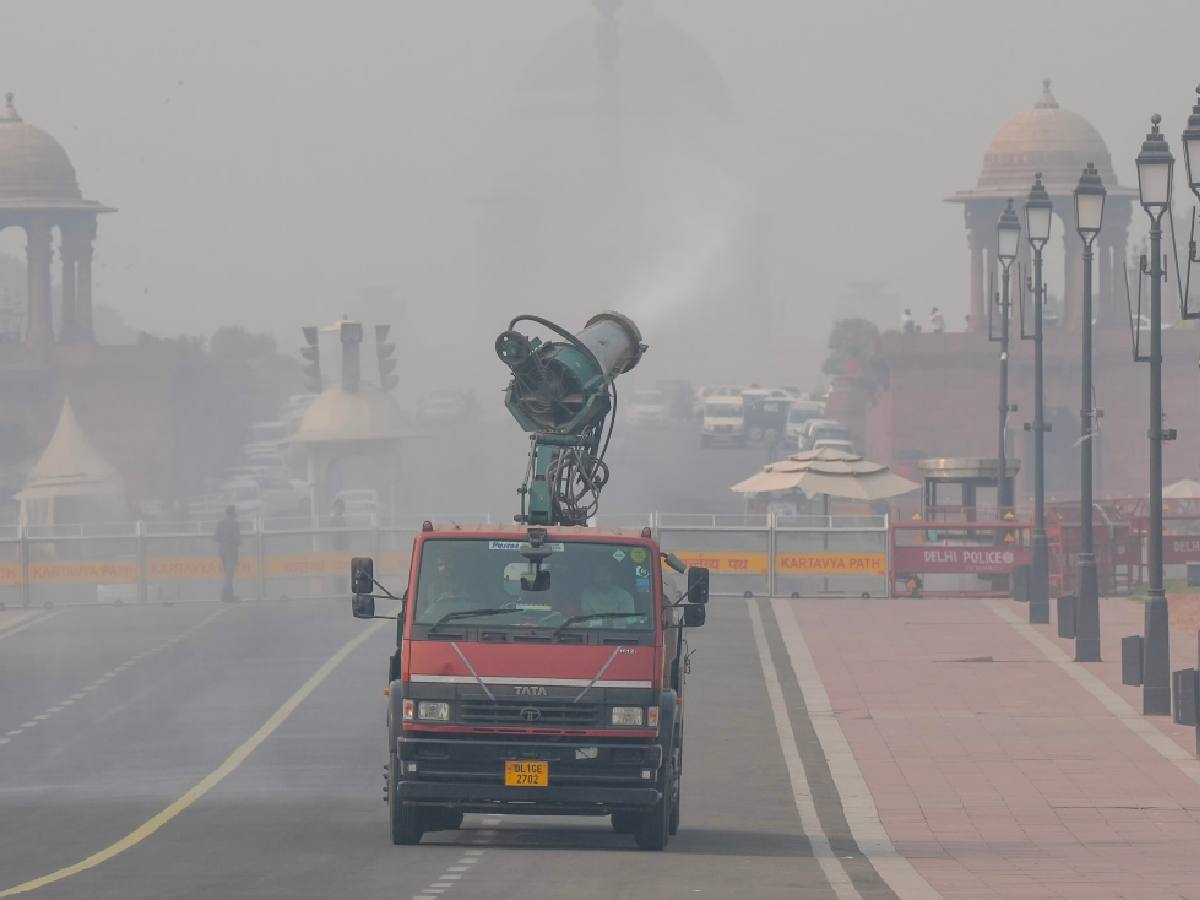
The devices already installed to tackle ambient air pollution include vehicle mounted air filters fitted on DPCC cars, pole-mounted dust catchers-cum-air cleaners installed on Rama Road, and the innovative air-purifiers fixed on the central verge of the road on Satguru Ram Singh Marg, as well as India’s first EV-mounted anti-smog gun has been placed near Mandir Marg.
Other devices include an algae tree installed at Anand Vihar ISBT, which is an ambient air purification system as well as a highly efficient air filter designed for larger spaces that regenerates oxygen instead of just circulating the same air. Also, a couple of innovative bus-mounted air filters are being put on DTC buses for trial runs, the official said.
“Some of the devices are already creating an impact at the ground level. For the next four weeks, the National Physical Laboratory (NPL) will be collecting and analysing data for the installed devices,” he said.
The Delhi government’s innovation challenge was launched to identify the most practical, cost-effective, and scalable solutions to tackle air pollution, with the challenge originally receiving a total of 284 applications.
Earlier, the Delhi government had mentioned that the Environment Department and Delhi Pollution Control Committee (DPCC) will closely track performance data from all deployed devices, with periodic reviews at the ministerial level. The outcomes of these trials will inform the final selection of winning solutions and the road map for their integration into Delhi’s broader clean air strategy.
The Independent Technical Evaluation Committee (ITEC), comprising industry and academic experts and headed by a professor from IIT Delhi, will further analyse the trial outcomes, before final recommendations are made.