A hospital in Delhi-NCR has used a new faecal diversion technique during a complex rectal cancer surgery, allowing a patient to avoid an external stoma bag and a second surgery usually required for its reversal.
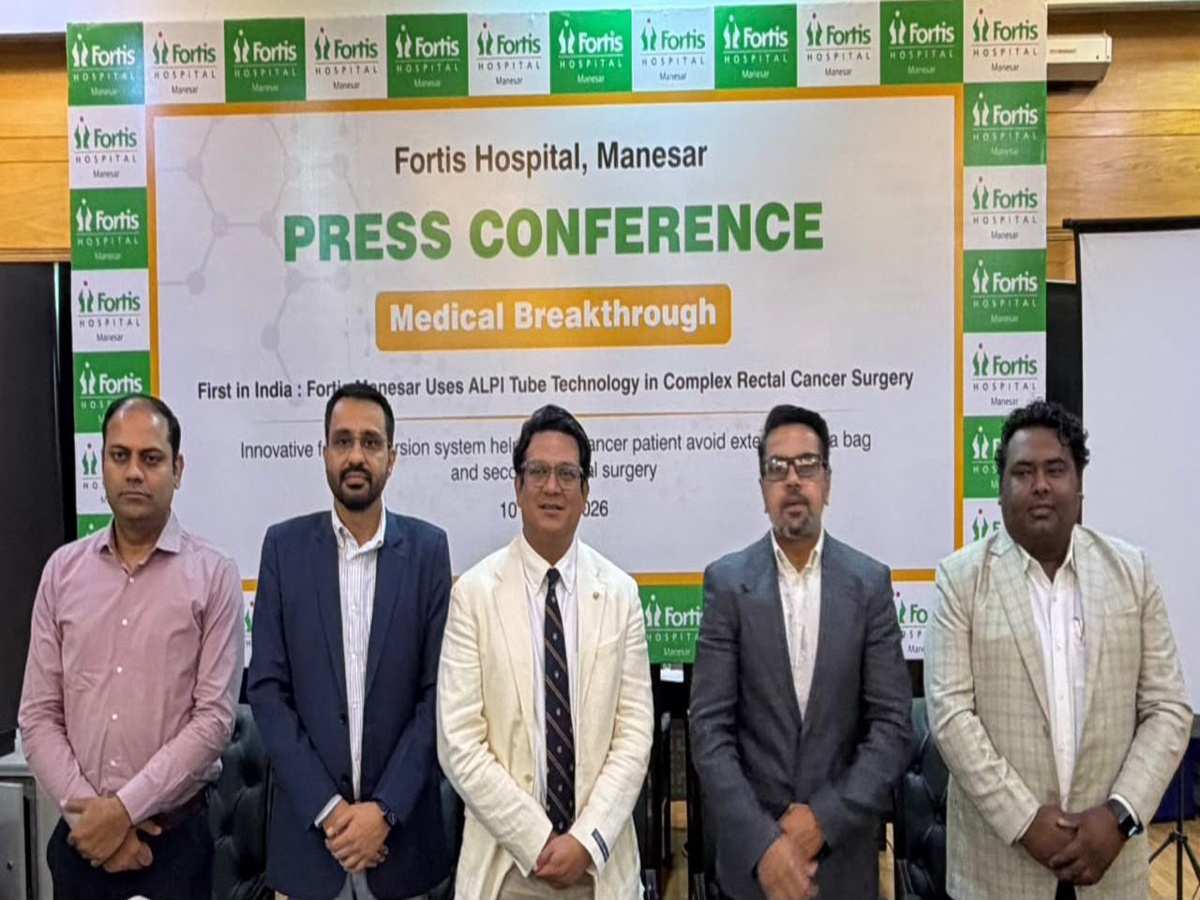
Speaking at a press conference in Delhi, officials of Fortis Hospital Manesar said the hospital had become the first in India to use the ALPI Tube Faecal Diversion System in a robotic-assisted surgery performed on a 55-year-old Bangladeshi patient diagnosed with Stage III rectal cancer.
The patient, Moyazzem Hossain, had been suffering from persistent rectal pain for nearly five months and travelled to India after reportedly being unable to access advanced treatment in his home country.
Investigations, including blood tests, tumour marker evaluation and a PET-CECT scan, revealed a rectal tumour measuring around 13 cm with involvement of surrounding tissues, confirming the diagnosis of Stage III colorectal cancer, the hospital said.
Doctors carried out a robotic-assisted surgery to remove the cancerous section of the rectum and nearby affected tissues. The six-hour procedure also involved reconstruction of the intestine and placement of the ALPI Tube.
The patient recovered well after the operation and was discharged in a stable condition six days later, according to the hospital.
Hospital officials said patients undergoing lower rectal cancer surgery are often given a temporary stoma — an opening created in the abdomen to divert stool away from the healing surgical site. While the procedure helps reduce the risk of complications such as anastomotic leaks, it can affect a patient’s quality of life and generally requires a second operation for reversal.
In this case, surgeons placed the ALPI Tube inside the intestine to internally divert faecal matter away from the newly created colorectal junction during the healing period, eliminating the need for an external stoma bag.
“For decades, temporary stomas have been considered the standard protective measure following low rectal cancer surgeries. While clinically effective, they often carry considerable psychological, social and physical burdens for patients,” said Dr Vinay Samuel Gaikwad, Senior Director, Surgical Oncology, Fortis Hospital Manesar.
He said the ALPI Tube offers a potential alternative in carefully selected cases by providing internal faecal diversion while avoiding the discomfort associated with stomas and the need for a second reversal surgery.
Abhijit Singh, Facility Director at Fortis Hospital Manesar, said the successful use of the technology marked a significant development in colorectal cancer surgery and reflected the hospital’s focus on adopting newer treatment approaches aimed at improving patient outcomes and quality of life.