
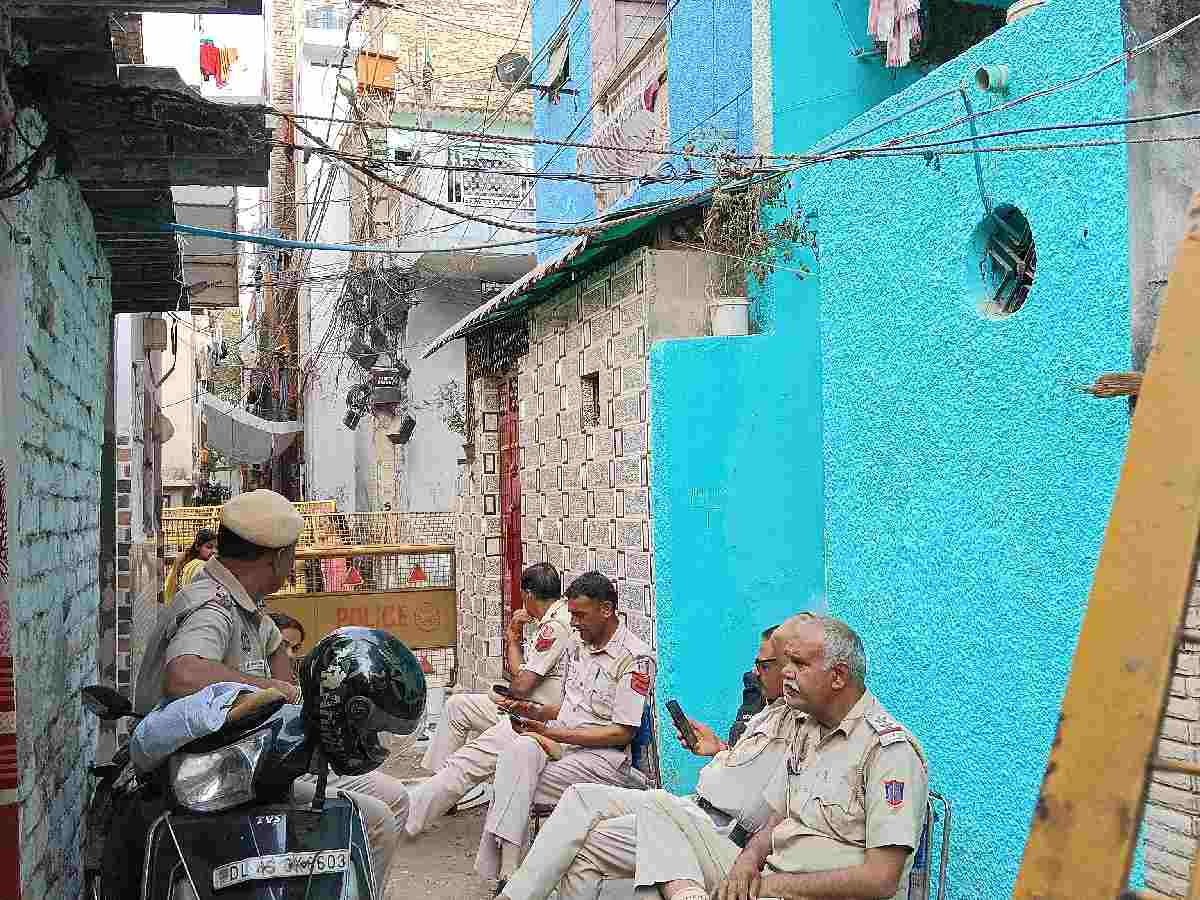
Delhi: Plastered across the narrow alleys of Uttam Nagar’s JJ Colony, a sense of unease lingers within its many crevices. With each turn, that unease becomes more apparent.
A heavy security presence — including personnel from the Delhi Police and paramilitary forces — has become a common sight in the area. Residents say they now carry Aadhaar cards and other identification documents even for routine errands such as buying groceries. Suffice it to say, the situation remains tense days after the incident.
With round-the-clock security deployment, even children must pass through multiple checkpoints as they move through the area. Reaching the inner lanes often requires navigating nearly 10 barricaded entry and exit points. According to residents, the extensive restrictions have made everyday movement difficult. Some said that had the situation not taken on a charged atmosphere, the response might have been different.
However, the question remains how much of the situation was actually communal. Neighbours and the parties involved say that the dispute itself was not communal, yet numerous social media posts have circulated online suggesting that Tarun Butolia’s death on Holi had a divisive motive. The situation escalated further after the March 4 incident, when several groups gathered outside the homes of the two families and raised slogans demanding action against the accused.
From vandalism to arson, the accused’s house now lies deserted, with those who have not been arrested moving elsewhere until tensions ease.
The dispute
The dispute began during the day on March 4. According to Tarun’s father, Memraj, a six-year-old girl from their family accidentally splashed a water balloon near a Muslim neighbour. Memraj claimed that despite offering an apology, the woman became aggressive, leading to an altercation where his family was allegedly assaulted and forced to retreat into their home.
However, Shaheen Rangrez, a member of the accused family, presented a different version of the initial spark. She stated that the incident did not involve a child but a 20-year-old man named Prince, who allegedly threw dirty water at her aunt. Rangrez claimed the men from the neighbouring house were intoxicated and began misbehaving and using abusive language when her aunt objected.
The violence escalated significantly later that night. Memraj alleged that when Tarun returned home on his motorcycle, he was ambushed by a group armed with sticks, rods, and iron pipes. Tarun was rushed to the hospital but succumbed to his injuries the following day, March 5.
Contrasting claims
On the contrary, Rangrez alleged that it was Butolia who returned with a mob of 25 to 30 men carrying hockey sticks and bats. She suggested that Tarun’s death might have been accidental, claiming that he was struck by his own brother in a case of mistaken identity during the drunken brawl. These allegations have not been independently verified by investigators.
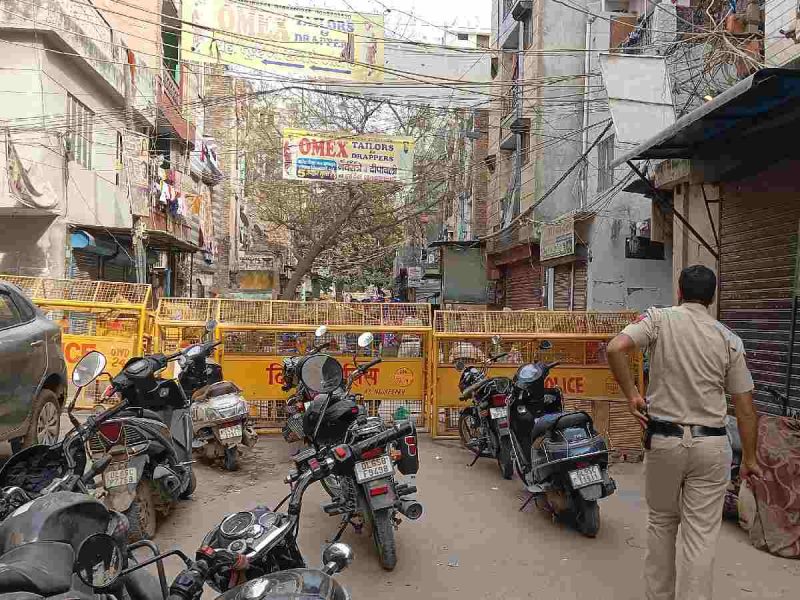
Police intervention resulted in the arrest of 14 members of the Rangrez family, including three women. Two minors from the family have also been apprehended. Rangrez has since raised concerns over her 14-year-old brother, Rizwan, who she claims went missing after being injured. However, Dwarka DCP Kushal Pal Singh confirmed that two minors related to the case have been sent to a juvenile home.
Police version
Despite social media commentary suggesting a sectarian motive, the Delhi Police have officially denied any communal angle. DCP Singh clarified on March 5 that the clash was the result of a sudden argument on Holi between neighbours who had a history of disputes over parking and garbage disposal.
Both families originally hail from Rajasthan and have lived as neighbours since 2004. While the case was initially registered under the Bharatiya Nyaya Sanhita for rioting, it was upgraded to include murder charges following Tarun’s death. At the request of the victim’s family, provisions of the Scheduled Castes and Scheduled Tribes (Prevention of Atrocities) Act have also been invoked.
Cost of living
Asim Ali, a resident of Uttam Nagar who lives within the area sealed off by barricades, stated that the two parties had been consistently at each other’s throats for a long time.
“There was always some quarrel or another happening. It was always about something fairly minor. From garbage and littering to parking, there was always noise. We never thought that it would reach such a head. Nobody saw it happening,” he said.
However, what residents point out is the extent to which the locality had been largely neglected until the day the tragedy unfolded.
“Now, everyone cares about us,” said a resident, on the condition of anonymity.
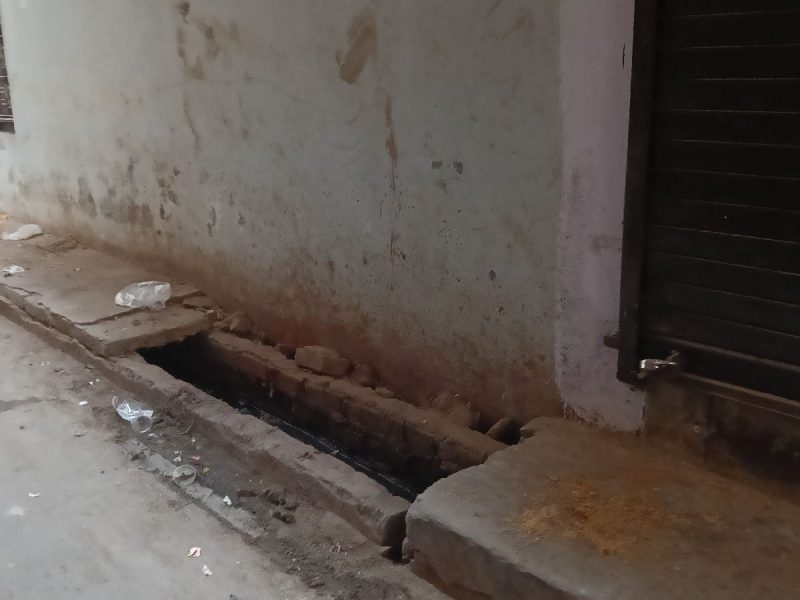
Walking along an entire line of uncovered drains, he pointed out that the drainage system is clogged. “Half of the water that we get is contaminated. We keep telling the authorities about it, but nothing ever changes. Even getting the Delhi Jal Board (DJB) to conduct its usual maintenance becomes a chore. We keep complaining to the local councillor, but it has remained like this. Whenever guests come home, they complain about a stench. Unfortunately, I cannot smell it because I have just been here too long. That’s how bad it is here,” he said.
On the other hand, Prajwal Singh, a resident of the JJ Colony’s B block, stated that the contention between the victim’s family and the accused was widely known in the vicinity.
Govt. apathy
“I do not stay near them, but my friends stay here. It is unfortunate that it boiled over to this extent. Usually, neither the government nor the media really cares about what we have to say, or even our lives. We keep complaining about the number of issues that we contend with here, but nobody helps,” he said.
Singh added that there were many poultry shops disposing of the offal from slaughtered poultry in the open.
“We keep complaining to the authorities, but no action has yet been taken. Funnily, all of this is happening right across a police station,” he said.
Since 2018, according to a Division Bench verdict reiterated by the Delhi High Court in January 2026, slaughtering in the open and disposal without effective facilities is illegal in the national capital.
Despite these persistent civic issues, much of the media and some groups online have focused on the tragedy in ways that residents say risk deepening divisions. After the incident, the Municipal Corporation of Delhi came to the spot to bulldoze a part of the accused’s building, which was adjudged “illegal”, after decades of them living there.