
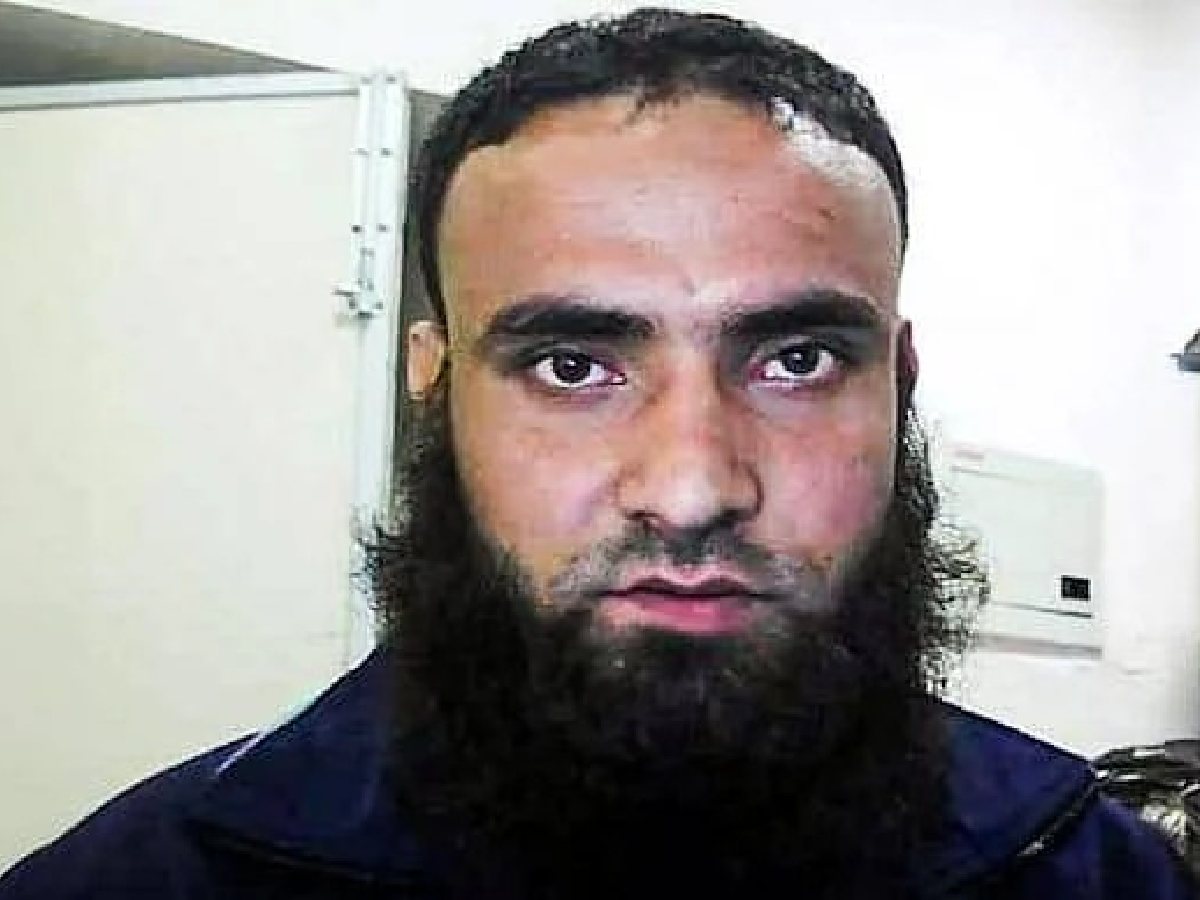
A cat-and-mouse chase following the Red Fort blast last year finally ended with the Special Cell of the Delhi Police apprehending an alleged high-ranking Lashkar-e-Taiba (LeT) handler, Shabir Ahmed Lone, in the Ghazipur area of East Delhi.
Lone, a 43-year-old from Ganderbal in Jammu and Kashmir, is accused of coordinating a terror module that was recently dismantled by Indian authorities.
The arrest, carried out on the night of March 29, followed a sophisticated intelligence-led operation conducted in coordination with central agencies. Lone is alleged to have been operating from Bangladesh, acting as a key link between Pakistan-based commanders and recruits within India.
Who is Shabir Ahmed Lone
According to police sources, Lone’s apprehension has effectively thwarted a fresh recruitment drive aimed at radicalising vulnerable youth. He was reportedly acting under the direct instructions of Pakistan-based handlers, identified by the code names Abu Huzaifa and Sumama Babar, to bolster the ranks of the banned outfit.
Lone had previously been convicted in 2007 following a major arms recovery that included AK-47 rifles and grenades. He is also wanted in connection with several active cases under the Unlawful Activities (Prevention) Act in Jammu and Kashmir.
Investigations reveal that Lone recently entered India clandestinely via the Nepal border. This followed the February arrest of eight other module members, including seven Bangladeshi nationals, who had been tasked with identifying high-traffic commercial and religious sites for potential strikes.
Terrorism incidents in India
However, questions have emerged regarding the overall security scenario. While terrorism-related incidents have declined over the past two decades, concerns remain.
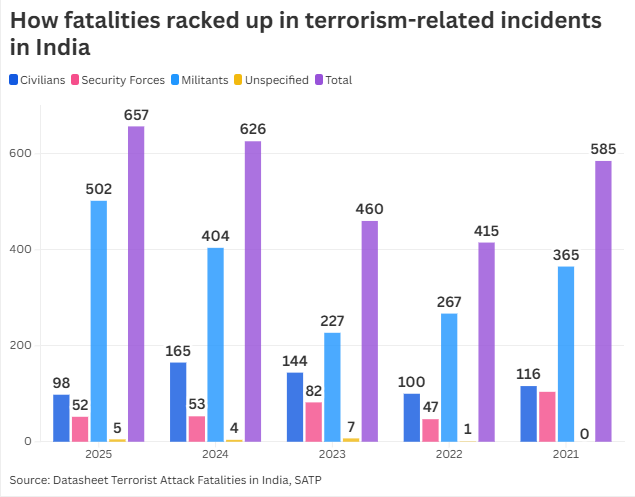
According to the South Asian Terrorism Portal (SATP), there have been 427 terrorism-related incidents across the country in 2026, with February recording the highest at 159. In the past five years, the numbers rose sharply last year, with 2,247 incidents recorded, compared with 1,587 in 2024.
A similar pattern is reflected in fatalities. In 2026, till March 28, the number stood at 83 — including 72 militants, five civilians, four armed forces personnel, and two unspecified individuals. In 2025, there were 657 fatalities, including 502 militants, 98 civilians, 52 armed forces personnel, and five unspecified.
Investigating agencies, including the National Investigation Agency (NIA), continue to handle multiple such cases.
Tracking the network
During his time in Bangladesh, Lone reportedly established a “launching pad” in Saidpur and married a local woman to integrate into the community. He allegedly oversaw the distribution of anti-national material in Delhi and Kolkata as a “test” of recruits’ operational capabilities.
At the time of his arrest, officers recovered multiple currencies, including Bangladeshi Taka, Pakistani Rupees, and Nepalese Rupees, along with a Nepalese SIM card, indicating the cross-border nature of the network.
The Special Cell said Lone had been in contact with several militants, including a commander of Tehrik-ul-Mujahideen. His interrogation has provided insight into methods used to radicalise individuals through encrypted messaging applications and social media.
The investigation intensified after the arrest of eight individuals on February 23, six of whom were Bangladeshi nationals, in connection with “Free Kashmir” posters found near the Supreme Court Metro station on February 7.
Police said two men had pasted the posters before fleeing to Kolkata. Subsequent raids in West Bengal led to the arrest of Umar Farook and Rabiul Islam, the latter a Bangladeshi national previously arrested in India in 2007.
Additional Commissioner of Police Pramod Singh Kushwah said the pair had pasted pro-Pakistan and pro-terror material at 10 locations across Delhi. “They recorded their actions on video to send to Lone as proof of their progress,” he said.
During interrogation, the suspects described the poster campaign as a “dry run” orchestrated by Lone to assess their suitability for formal training, with the aim of carrying out attacks in major cities across north India.
Further investigation led police to a flat in Kolkata that functioned as a hub for recruitment targeting Bangladeshi nationals living in India.
Officials said Farook used social media to recruit six men working in garment factories in Tamil Nadu, who were later arrested. Lone allegedly appointed Farook to spearhead operations in India, using individuals with assumed identities to evade detection.
In December 2025, Lone directed Farook to conduct reconnaissance of key landmarks and send video footage. He was later asked to travel to Bangladesh for further briefings.
Investigators have also identified an accomplice, Saidul Islam, a Bangladeshi national believed to be abroad, who allegedly facilitated Lone’s entry into Bangladesh and arranged his hideout.
Red Fort blast
On November 10, 2025, a car bombing near the Red Fort in New Delhi killed at least 15 people and injured more than 30. The explosion occurred around 6:52 pm when a white Hyundai i20, carrying ammonium nitrate and other explosives, detonated near a traffic signal at Gate 1 of the Lal Qila Metro station.
The blast destroyed several nearby vehicles, including e-rickshaws and one auto-rickshaw, and damaged surrounding buildings.
The accused was identified through DNA analysis as Dr Umar Un Nabi, a 31-year-old assistant professor of medicine from Pulwama, employed at Al-Falah University in Faridabad.
Investigating agencies, including the National Investigation Agency, said the explosion may have been a suicide attack or a premature detonation triggered by panic after a police raid in Faridabad a day earlier. The raid had uncovered nearly 2,900 kg of explosives and multiple assault weapons linked to the same module.