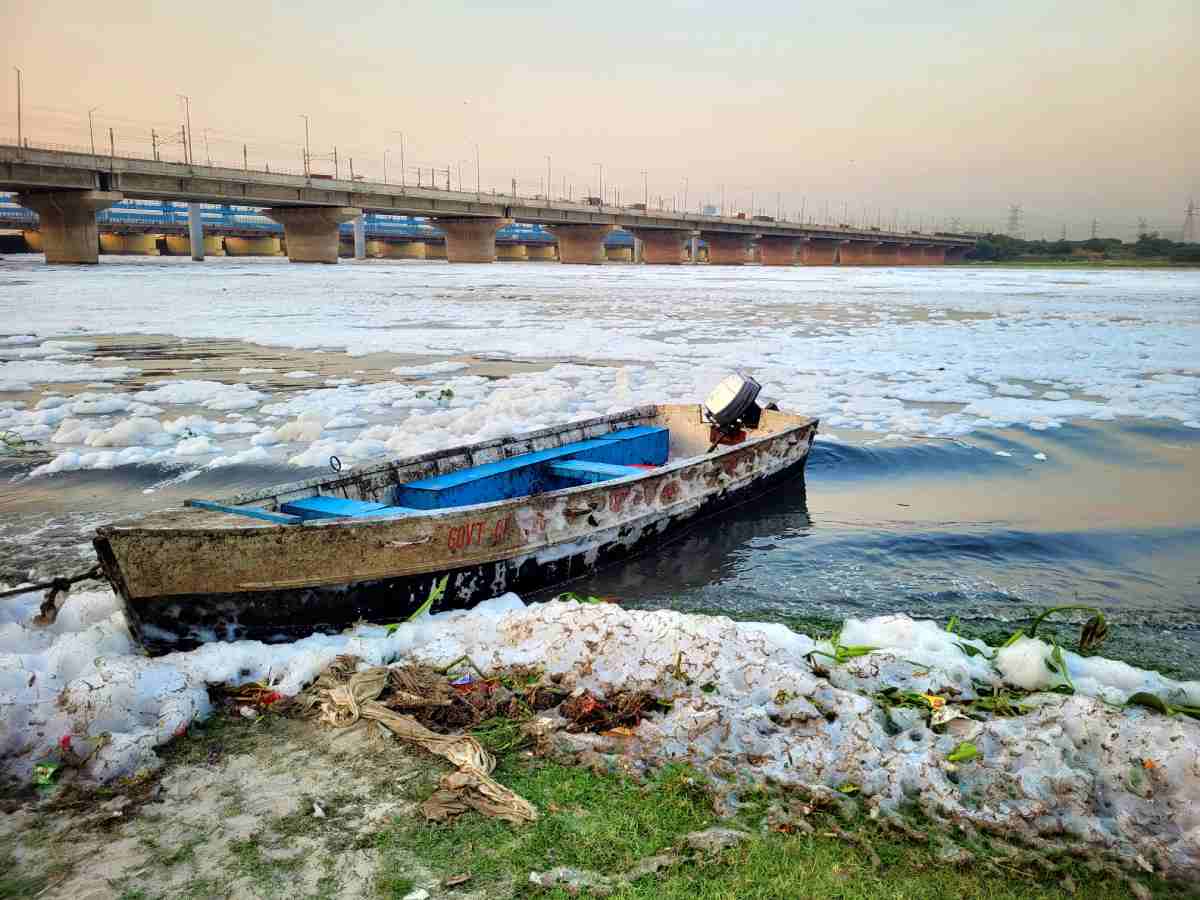
Delhi Lt Governor Taranjit Singh Sandhu on Wednesday said Yamuna floodplain from Palla to Kalindi Kunj will be developed as eco-friendly spaces in lines with Vasudev Ghat area.
LG Sandhu and Chief Minister Rekha Gupta visited Vasudev ghat and nearby areas along the Yamuna bank to take stock of the government’s summer and monsoon preparations.
During the visit, Sandhu instructed the Delhi Development Authourity (DDA) to undertake the rejuvenation of the entire stretch of floodplains from Palla to Kalindi Kunj, in a time-bound manner with specific timelines.
The entire stretch of river in the national capital is approximately 55 kilometres.
“While Vasudev Ghat, along with other restored ghats such as Asita, Baansera and Yamuna Biodiversity Park, have emerged as eco-friendly, sustainable and green public spaces on the floodplains, attracting thousands of Delhi residents,” he said.
Several other ghats still need to be developed on similar lines by DDA with the cooperation of other departments, Sandhu added.
These restored ghats, which are bringing the people of Delhi closer to the river and fostering a sense of ownership and belonging towards the Yamuna, can serve as models to be replicated at other locations, the LG added.
During the visit, LG Sandhu emphasised involving domain experts in the project and prepare the plan.
“Going forward, it is essential for the government to actively engage with national and international experts to incorporate global successful best practices and innovative solutions into these critical initiatives,” Sandhu added.
He also directed all concerned departments, including irrigation and flood control, Delhi Jal Board (DJB), Delhi Pollution and Control Committee and Municipal Corporation of Delhi (MCD), to work collectively and in seamless coordination.
“You all are aware of the challenges that Delhi faces. Yamuna pollution, air pollution, water shortages during summer and flooding during monsoon is a non-negotiable priority. These issues require urgent, mission-mode action for the well-being of both present and future generations,” Sandhu added.
During the visit, the two also discussed ways to reduce waterlogging in low-lying areas near Kashmere Gate and steps taken by the government, like construction of a protection wall.
CM Gupta directed officials to immediately remove encroachments from floodplains to enhance the river’s water holding capacity.
“Implement a three-pronged agenda focusing on desilting, ensuring smooth water flow and providing permanent solutions for waterlogging hotspots,” Gupta said.
Emphasis is also laid on developing Yamuna riverbanks into permanent and grand public assets, instead of incurring recurring expenditure on temporary ghats, she added.
According to officials, under the Yamuna floodplain rejuvenation plan, currently the DDA is already working on 11 projects covering around 1,660 hectares of area, which will be expanded further.