A five-year-old boy died on May 3, 2026, after banned synthetic kite string, commonly known as Chinese manjha, slit his neck while he was travelling with his family on a motorcycle in northeast Delhi’s Usmanpur area, police said.
The incident occurred near Jag Pravesh Chandra Hospital, where the sharp, glass-coated string became entangled around the child’s neck and caused a deep wound.
He was rushed to a nearby hospital, where he died during treatment. Police subsequently launched an investigation.
“A probe is underway to ascertain the source of the Chinese manjha and identify those involved in its sale and use,” a senior police officer said at the time.
No accused has been identified in the case so far.
More than 3,000 rolls seized
Delhi Police have carried out several operations against the banned string across the Capital this year.
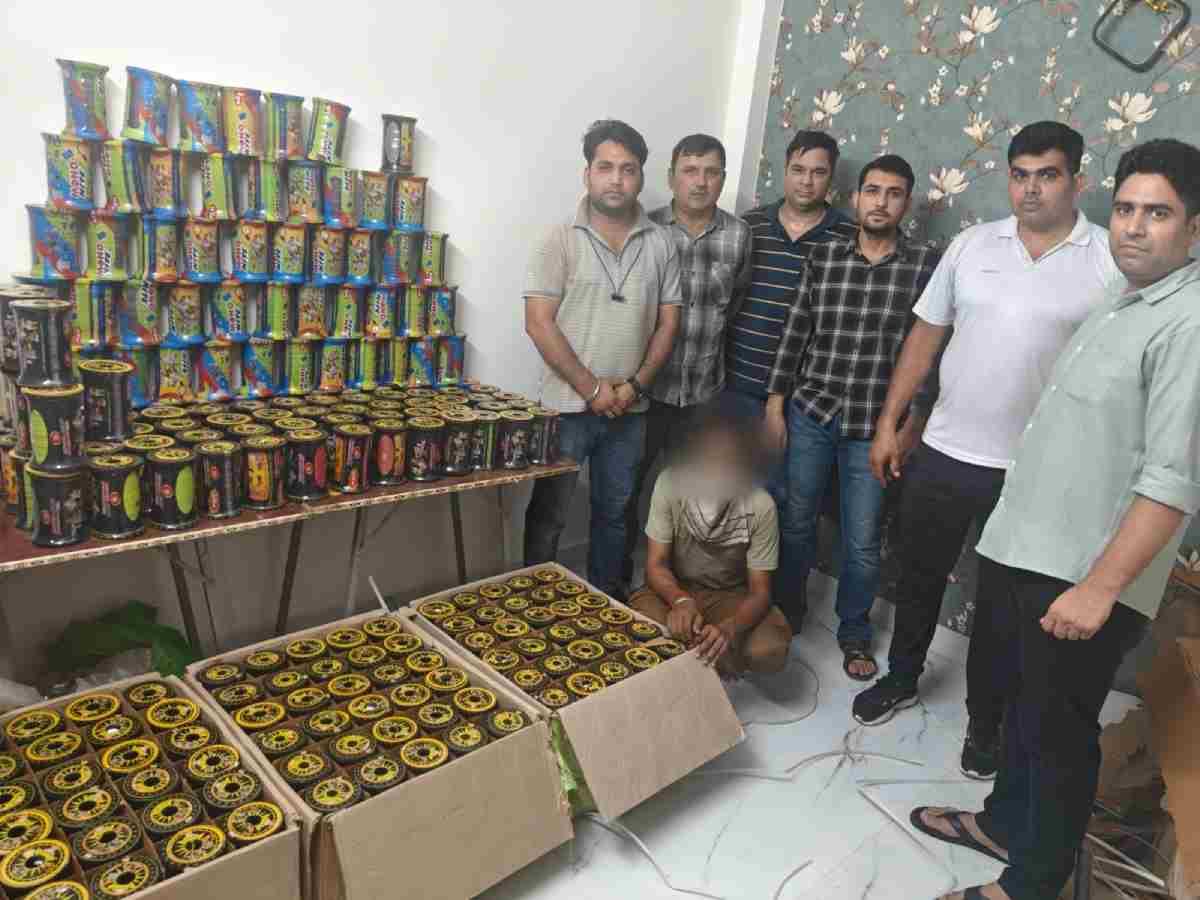
One of the largest was conducted in May, when police raided an illegal godown in Uttam Nagar in Southwest Delhi and recovered 2,040 rolls of synthetic kite string. The stock had allegedly been stored for distribution ahead of the kite-flying season.
In late July, the Special Staff of the Central district police uncovered an alleged storage and supply racket in Nabi Karim. Acting on specific information, officers raided a property in Laxman Puri, seized 424 packed reels and arrested a key suspect.
Police intensified their crackdown in the Outer district in August. After apprehending a person allegedly selling the banned string in Nilothi Extension, officers traced the supply to a storage facility in Chander Vihar and seized 300 rolls.
Separate operations were also conducted in Ashok Nagar, Mustafabad and Seelampur in northeast Delhi in early August. One investigation into a supply network spanning Jyoti Nagar, Ashok Nagar and Ghaziabad led to the recovery of 372 reels and the arrest of four people. Another raid in Gautampuri, Seelampur, yielded 30 rolls and led to the arrest of a local trader.
Together, the major operations have resulted in the seizure of more than 3,000 rolls, or charkhis, of banned synthetic string across the Capital.
Supply routes through Ghaziabad
Much of the banned string seized in Delhi is believed to enter through border areas, particularly from Ghaziabad district in Uttar Pradesh. Residents claimed that weak enforcement in Loni made the string easier to procure.
“There are no police officers here. Most of them are stationed in the market area, which is full of kite sellers,” a Sonia Vihar resident said on condition of anonymity.
The resident said that while the kite market in Seelampur’s Chand Mohalla remained under close surveillance, border areas received less attention.
“Almost everyone who wants kaanch (glass) manjha goes to Loni or some other place in Uttar Pradesh. Some just choose not to buy the manjha from Delhi,” said Sonia Vihar kite seller Paresh Kumar.
A senior police officer said the Yamuna was sometimes used to transport the string.
“Those in the trade sometimes use the river for transport as well. Moreover, in the cases in which we have seized the contraband and arrested the accused, a person from Loni has been involved in almost every case. Usually, that person is the dealer,” he said.
Why the string is dangerous
Traditional Indian manjha is generally made from cotton thread, sometimes coated with powdered glass to make it more effective in kite-flying contests. It is biodegradable and breaks more readily than its synthetic counterpart, although it can still cause cuts. Glass-coated cotton string is also prohibited in Delhi.
Chinese manjha, by contrast, is made from nylon or plastic fibre and is often coated with powdered glass or metal. It is sharper, stronger and more durable than cotton thread and does not decompose easily.
The string can remain suspended across roads, trees and electric poles long after the kites have disappeared from the sky. Because it is thin and difficult to see, it poses a particular danger to two-wheeler riders. When a rider encounters the string at speed, it can tighten around the neck or face, causing deep wounds and, in some cases, fatal injuries.
Birds are also frequently injured after becoming entangled in discarded kite string. Delhi Fire Services received 566 bird-rescue calls in August 2024 and 757 in August 2025.
Synthetic string also adds to non-biodegradable waste and can cause electrocution when it becomes entangled with power lines.
Ban in force since 2017
The Delhi Government prohibited the production, storage, supply, import, sale and use of sharp kite-flying strings in January 2017. The National Green Tribunal subsequently imposed a nationwide ban on nylon and other synthetic kite strings in July that year because of the danger they posed to people, wildlife and the environment.
Only plain cotton thread without glass, metal or any other material intended to increase its sharpness or strength is permitted for kite-flying in Delhi. Uttar Pradesh, Rajasthan and Gujarat have also issued prohibitory orders against dangerous synthetic strings.
Also Read: Delhi records 465 National Highway crashes in seven months
Despite the ban, Chinese manjha remains in demand because its strength gives kite-flyers an advantage during contests. It does not snap easily and can also be cheaper when smuggled stock is bought in bulk. Some buyers remain unaware of the prohibition, while others underestimate the danger posed by the string.