The Delhi government on Wednesday, July 1, notified the “Delhi Electric Vehicles Policy 2026”, which aims to accelerate electric vehicle (EV) adoption, improve air quality, and create a supportive ecosystem for electric mobility.
Moreover, the policy has also included a provision for the registration of hydrogen fuel-powered vehicles in the next four years. Earlier last month, Transport Minister Pankaj Singh announced that the Delhi government plans to operate two hydrogen-powered buses in the national capital as part of its push towards clean energy and sustainable public transport. “If cleaner fuel vehicles are introduced during the period of this policy, such as hydrogen fuel, the same may be inducted, allowed to be registered, as per the decision of the Delhi government,” the new EV policy states.
The Delhi Cabinet headed by Chief Minister Rekha Gupta on Monday, June 29, approved the EV policy after which it was sent to LG Taranjit Singh Sandhu for final approval.
Under its EV policy, the Delhi government announced that all electric cars with an ex-showroom price of Rs 30 lakh or less registered in the national capital will get full exemption on road tax and registration fees.
Timeline of EV policy implementation
Besides, only electric auto rickshaws will be registered in Delhi from January 1, 2027, while registration of new petrol and CNG two-wheelers will be phased out, with only electric two-wheelers to be registered from April 1, 2028.
Under the new policy, people buying e-two-wheelers will get a subsidy of Rs 30,000 in the first year, Rs 20,000 in the second year and Rs 10,000 in the third year.
The policy will remain in force till March 31, 2030.
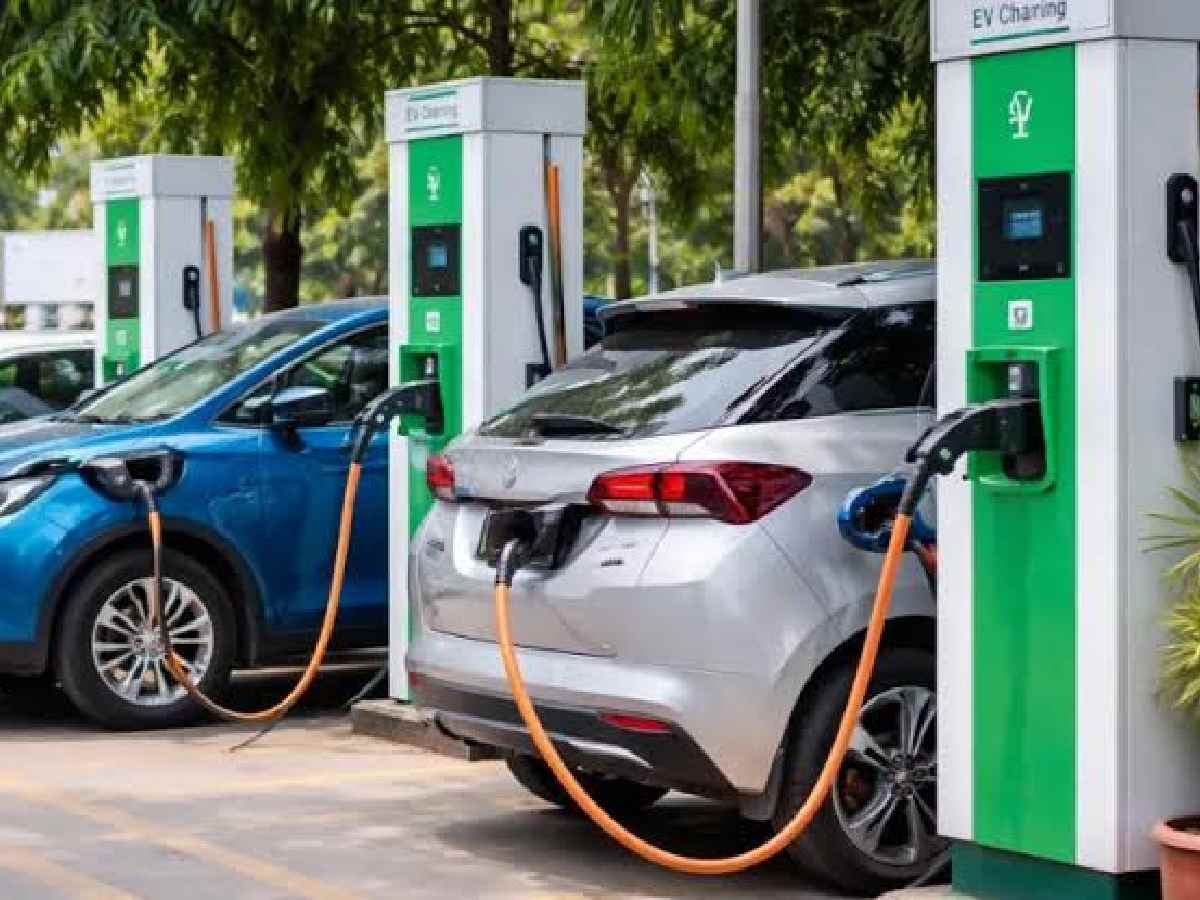
The state government will invest around Rs 15,000 crore over the next four years to promote electric mobility and reduce vehicular pollution, and more than 30,000 EV charging points will be set up across the national capital.
Growing EV infra
Officials said Delhi witnessed “record” expansion of charging infra in the last one year, with the total number of charging points rising to over 10,000, of which more than 3,000 were added in the past few months.
The three major power discoms in the city-BRPL, BYPL and TPDDL-have led the initiative.
In 2025-26, BRPL and BYPL installed over 1,600 EV charging points and battery swapping stations across 1,241 locations-the highest ever in a single year, discom officials said.
Tata Power Delhi Distribution Limited (TPDDL) energised 3,783 EV connections, out of which 1,641 EV connections got charged in 2025-26.
Earlier, CM Gupta had said that the new EV policy not only offers incentives on buying an electric vehicle, but it also provides a roadmap for structural reforms in the transport sector.
“EV policy 2026 goes beyond offering incentives for purchasing electric vehicles and lays out a clear roadmap up to March 2030 for structural reforms in the transport sector, expansion of charging infrastructure, a stronger institutional framework and the phased electrification of different vehicle categories,” Gupta said.
Accordingly, the new framework also includes three bodies supervising, including the Delhi EV Apex Committee, a High-Powered Committee and a dedicated EV Cell. The earlier framework only involved an EV Cell and the State EV Board.
Reportedly, the new policy also introduces battery traceability, from manufacturing to recycling through digital tracking, collection centres and a public- private-partnership (PPP) based recycling system.
“While the previous policy focused on developing charging infrastructure, the new government has expanded that approach by appointing Delhi Transco Limited as the nodal agency,” Gupta added.
She also said the government has strengthened the financial framework of the EV policy, with expanded funding sources such as PM E-DRIVE, the state government’s budget and the pollution cess.
Experts hail move
Experts have welcomed the Delhi government’s EV Policy, saying its proposed phase-out of petrol and CNG-powered two- and three-wheelers and incentives for zero-emission vehicles could significantly reduce vehicular pollution in the national capital.
Sharif Qamar, Fellow and Associate Director at The Energy and Resources Institute (TERI), described it as a forward-looking policy that could serve as a model for other states.
“The policy gives a good framework which can result in a reduction in vehicular emissions in Delhi in the next few years,” he said, adding that states in the Indo-Gangetic plains, which witness a sharp rise in pollution during winter, could benefit from a similar approach.
Qamar said the policy was also likely to attract private investment and strengthen the city’s EV ecosystem.
However, he stressed a significant expansion in charging infrastructure for the policy to become a success.
“The target to install over 30,000 EV charging stations is good, but to cater to the upcoming demand, more charging stations will be required in the national capital,” he said.
Qamar said commercial and fleet vehicles often occupy charging stations, necessitating additional capacity for private users. He also called for greater participation by housing societies, resident welfare associations, and apartment complexes in setting up charging facilities.
Anumita Roychowdhury, Executive Director at the Centre for Science and Environment, said the decision to allow only electric three-wheelers and N1 trucks to be registered from next year was a welcome move.
“Along with subsidies on new purchases, there was an urgent need for a legal mandate to properly implement the new EV policy so that the desired results to reduce vehicular emissions can be achieved,” she said.
According to Roychowdhury, two-wheelers are a major contributor to vehicular emissions in Delhi.
She also welcomed the decision not to provide subsidies for hybrid vehicles.
“If we truly want to achieve net zero emissions in the national capital, vehicles which have zero tailpipe emissions should only be provided subsidies,” she said.
Amit Bhatt, Managing Director (India) at the International Council on Clean Transportation, said phase-out of new internal combustion engine-powered two- and three-wheelers could be a major step in tackling Delhi’s air pollution.
“These segments account for a large share of the city’s vehicle fleet, and accelerating their transition to zero-emission vehicles can significantly reduce vehicular emissions, improve public health, and pave the way for a broader transition to zero-emission transport across all vehicle segments,” Bhatt said.
He added that discontinuing purchase incentives for strong hybrid vehicles would help channel policy support and investment towards zero-emission transport technologies.
Environmentalist Bhavreen Kandhari said the policy should not just focus on private vehicles, but also on making public transport green.
“More cars on the road is not a solution. To reduce traffic jams and dust in the city, the government should work on improving public transport and last-mile connectivity with green solutions. This EV policy falls short on that aspect,” she said.
Auto rickshaw unions remain on their toes, calling the move sudden and potentially disruptive.
“Any forced, sudden move like only EV auto-rickshaw registration from next year is a disruptive move. What the government should actually do is strengthen the charging infrastructure and move the Supreme Court to relax the cap on fresh registration of three-wheelers,” Rajindra Soni, general secretary, Delhi Auto Rickshaw Sangh, said.
“We also want the subsidy for the vehicles to increase to around Rs 1.5 lakh from both the Centre and the Delhi government, as the current incentives are not enough. New auto-rickshaws cost around Rs 3 lakh; how will the poor manage this? There was no consultation with us before finalising the policy,” Soni added.
“We are yet to get the full details of the policy. But for now, electric-only vehicle registration should be given more time by the government. The incentives for transition are also not enough; there should be an increase,” Harish Sabharwal, national president of the All India Motor Transport Congress, the apex body of several buses, taxi and auto-rickshaw associations in the Delhi-NCR region, said.