
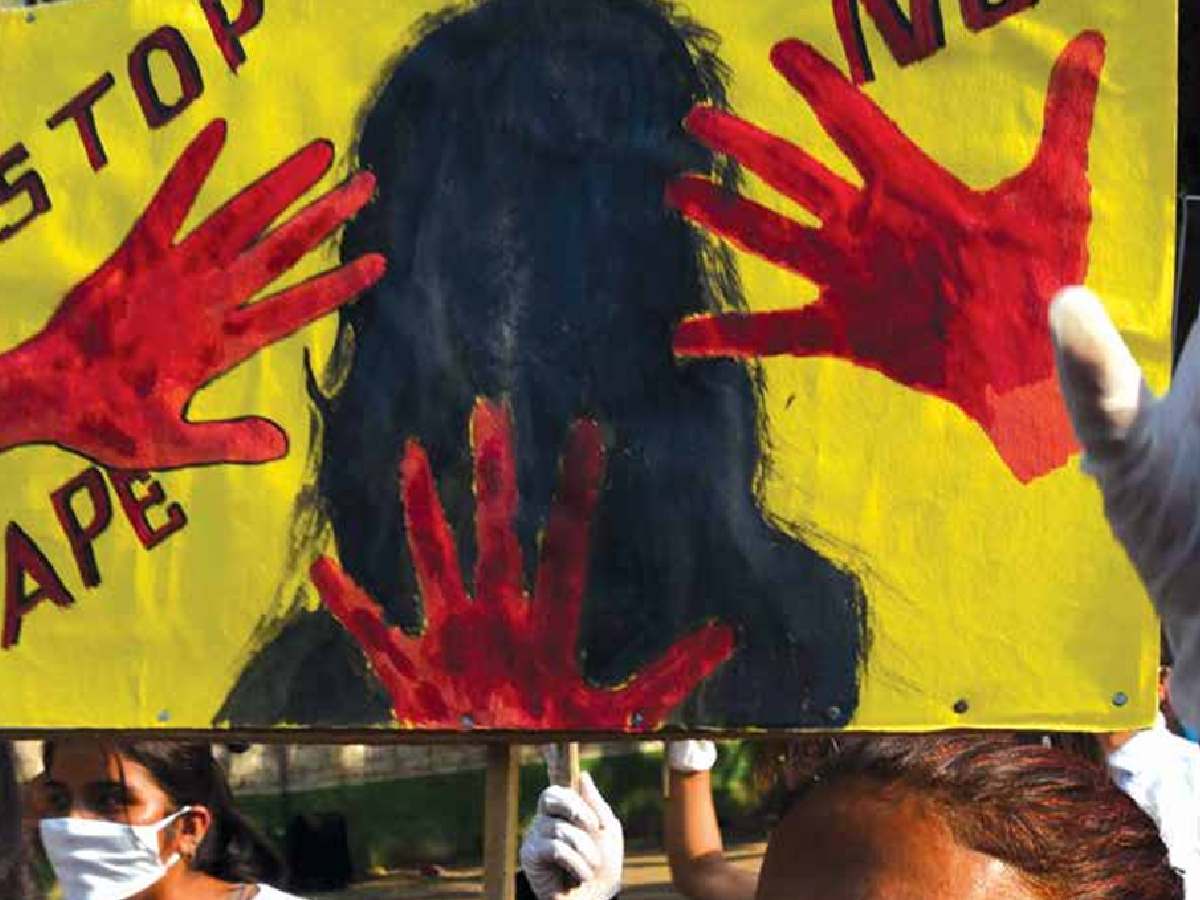
The public perception of sexual violence is often dominated by a familiar image: a stranger lurking in a dark alley, waiting to strike. Yet, empirical data consistently challenge this narrative.
The national capital reflects this pattern as well. Court case studies in Delhi show that the accused are rarely strangers; instead, they are frequently neighbours, friends, family members, or employers who exploit their established relationships with and access to the victim.
Data shared by Delhi Police with Patriot show that of all rape cases registered in Delhi this year till May 15, the survivor knew the accused in 98.15% of cases—only 1.85% involved strangers.
In a detailed conversation on the subject, Professor K Jaishankar, the Founder and Principal Director of the International Institute of Justice & Police Sciences, explains the structural, psychological, and social factors that fuel this persistent crisis.
Psychology of known offenders
Understanding why this pattern persists requires a closer look at the sociological and psychological dynamics of sexual violence committed by someone known to the survivor. Jaishankar explains that acquaintance offenders rarely fit the stereotypical profile of a fixed, antisocial deviant.
“The psychology of acquaintance offenders differs significantly from that of stranger offenders. They often do not fit the stereotypical image of a ‘monster’ or ‘outsider’. Many are what experts term situational offenders, whose criminal behaviour is triggered by a confluence of circumstances rather than a fixed deviant personality.”
This dynamic is further complicated by how these individuals present themselves to the world. They are frequently integrated into the victim’s immediate social fabric, using their standing to mask their intentions.
“Acquaintance offenders often appear as ‘pillars of the community’ or ‘child magnets’, individuals who are trusted and respected, which makes them highly effective at grooming victims. The abuse is often preceded by a grooming process where the offender builds trust and manipulates the victim into a vulnerable position.”
Why survivors stay silent
In many communities, familial bonds and communal harmony are prioritised above individual justice, creating structural barriers to reporting.
Jaishankar says the reluctance to report such crimes is rooted as much in social structures as in individual circumstances. “Deep-rooted patriarchal structures often normalise male entitlement over women’s bodies and silence victims through stigma and societal pressure. Victims are frequently deterred from reporting because the offender is known to their family, and reporting could lead to social ostracism, loss of honour, or disruption of familial relationships.”
Beyond these structural barriers, researchers point to specific behavioural catalysts that lower psychological inhibitions, making it easier for an individual to act on harmful impulses.
“Research indicates that substance abuse and the consumption of pornography are significant pre-crime factors that can lower inhibitions and exacerbate aggressive sexual impulses. For some, repeated exposure to pornography or substance abuse can fuel fantasies. When combined with an opportunity to act on these impulses with a familiar, accessible person, the psychological barriers to committing the act are significantly lowered.”
The age factor
The dynamics of acquaintance rape manifest differently depending on the age of the perpetrator, spanning from exploratory behaviour in adolescents to calculated exploitation in older adults.
On age-related differences, Jaishankar notes: “Among adolescents and young adults (e.g., 12–16 years), the abuse is often exploratory in nature. Many may not fully understand the concept of consent or may view their actions as a ‘right’ or as a result of peer pressure rather than a criminal act. Their behaviour is often heavily influenced by peer groups, pornography, and substance abuse.”
Adult offenders tend to operate with a far more calculated approach.
“Adult offenders, particularly those in positions of trust (e.g., family members, teachers, employers), are more likely to engage in calculated, long-term grooming. Their behaviour is driven by a combination of individual pathology (often linked to their own past trauma or abuse) and deeply ingrained patriarchal attitudes that foster a sense of entitlement and power over the victim.”
Victim-centred approach
Addressing this crisis requires a multi-layered strategy that extends far beyond standard law enforcement responses, requiring legal reforms and community-level interventions.
“We need more efficient and victim-sensitive legal processes. The high rate of acquittals and the social cost of reporting often deter victims. Strengthening witness and victim protection measures is critical, as many victims relocate or live in fear of reprisal from known offenders who have easy access to them.”
Ultimately, addressing sexual violence requires confronting an uncomfortable truth about where the true danger lies.
As Jaishankar concludes: “The data make it unequivocally clear that the greatest threat to women and children in India lies not on the streets but within their own homes and communities. A paradigm shift in how we perceive, prevent, and respond to sexual violence is urgently needed, one that recognises that the enemy is often known.”
Trust betrayed
A recent case registered by Delhi Police reflects this trend. On June 10, a social media influencer accused a man of allegedly raping her on the pretext of shooting videos, according to the police. The 36-year-old woman, who resides in Burari, reported that she first came into contact with the accused through a social media platform in 2022.
In her complaint, the woman alleged that the man invited her to a hotel in Burari in September 2022, claiming they would be shooting social media reels, but instead sexually assaulted her. She further alleged that the accused subsequently blackmailed her and repeatedly assaulted her over a period of time.
The woman later discovered that the accused had introduced himself using a false name. After discovering his real identity, she immediately distanced herself from him.
Following this, the woman alleged that the man’s brother-in-law and another relative contacted her to issue threats. The police have confirmed that the case has been registered under relevant charges, and further investigations are in progress.