Piyush Marwah, 21, a resident of Rajasthan, arrived in Delhi on an overnight bus from Jaipur, believing that this time his voice might be heard. He did not expect change to come immediately.
“It is for the future. No matter when that future comes,” he said.
Marwah had expected a peaceful demonstration. Although he had anticipated the possibility of minor scuffles, he had not imagined that scores of protesters would be taken to Ram Manohar Lohia (RML) Hospital on stretchers.
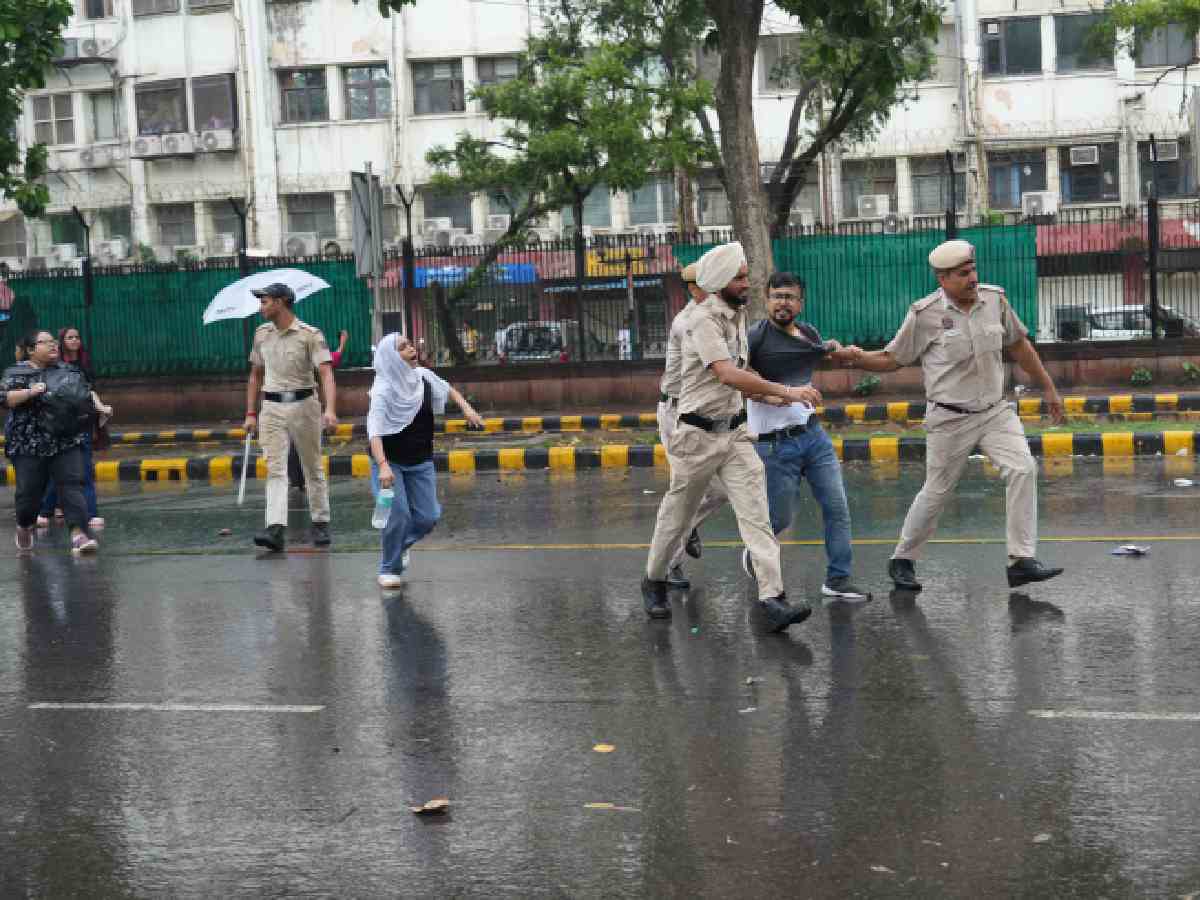
“They had already started their lathi-charge in batches. I was standing right in front of the barricade near Kerala House when they first used force,” Marwah said.
He said the protesters had not begun moving when police officers started swinging their batons over the barricade.
“The use of such force was unnecessary at that point. They hit my hand and kept hitting a couple of people near me as well,” he added.
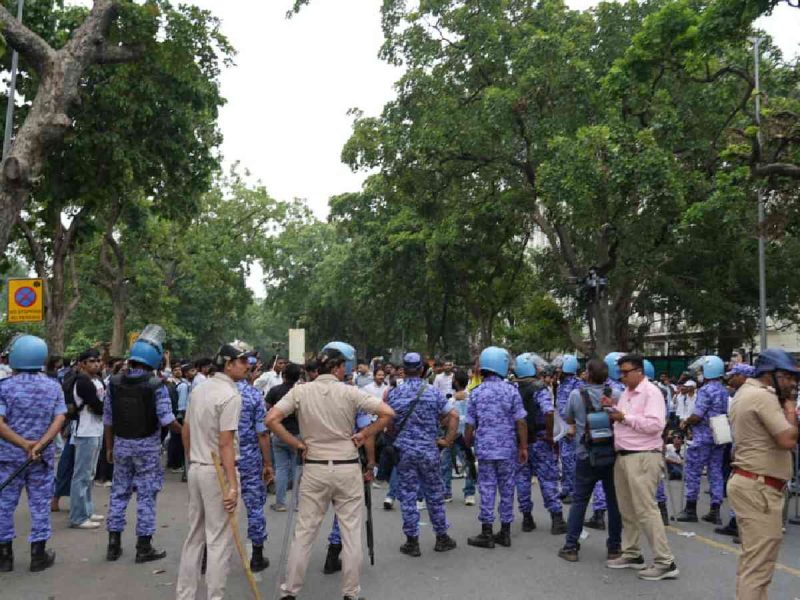
Batons, tear gas and clashes marked the streets of central Delhi on July 20 as the Cockroach Janta Party’s (CJP) protest entered its second month. The student-led movement has been demanding the resignation of Education Minister Dharmendra Pradhan over the alleged leak of the National Eligibility-cum-Entrance Test (NEET) question paper and other alleged irregularities in public examinations.
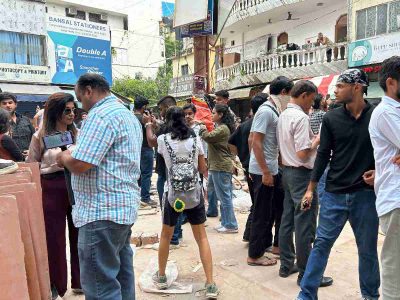
As per some estimates, more than 1 lakh students and other young protesters gathered for Monday’s demonstration and attempted to march towards Parliament in defiance of a police ban.
Violence spread across parts of the New Delhi district after police used batons and tear gas to disperse the crowds. At least 89 protesters were injured, according to estimates provided by RML Hospital. Police officers also dismantled the stage and makeshift tents at the main demonstration site.
Delhi Police said 118 officers were injured in the clashes. Around 70 protesters were subsequently taken into custody.
Ten cases registered
Police have registered ten FIRs against protesters and are examining CCTV footage to identify those allegedly involved in the violence.
The cases, registered at the Parliament Street police station, include charges of rioting, criminal conspiracy, unlawful assembly and damage to public property under the Bharatiya Nyaya Sanhita (BNS). Provisions of the Arms Act have also been invoked.
Several protesters alleged that confusion over the proposed march and the absence of clear instructions from the organisers contributed to the violence.
“Nobody was clear about the steps we should take while we were at the site. However, even before the barricades were torn down, the police had started lathi-charging,” said Shabbir Ali, 34, from Rajasthan’s Bharatpur district.
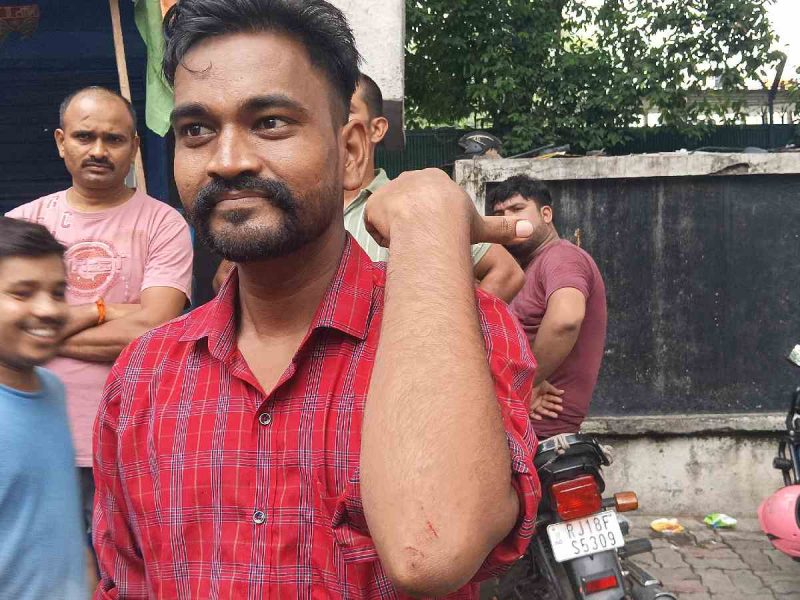
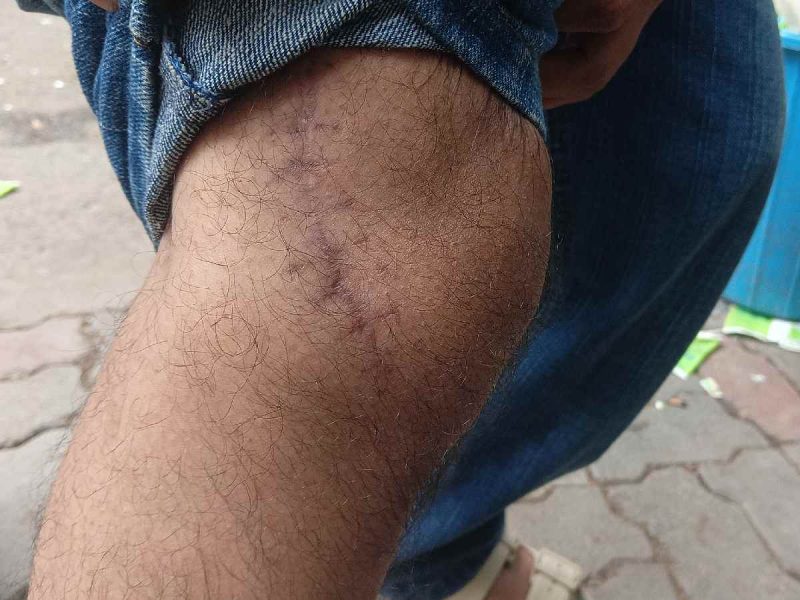
Showing bruises on his forearm, Ali said he had been waiting near the barricade, much like Marwah, when police attempted to push the crowd back.
“However, owing to the crowd, there was already barely any space for us to move. The police used the barricade as a support to climb up and started flailing their batons indiscriminately,” he said.
Recounting police action
Among those injured was a 17-year-old who was attending a protest for the first time. The teenager, who is due to sit for his board examinations next year, had travelled to the demonstration with strangers he met on the way.
“I met some people who were on their way here, so we hitched an autorickshaw ride together. I had no idea that it would turn out this way,” he said.
The teenager said he tried to run towards a safer area but found police personnel deployed across Central Delhi.
“I was running to a safe space where the violence would not reach me, but the police deployment was everywhere, and I received multiple blows around Connaught Place,” he said.
He sustained several injuries and said he could no longer raise his right arm.
A 20-year-old protester was reportedly placed on a ventilator after allegedly hitting her head against a barricade. Three other protesters were reportedly admitted to the intensive care unit.
Aditya Gahrwal, 30, was another protester who attended the demonstration despite his parents’ objections.
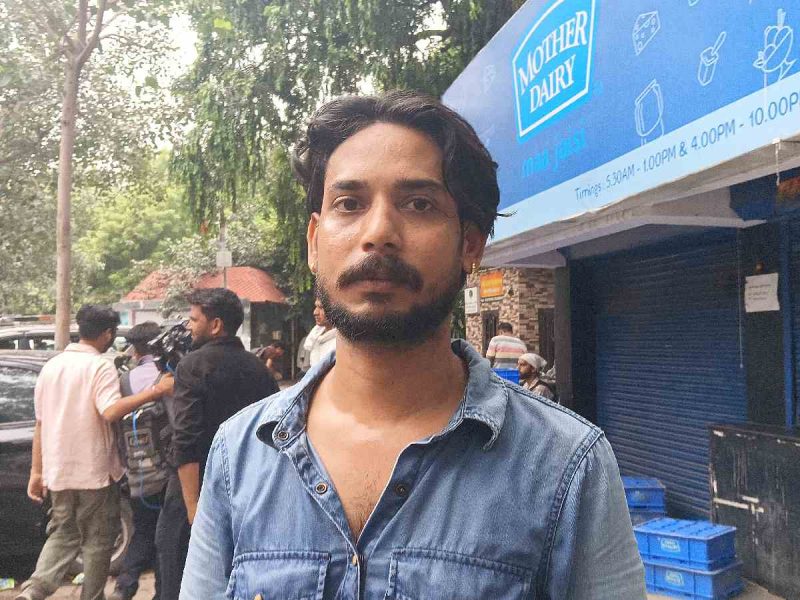
“I had recently suffered an injury to my leg, which required stitches. The doctor had told me to minimise my movement for at least three months. It has been two and a half months, but I could not just sit back,” he said.
Gahrwal alleged that police struck his injured leg during the lathi charge. “I will have to check whether my leg is actually fine or whether it is just the adrenaline,” he added.
He had planned to inform his parents about his injuries immediately. However, mobile jammers and the reported suspension of network services in parts of New Delhi and Central Delhi districts made it difficult for him to contact them.
Protesters to blame
In a statement, the police alleged that the protesters had displayed “unruly, aggressive and violent behaviour” during the clashes.
They added that the protesters refused to disperse despite repeated warnings and lawful directions and deliberately violated the prohibitory orders in force.
“The protesters attacked police personnel with stones and other objects, attempted to breach police barricades, vandalised police and other government vehicles, damaged public property, and resorted to large-scale violence,” read the statement.
The violence, police added, posed a serious threat to public order, security arrangements and the safety of personnel performing their duties. Senior IPS officers were among those injured, according to the statement.
The confrontation left police vehicles overturned and buses damaged, while dozens of protesters were detained. It also disrupted proceedings in Parliament on the opening day of the Monsoon Session.
The Union Government had reportedly instructed the police and paramilitary forces to avoid using force or to use the minimum force necessary. Several police officers deployed during the clashes were seen without name badges.
Several social media accounts have also come under scrutiny for allegedly spreading misinformation about the violence.
The origins
The CJP began as a satirical online campaign launched by Abhijeet Dipke in May following a remark by Chief Justice of India Surya Kant. It soon developed into a student-led movement against paper leaks and other alleged irregularities in public examinations.
In June, the CJP organised protests across the country, demanding accountability for repeated examination failures and Pradhan’s resignation. Its supporters began an indefinite protest at Jantar Mantar on June 20.
The agitation gained wider attention after educator and engineer Sonam Wangchuk joined the protesters and began a hunger strike on June 28. His removal from the protest site and admission to Safdarjung Hospital on July 18 gave the movement greater visibility and drew more supporters.
On July 20, students and other young protesters attempted to march towards Parliament after talks with the government ended without any assurance on their demands. They proceeded despite prohibitory orders imposed ahead of the Monsoon Session of Parliament.
Wangchuk to continue fast
As the confrontation unfolded, Wangchuk announced from Safdarjung Hospital that he would continue his indefinite fast. In a handwritten statement, he said the police action against the protesters had prompted his decision.
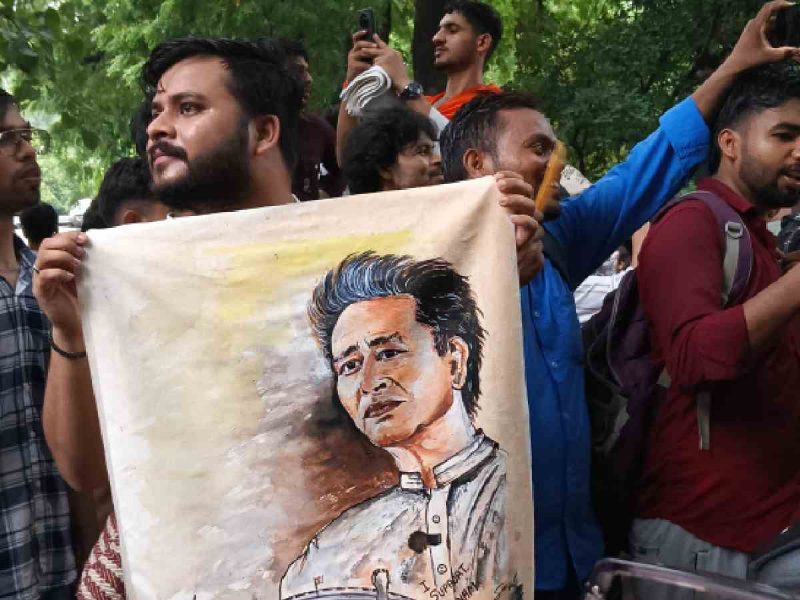
“Seeing the brutality with which peacefully protesting youth are being dealt with, I have decided to continue my fast until the youth leaders are allowed to meet the parliamentarians at the Sansad Bhawan or I am allowed to meet them here at the hospital,” he said.
“Hopefully, the government will fix accountability for the Education Minister before that,” he added.
Wangchuk said he was “touched and moved” by the manner in which the protesters had maintained peace despite what he described as “provocation”.
“I appeal to the government and the police force to resolve the issue by simply allowing the students to present their grievances before Parliament today or tomorrow,” he said. “I am sure the young protesters will maintain peace tomorrow as they did today.”
Wangchuk had earlier said he would end his fast if the government accepted accountability for the alleged failures in the education system or if political leaders assured him that the issue would be raised during the Monsoon Session.
Inconclusive talks
Two CJP spokespersons met Union Minister JP Nadda on July 20 and submitted a written charter of demands at 4 pm.
However, the delegation reportedly received no assurance from the government.
Nadda did not accept the demands and asked the protesters to call off their sit-in and cooperate with the administration in restoring normalcy.
The movement has since spread to several cities across the country, with organisers indicating that further protests are planned.