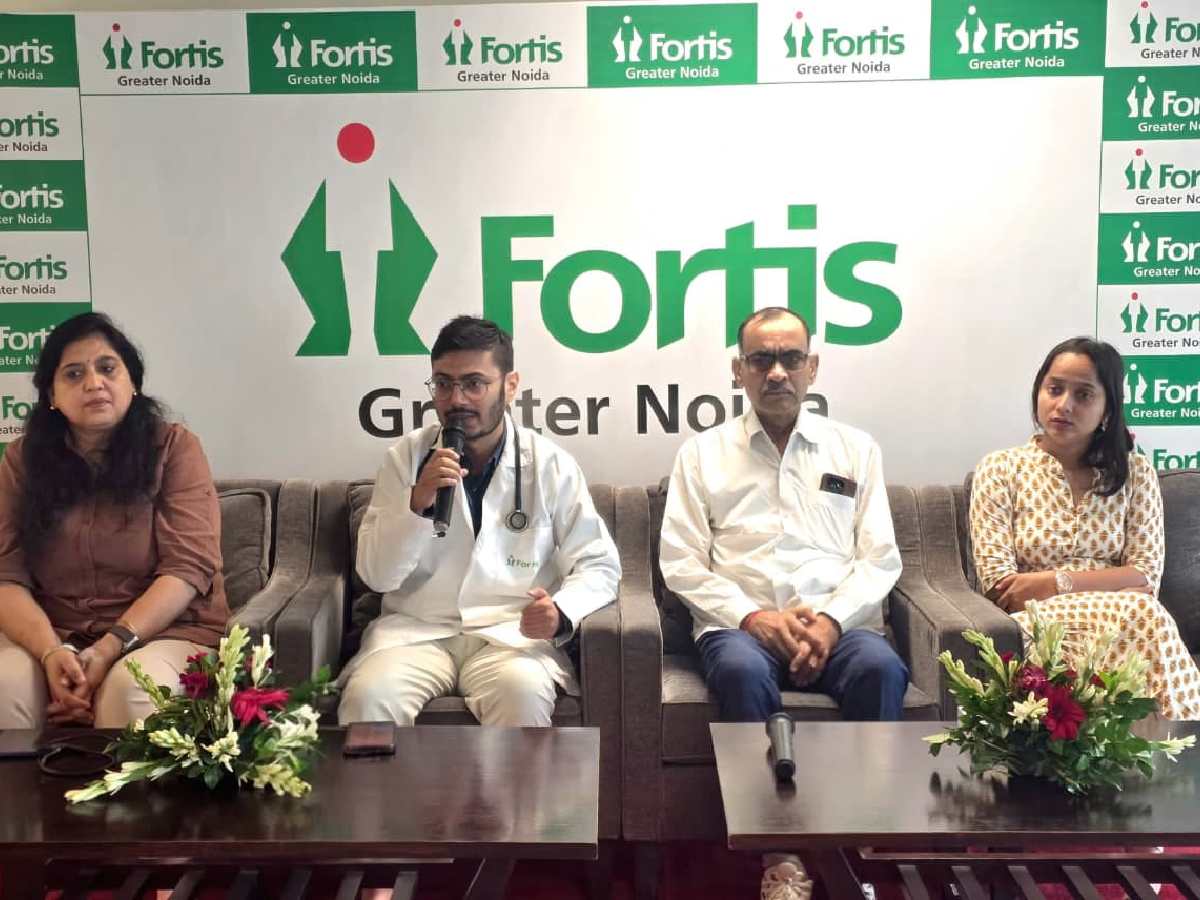
Delhi: Doctors at Fortis Hospital Greater Noida have successfully treated a 57-year-old man who was admitted in a critical condition with his heart functioning at just 10 to 15 per cent, performing a high-risk emergency angioplasty that restored his heart’s pumping capacity to 45 per cent.
The patient was brought to the hospital with severe chest heaviness and breathlessness that had persisted for nearly 24 hours. He had a history of uncontrolled diabetes and hypertension and was diagnosed with acute heart failure after developing fluid accumulation in the lungs and dangerously high blood pressure.
According to the treating doctors, the patient’s condition deteriorated rapidly, requiring ventilator support and emergency medication to stabilise his blood pressure. Investigations revealed severe blockages in all three major coronary arteries, while his heart’s ejection fraction — a measure of its pumping ability — had fallen to just 10 to 15 per cent.
The cardiac team, led by Dr Shantanu Singhal, Consultant Cardiologist at Fortis Hospital Greater Noida, decided against immediate conventional angioplasty because of the high risk of cardiac arrest. Instead, doctors first inserted an Intra-Aortic Balloon Pump (IABP), a mechanical device that helps the heart pump blood more effectively, following an emergency angiography.
After stabilising the patient in the intensive care unit for two days, doctors carried out a 15-minute angioplasty to clear the main blocked artery. The patient responded well to the procedure and was taken off ventilator support and the heart-assist device the following day.
Within a week, his heart’s pumping capacity improved from 10 per cent to 35 per cent. After a subsequent procedure, it further increased to 45 per cent, allowing him to recover without persistent cardiac symptoms.
“The patient was battling severe heart failure with extremely poor heart function, fluid-filled lungs and dangerously high blood pressure. Stabilising him with a heart-assist device before performing a low-contrast angioplasty significantly reduced the risk of sudden cardiac arrest and contributed to the successful outcome,” said Dr Shantanu Singhal.
The patient has since been discharged and is under regular follow-up at the hospital. Doctors said he remains free of symptoms and is expected to return to his normal professional routine after completing cardiac rehabilitation.
Dr Shanu Sharma, Medical Director, Fortis Noida and Greater Noida, said the case highlights the importance of timely intervention and advanced cardiac care in managing life-threatening cardiovascular emergencies.
He said the successful recovery reflected the hospital’s ability to manage complex, high-risk heart cases through coordinated critical care and interventional cardiology expertise.