Fresh guidelines issued to Delhi Police by a central agency advise personnel to remain calm during protests, avoid rising to provocation and being pictured as “villains” by the demonstrators filming them, police sources said on Sunday.
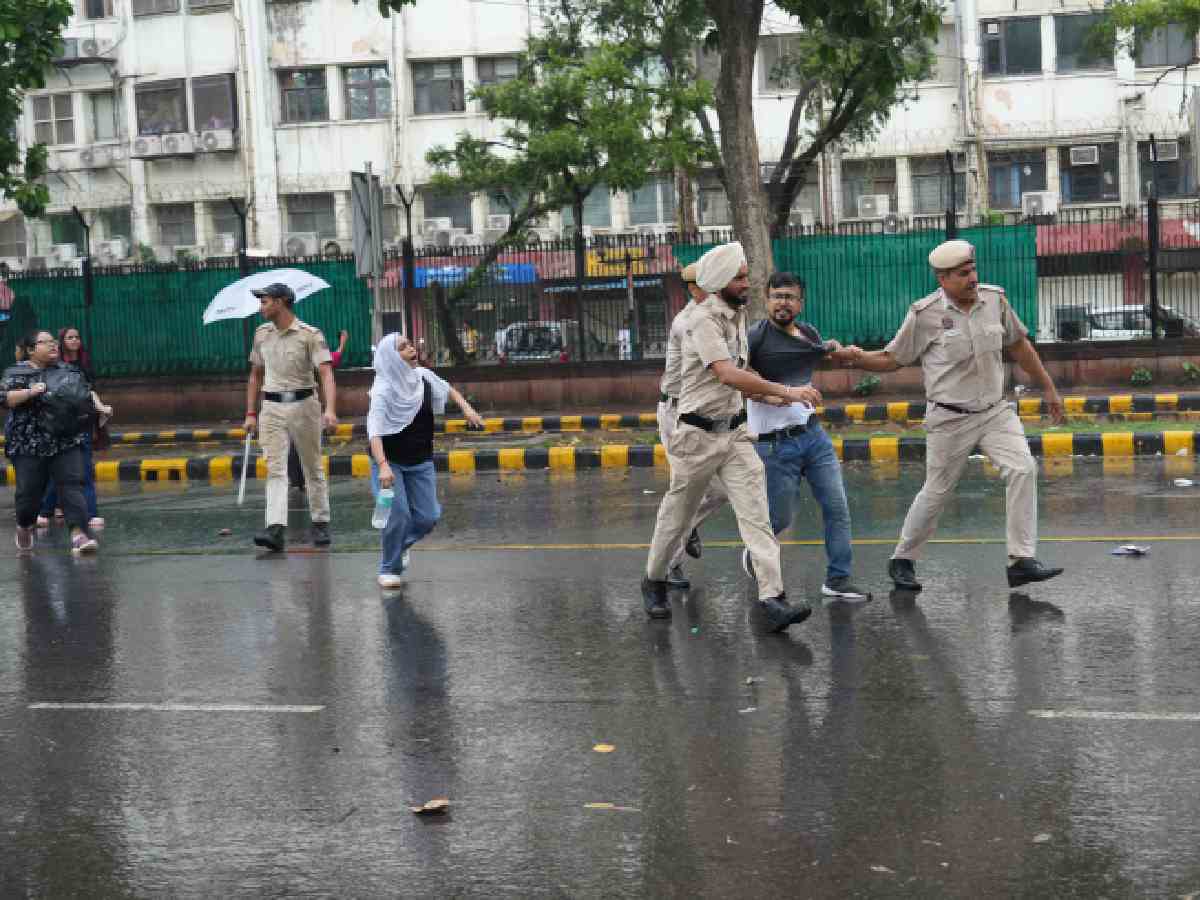
The guidelines come in the backdrop of the allegations of police excesses during the Cockroach Janta Party (CJP) protest at Jantar Mantar last month.
“Your anger is their satisfaction and content for them to portray you as villains,” the fresh guidelines say, urging personnel to exercise restraint and remain conscious that their conduct during protests is likely to be recorded and scrutinised.
A senior police officer, requesting anonymity, said the directions were aimed at ensuring that personnel maintain professionalism and restraint while performing crowd-management duties.
The officer said similar directions were given to all officers deployed during the CJP protest.
“I had given the same directions to all the officers during the CJP protest – not to give any reaction to any of the protesters and just to do their duty,” the officer told PTI.
The guidelines emphasise that personnel should assume that their actions and reactions are being recorded on mobile phones and could subsequently circulate widely online.
Police personnel have also been advised to avoid unnecessary conversations with protesters and not respond to questions, taunts, emotional appeals or attempts to draw them into arguments. When an interaction is unavoidable, they should restrict their response to a simple request to cooperate and otherwise maintain silence, the guidelines say.
During the CJP protest, several videos of police personnel deployed were widely circulated online. In some of these videos, police personnel were seen involved in verbal altercations with protesters.
The instructions specifically caution personnel against reacting to mockery, humour, songs, dances, placards, mock salutes or other forms of behaviour intended to elicit a response.
They have also been told not to respond aggressively by pushing away mobile phones, snatching or throwing objects, shouting in anger or engaging in any physical confrontation unless required as part of their duty, the source said.
The advisory also addresses situations where protesters may attempt to evoke sympathy. Personnel have been asked not to get drawn into conversations involving personal circumstances, family issues, salaries or other emotional subjects.
Maintaining professional body language and respectful language has been stressed, with officers instructed to exercise restraint even in situations where protesters deliberately attempt to provoke them.
The personnel have also been asked to not accept flowers, food or any other items from the women protesters.
In some videos shared online, agitators were seen offering flowers to police personnel. The protesters were heard saying that although they had been lathi charged by police, they would still offer flowers to them. The contrasting visuals of confrontation and protesters offering flowers led to criticism of the forces by a large number of social media users.
At the same time, the guidelines emphasise that maintaining law and order should not come at the cost of public safety. Personnel have been directed to assist protesters who fall ill or sustain injuries and ensure unobstructed movement for ambulances, schoolchildren and elderly people.
The directions assume significance following a series of protests in the national capital where police personnel and demonstrators were frequently seen filming each other. Several interactions captured on mobile phones subsequently became subjects of discussion and criticism on social media.
The guidelines also advise personnel in district, railway and metro units to remain particularly conscious of their conduct in public spaces.